
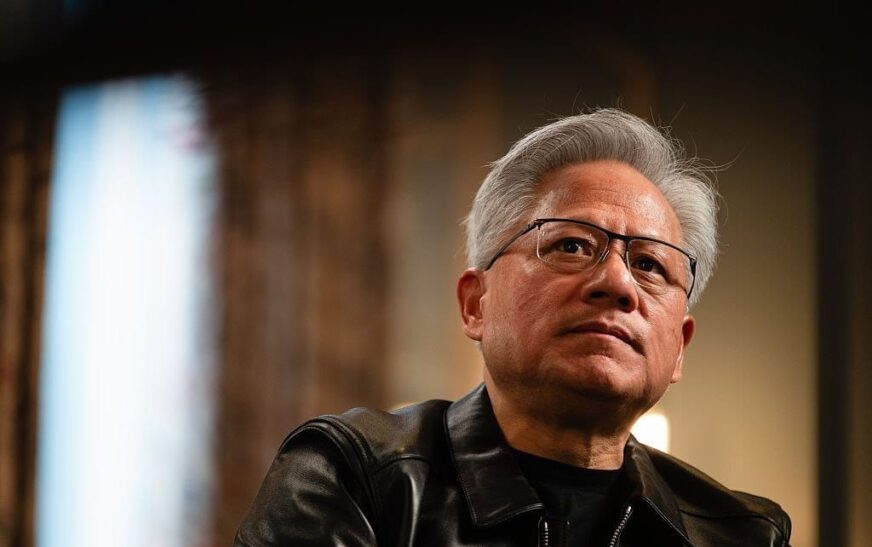
Nvidia has reinstated Jensen Huang as president and chief executive officer less than two weeks after his resignation, following intervention by US President Donald Trump and assurances from the American government that his return poses no national security threat.
The decision marks a dramatic reversal at the world’s leading artificial intelligence chipmaker, whose leadership transition had become entangled in allegations of personal misconduct, suspected Chinese espionage and concerns over the export of advanced computer chips to China.
Nvidia announced on November 23 that its board of directors had unanimously voted to restore Huang to his positions as president, chief executive officer and member of the board, effective immediately.
The board said it had consulted senior officials in the United States government before reaching its decision, adding that it was satisfied with Huang’s candour and ability to lead the company.
In a statement, board chairman Harvey C. Jones said the directors believed Huang was the right person to lead Nvidia and that his reinstatement served the interests of shareholders, employees, business partners and customers.
The announcement followed public pressure from Trump, who had openly supported Huang’s return despite the controversy surrounding his departure.
In a statement posted on his Truth Social platform on November 23, Trump welcomed the board’s decision, describing it as the correct and proper move for both the company and the American economy.
“The Country needs Jensen’s leadership at NVIDIA in order to ensure the Success and Prosperity of not only the Company, but the American Economy,” Trump wrote.
He further said the US government had no reason to believe Huang’s reinstatement posed a national security threat.
Trump also invoked the position of the US Attorney General, saying the government had no evidence that Huang had engaged in unlawful conduct.
“On a personal note, I have gotten to know Jensen, and he is a Great Patriot and National Treasure,” he added.
However, Trump called on Nvidia to continue its internal investigation into the company’s compliance with US export controls, emphasising the importance of protecting American national security.
The president concluded by congratulating Huang, Nvidia’s board and the American public, extending his message to the rest of the world.
Trump’s intervention came after he had publicly urged Nvidia’s board to give Huang another opportunity to lead the company. He subsequently acknowledged speaking to Huang and members of the board to facilitate his return.
The development overturned an earlier position taken by Nvidia’s board chairman, who had indicated on November 17 that the directors did not intend to reinstate Huang following his resignation.
Huang stepped down on November 12 after reports emerged about extramarital relationships, including one involving Alice Huang, a Chinese businesswoman who previously held an executive position at Megaspeed International, a Singapore-based company that has been a major customer of Nvidia.
Reports also linked Huang to another relationship involving Kimberly Powell, a subordinate at Nvidia. The revelations raised questions about his personal conduct and corporate governance, particularly because of the sensitivity surrounding his relationship with Alice Huang.
US intelligence agencies reportedly suspected Alice Huang of having links to Chinese intelligence, although the allegations have not been conclusively established.

The controversy took on greater significance because of Megaspeed’s business relationship with Nvidia and investigations into whether advanced artificial intelligence chips supplied to the Singapore-based company had subsequently been diverted to China in violation of American export controls.
Washington has imposed restrictions on the export of certain advanced semiconductor technologies to China because of concerns that they could strengthen Beijing’s military and technological capabilities.
The investigations therefore placed Nvidia, one of the most strategically important technology companies in the United States, under increased scrutiny over its business relationships and export-control compliance.
Huang’s resignation came as these concerns intensified, prompting Nvidia to appoint its long-serving chief financial officer, Colette Kress, as interim chief executive while the board began searching for a permanent replacement.
Although the board initially rejected the possibility of Huang returning, the situation changed following lobbying by Trump and other influential figures in the technology industry.
Trump’s support has also drawn attention to the close relationship between the American government and major technology companies, particularly as Washington seeks to maintain its competitive advantage over China in artificial intelligence.
The president’s intervention has raised questions about the balance between corporate independence, economic interests and national security considerations when decisions involving strategically important companies are made.
Huang’s return does not, however, bring the investigations to an end.
He and Nvidia’s general counsel, Tim Teter, are expected to appear before US House committees on December 1 and 2 respectively for closed-door interviews concerning the company’s business dealings with Megaspeed, its export-control compliance and the circumstances surrounding the controversy.
The House Select Committee on the Chinese Communist Party is among the congressional bodies expected to examine the matter.
Nvidia has also established a board-level National Security and Export Control Committee to strengthen oversight of the company’s compliance obligations and engagement with the US government.
Following Huang’s reinstatement, Kress will return to her substantive position as executive vice president and chief financial officer.
Huang co-founded Nvidia in 1993 and has overseen its transformation from a graphics processing company into a global leader in artificial intelligence computing infrastructure.
The company has become central to the global AI industry through its advanced graphics processing units, which power data centres, artificial intelligence development and high-performance computing.
His return restores its long-serving leader at a time when demand for AI technology continues to reshape the global technology industry.
But with congressional inquiries and investigations into possible export-control violations still underway, the decision to reinstate Huang is unlikely to end questions about Nvidia’s corporate governance, its dealings with China and the role of the US government in protecting its strategic technology interests.