
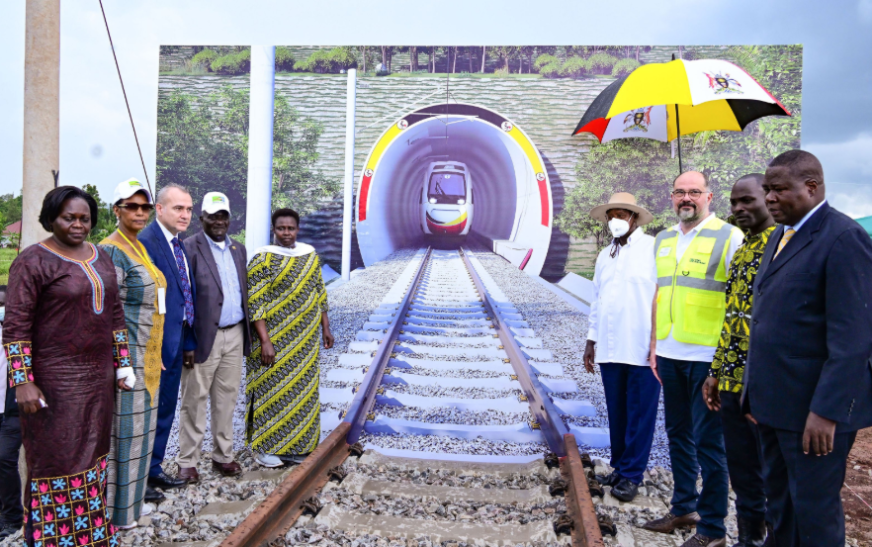
Uganda is exploring plans to establish a second Standard Gauge Railway (SGR) connection to Tanzania, a strategic move aimed at opening a direct export corridor to the Port of Dar es Salaam and cutting transportation costs and transit time for its mineral exports.
Reports by Sputnik Africa, referencing British media and a government document, indicate that Kampala intends to link its planned SGR network to Tanzania’s railway system, which is currently under construction. The connection would offer Uganda an alternative gateway to the Indian Ocean, easing its dependence on Kenya’s Port of Mombasa.
Under the proposal, the railway would extend from the Tanzania–Uganda border through the country’s southern and southwestern regions before reaching Mpondwe at the border with the Democratic Republic of Congo (DRC). The Mpondwe extension is viewed as strategically critical, as it could enable minerals from eastern DRC to transit through Uganda en route to Dar es Salaam, reinforcing Uganda’s position as a regional trade and logistics hub.
The new corridor would complement existing efforts to integrate Uganda’s SGR with Kenya’s rail network, which feeds into Mombasa — currently the main exit point for Uganda’s exports. By creating a second route through Tanzania, authorities hope to introduce competitive dynamics that could lower freight charges and improve overall efficiency.
According to the report, the African Development Bank is considering Uganda’s request to support preparatory work for the project. However, major financial backing would hinge on feasibility assessments confirming the project’s economic viability and bankability.

Meanwhile, Tanzania continues construction of its SGR system to boost trade and regional connectivity through Dar es Salaam. A linkage between the two countries’ rail networks would not only strengthen economic cooperation between Kampala and Dodoma but also advance integration within the East African Community.
The proposed development comes as Uganda seeks to strengthen its export competitiveness, particularly in the minerals sector. Policymakers see enhanced rail infrastructure as key to lowering logistics expenses, improving market access, and positioning the country as a central transit corridor for regional trade.