
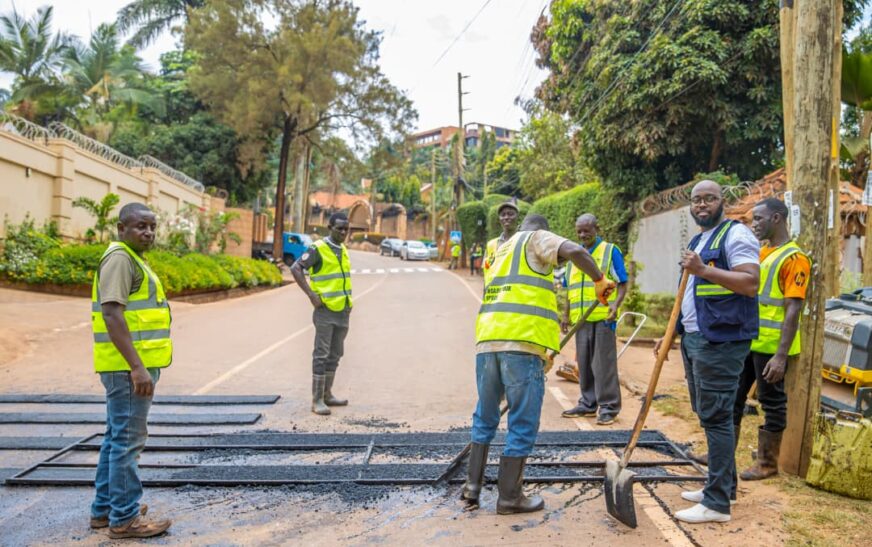
As schools prepare to reopen for the third and final term of the 2026 academic year, road safety agencies are turning their attention to the routes used by thousands of children walking to and from school.
The Intelligent Transport Monitoring System (ITMS), working with the Uganda Police Force, Kampala Capital City Authority (KCCA) and the Ministry of Works and Transport, has launched a road safety intervention at Peekaboo Primary School in Naguru, including the painting of a pedestrian crossing.
The initiative, under the theme “Safer Kids, Safer Roads, Safer Journeys,” is intended to make school zones safer by improving visibility for pedestrians and reminding motorists to slow down and give way to children crossing roads.
The intervention comes against a worrying national road safety picture, with police statistics showing that road crashes continue to claim thousands of lives every year.
According to the Uganda Police Force Annual Crime Report 2025, 5,383 people died in road traffic crashes last year, compared with 5,144 in 2024, representing a 4.7 per cent increase.
Serious injuries also rose from 17,013 in 2024 to 18,444 in 2025.
Kampala has not been spared the crisis. The KCCA road safety report for 2025 indicates that about 407 people died in road crashes in the city.
For children, the concern is even more acute.
Michael Kananura, a Uganda Police Force spokesperson, said available road safety statistics indicate that two school-going children aged between six and 15 die every day in road accidents.
“Children are among the most vulnerable road users because they may not always be able to accurately judge the speed or distance of an approaching vehicle,” Kananura said.
He urged motorists to exercise greater caution in school zones, particularly during the morning and afternoon hours when children are travelling to and from school.
“Motorists must therefore take extra care around schools, slow down, remain alert and respect pedestrian crossings. Road safety is not only the responsibility of the Police; every road user has a role to play in preventing crashes and saving lives,” he said.
The figures have strengthened calls for a broader approach to road safety that goes beyond traffic enforcement.
ITMS says infrastructure such as clearly marked pedestrian crossings must be complemented by technology, public awareness and responsible road-user behaviour if school routes are to become safer.
Steven Turayarugayo, ITMS public relations manager, said the partnership with government agencies is aimed at translating road safety measures into practical interventions that people can see and use.
“We are proud to work alongside government and community partners because safer roads require collective responsibility, and road signage and marking complemented by EPS technology must translate into practical interventions that make everyday journeys safer,” Turayarugayo said.
ITMS also pointed to a proposed law on the Express Penalty System (EPS), which includes a 30km per hour speed limit around school zones. The proposal is awaiting government approval.
If approved and implemented, the measure would give motorists a clearer speed threshold around schools, where children are particularly exposed to speeding vehicles.
But even before such measures take effect, road safety stakeholders argue that basic infrastructure can make a difference.
At Peekaboo Primary School, the newly painted pedestrian lane is expected to provide pupils with a clearly defined crossing point while making their presence more visible to motorists.
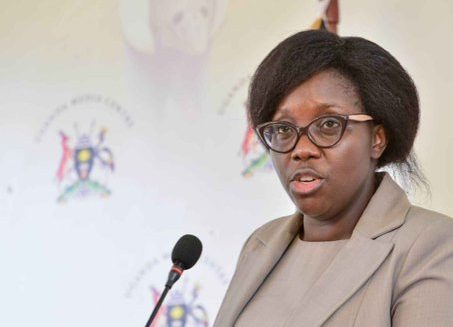
Jemima Nalumansi, KCCA road safety coordinator, said pedestrian infrastructure remains an important part of the authority’s efforts to address road crashes in the city.

“Providing and maintaining visible pedestrian crossings, walkways and other road safety infrastructure is critical to protecting vulnerable road users,” Nalumansi said.
She welcomed the partnership with ITMS, saying road safety requires the participation of government institutions, communities, schools, parents, motorists and development partners.
The intervention also comes at a time when the reopening of schools is expected to increase pedestrian activity on neighbourhood roads.
Children walking in groups, crossing busy roads and navigating areas without proper walkways can face particular risks, especially where motorists maintain high speeds.
Barbara Nalweyiso, administrator at Peekaboo Pre-school, said the school had been identified as one of the locations requiring attention because of the risks posed by motorists.
“We welcome this initiative and now have the relief that our pupils are safe from motorists who don’t slow down or give way to pedestrians,” Nalweyiso said.
For the school, however, the painted crossing is only useful if motorists respect it.
Road safety stakeholders therefore want the intervention to serve as a wider reminder to drivers that school zones require greater vigilance.
The return of children to school also increases pressure on roads during peak hours, when motorists, boda boda riders, parents and school transport vehicles compete for space.
The Police have repeatedly identified speeding, reckless overtaking and failure to observe traffic regulations among behaviours contributing to crashes.
The partners argue that addressing these behaviours alongside improvements in road infrastructure is necessary to reduce the risks faced by children.
Nalweyiso said the intervention should not be viewed simply as a painting exercise.
“Painting a pedestrian lane at Peekaboo Primary School is therefore more than a road-marking exercise. It is a visible reminder to the entire community that children deserve safer spaces to walk, learn and grow,” she said.
With the third school term approaching, the partners are calling on motorists to adjust their behaviour around schools and give children priority when crossing roads.
The message is particularly important in a city where many children still walk along or across busy roads as part of their daily journey to school.
The initiative at Peekaboo therefore seeks to demonstrate how relatively simple road infrastructure, when combined with enforcement, technology and public awareness, can contribute to safer journeys for children.
For the agencies involved, the ultimate test will not be the visibility of the newly painted crossing, but whether motorists slow down, pedestrians use the facility and crashes around the school are prevented.
As schools reopen, that responsibility will fall on everyone using the road.