

Family Medical Point has called on government to review Uganda’s legal framework on abortion, arguing that restrictions on access to safe abortion services are contributing to preventable deaths and complications among women and girls.
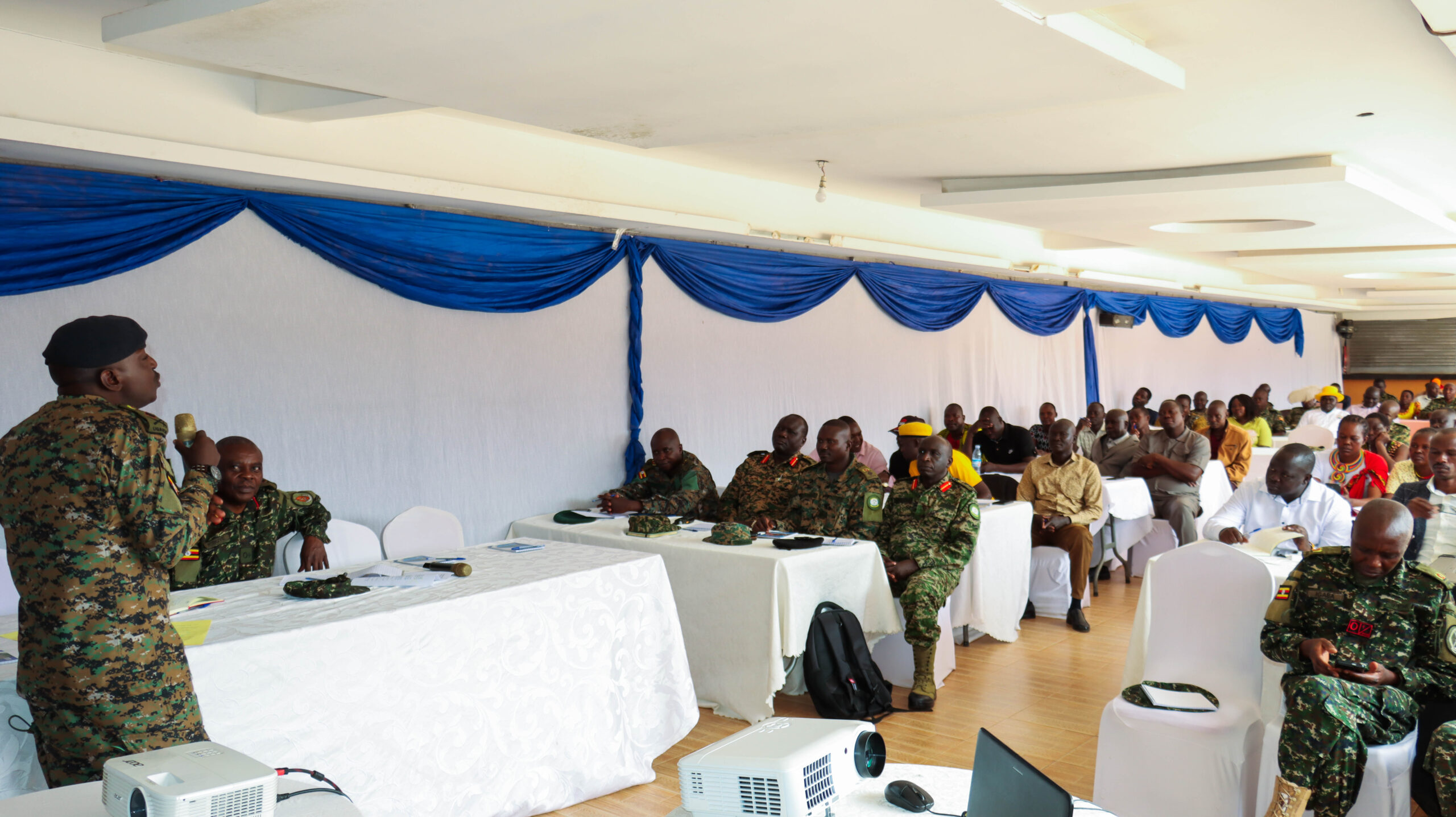
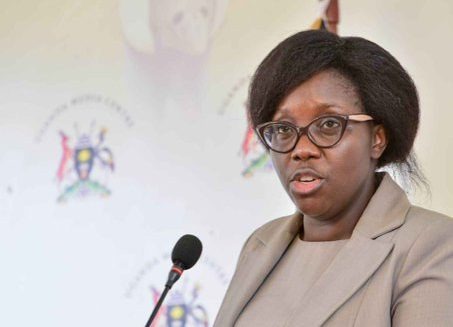
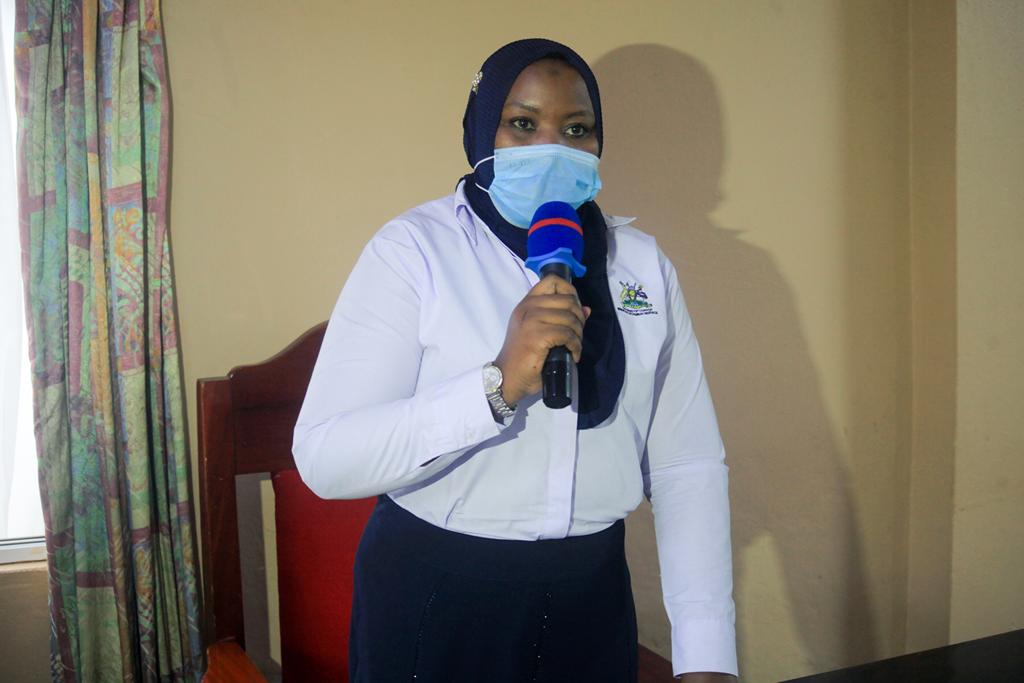
Poline Nabwire, head of Programs at Family Medical Point, made the call during a media café with journalists held to commemorate International Safe Abortion Day, where participants discussed the media’s role in reducing unsafe abortions and improving access to reproductive health information.
Nabwire said Uganda needs to examine the legal barriers surrounding abortion and align the country’s laws with its obligations under regional and international reproductive health frameworks.
“When prevention fails, what happens when people need safe abortion and post-abortion care? We need the government to amend the law to align with Article 14(2)(c) of the Maputo Protocol, which requires state parties to protect women’s reproductive rights by authorising medical abortion in specific circumstances,” Nabwire said.
Article 22(2) of Uganda’s Constitution states that no person has the right to terminate the life of an unborn child except as may be authorised by law.
Uganda’s Penal Code criminalises several acts intended to unlawfully procure a miscarriage. Under sections 130 to 132, a person who unlawfully attempts to procure a miscarriage can face up to 14 years in prison, while a woman who unlawfully attempts to procure her own miscarriage can face up to seven years. A person who unlawfully supplies drugs or other items knowing they will be used to procure a miscarriage can face up to three years in prison.
Justice Centres Uganda says abortion is generally prohibited under Uganda’s legal framework, with a limited defence where a surgical operation is carried out with reasonable care and skill for the purpose of saving the life of the mother.
Kamana Ivan Walunyolo, a journalist at NTV Uganda, said the media should continue giving visibility to cases of unsafe abortion and engage policymakers and other stakeholders on the issue.
“I think as journalists we need to continue raising the voices. We need to continue bringing cases that justify that unsafe abortions are being done behind the curtains. But this time to make them look like it’s a right for a woman to choose whether to have a child or not,” Walunyolo said.
He said reporting on reproductive health should also consider the social and economic circumstances faced by women who may be unable to care for children.
“I think to me that’s one of the ways we’ll have to reduce the street children. Because a woman will give birth to a child, but she’s unable, she’s vulnerable herself. She doesn’t have where to stay. But you’re adding a responsibility to her that you need to bear a child,” he said.
Walunyolo called for journalists to work with relevant stakeholders to ensure the issue receives greater attention.
For some journalists, however, abortion was previously considered too sensitive or controversial to report on, particularly within educational institutions.
Nyashonji Simon Peter, a journalist at Nkumba University News, said he initially viewed abortion as an issue that was heavily condemned within the university environment.
“It’s something, of course, working in a university environment, you look at it as an abomination. Most people have condemned it over the years. So we would avoid writing anything to do with abortion,” he said.
He said his engagement with Family Medical Point changed his approach to reporting reproductive health issues, particularly after understanding the importance of providing students with accurate information.
“It has influenced in quite a number of ways, but particularly on digging deeper, understanding what really happens in our communities. So we’ve been able to explore on the ground what really students do when it comes to sexual reproductive health, and in particular abortion-related issues. And now we cover areas that actually relate to what’s happening within the university environment,” Nyashonji said.
Mutabazi Hannington, a journalist at New Vision, said he also previously avoided abortion-related stories because he considered the subject complex and difficult to approach.
“We concentrated, or personally concentrated, on every other thing apart from that. First I thought it’s complex, and it’s something I really never wanted to tackle. I didn’t know how to start, where to start, and how to go about it,” Mutabazi said.
He said his approach changed in 2025 after meeting Pauline, who introduced him to Family Medical Point and helped him gain experience reporting on reproductive health.

“Last year, 2025, I met Pauline, who introduced me to Family Medical Point. And we started working together, especially on stories for media houses. I wrote my first story on safe abortions, and protection, and sexual health, and reproduction,” he said.
Mutabazi said the experience helped him understand how to approach sensitive reproductive health subjects and the importance of advocacy.
“I started getting that experience, learning about how to approach the subject, how to write about it, and why it needs more advocacy,” he said.
Nabwire said the legal uncertainty surrounding abortion should not prevent women who experience complications from receiving timely post-abortion care.
She said reform was necessary to address the realities faced by women with unintended or high-risk pregnancies while strengthening access to reproductive health services.
Unsafe abortion remains a major reproductive health concern in Uganda and across the region.
The organisers of the media café cited estimates showing that unsafe abortion accounts for about 7.9 per cent of maternal deaths globally and 9.6 per cent in East Africa, while in Uganda approximately eight per cent of maternal deaths are attributed to unsafe abortion.
They further cited 2023 research indicating that nearly 10 per cent of maternal deaths in Uganda are linked to unsafe abortion.
Abortion among adolescents was also highlighted as a major public health concern, with the organisers saying about one in four Ugandan women above the age of 19 experiences pregnancy between the ages of 15 and 19.
The meeting also highlighted gaps in access to contraception.
Between 31 and 39 per cent of women of reproductive age use some form of contraception, with injectables and oral pills among the most commonly used methods, while an estimated 20 to 22 per cent have an unmet need for family planning.
Nabwire said improving access to contraception and accurate reproductive health information should remain central to efforts to prevent unintended pregnancies.
However, she said prevention alone could not address every case.
“When prevention fails, we must ask what happens to those who need safe abortion and post-abortion care,” she said.
The media café also challenged journalists to provide accurate and responsible information on reproductive health, particularly on contraception, abortion and post-abortion care.
Participants said misinformation, stigma and limited knowledge about available services can make it harder for women and girls to seek timely medical assistance.
Nabwire said journalists have an important role in ensuring that reproductive health discussions are based on evidence and that the public understands both the health risks of unsafe abortion and the available avenues for care.
She said aligning Uganda’s legal framework with regional commitments, while strengthening family planning and reproductive health services, would help address the health consequences associated with unintended and high-risk pregnancies.