
Belief is a necessity
Every evening during the 40-Day War (March 2026), after breaking their Ramadan fast, Iranians came out into streets to mandate their government – No Surrender.
There were more than 850 marches while the army launched 5472 counterattacks that rendered 13 USA bases in the Arab countries uninhabitable (Anadolu Agency: Turkiye). The New York Times conceded that the USA military has been pushed out of West Asia.
Mental roots in Persian civilization
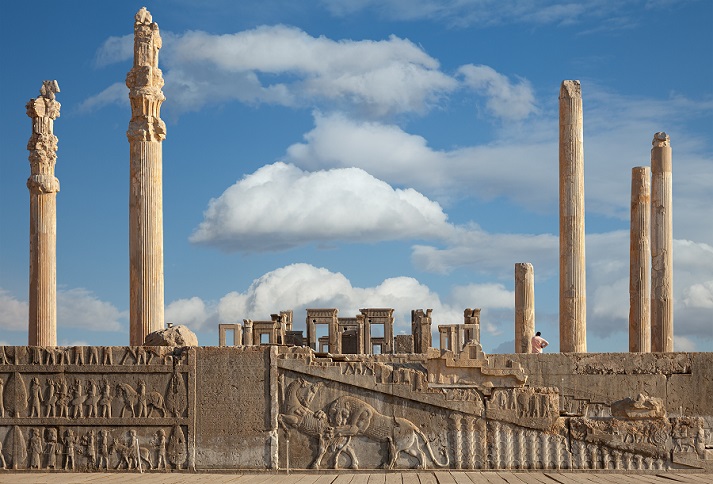
Iranians have their mental roots in Persian civilization, of which the Imam Reza Waqf is an evidence. Persian gives Islam its Persian characteristics. The Iranian leaders have the skill to read the fluctuating moods of their people and bring them to a convergence point to achieve a purpose that is larger than the life of individuals.
The Imam Reza Waqf – a philanthropic institution
The Waqf provides tangible evidence of the mental roots of Iran’s intellectual tradition.
The seminal argumentations of Imam Reza (R.A.) (766-818 CE) are constituted into a library of 69000 manuscripts and an archive of 6-million documents – inscribed on UNESCO’s Memory of World Register (2009). They form the primary basis of the Waqf.
The five themes of the 1000-year-old philanthropic institution cover social; finance and administration; economic and agriculture; religion; and military. (Imam Reza was martyred at age 52 years, 200 years earlier.)
In world literary terms, the argumentations are similar to the orations of Demosthenes (384-322 BCE) of Greece.
The unintended material outcomes of the argumentations
The argumentations has produced more than 145 industries such as pharmaceuticals, medical, agriculture, food, livestock, construction, motor vehicles, mining, energy, textile, carpets, transport, finance, and more. It is a multi-billion-dollar network that has universities, schools, sports institutions, and think tanks. It is reputed to produce world-class statespersons, scholars, scientists, sportspersons, and government leaders.
It is an enduring model of the decentralised public ownership of the means of production, distribution, exchange, and consumption.
Mashad City: ideas as force of attraction
The Imam Reza shrine in Mashad City attracts 20-million international and national visitors annually. The power of ideas, created more than 1200 years ago, is the force of attraction.
A unique feature of its sports institutions (traditional and modern) is the training of its gifted sportspersons in the art of altruism for high performance as an aspect of mental coaching. Performance is an act of patriotism.
The Waqf exemplifies belief as a civilizational value.
It explains how belief has enabled Iranians to sustain themselves for 47 years, in spite of the abnormal pressures of 8000 sanctions and militaristic pressures.
Iranian leaders’ skill at reading the political mood of Iranians
The decisive ideas of government appeal to the belief system of Iranians – emotionally and cognitively. The appeal is to patriotism. This was demonstrated when in response to President Pezeshkian’s appeal, 14-million Iranians volunteered their services during the 40-Day War. They were effuse with the spirit of the martyrdom of Imam Hussein (R.A.) who rose up at the historic Battle of Karbala against feudal oppression. The effusion permeates their hearts and ‘sacred consciousness’.
The effusion gives them a steadfast and patient Islamic character to cope with the ongoing struggles of life-and-death as a single continuity. The heart-mind interpenetration is the primary battlespace of struggle that produces positive neurochemicals and neuro-enzymes. They keep morale and fighting spirit high. They influence energetic thought and behaviour. Belief is now known to have a biological basis with molecular pathways. (The Biology of Belief: Bruce H Lipton: Elite Books: California: 2005)
This is the ‘secret’ to how military leaders keep command of their soldiers.
Intangibly, belief and altruism are interpenetrated, influence individual behaviour and social conduct, and determine inner harmony – in spite of difficult external conditions. This is how the army keeps marching, fighting, and keeping alive for another battle.
Mental aspects of war
Mental aspects of warfare make up 90% and the physical aspects make up 10% of the constitutive elements of warfare. This demands greater mental than physical conditioning in war, as in sports. The mind extends the power of the body. In the war of minds, the enemy is psyched out and their spirit to fight is weakened.
In ‘soft’ media war all possible means of influencing public opinion are used in mainstream and social media. Augmented AI is very useful. War becomes a subversive activity against the enemy.
Natural human intelligence is optimally developed before the deployment of robots for operational and administrative functions.
It is with this broad heart-mind culture, embedded in a 7000-year-old civilization, that Iranians who go to war are soldiers of faith, who carry their burial shrouds with them. Simultaneously, they fight to maintain Persian civilization.
Militarism as imperialist ideology
After successive military defeats in Vietnam, Iraq, and Afghanistan and with depletion of fighting forces and the increased deployment of technological weapons the USA has developed militarism as its ideological weapon. Unethically, it relies on AI to make ‘decisions’ to bomb people and civilian buildings.
This logic operates through a rhetorical cycle in which military ‘achievements’ are declared total and historic, only to be reframed weeks later as insufficient or obsolete, thereby justifying renewed attacks.
The contrast between the conclusion of the 12-day June 2025 war against the Islamic Republic and a fresh escalation in March 2026 illustrates this paradox clearly.
President Trump as military-diplomatic enigma
Trump, in his enigmatic style, claimed that Iran’s nuclear capabilities had been ‘obliterated’, only to claim later that Iran was nearing a nuclear weapon breakthrough.

Mr Netanyahu has similarly alternated between declaring that Iran had been set back significantly and warning of rapidly advancing nuclear and missile capabilities.
Militarism has become the ideology of the USA’s big bourgeoisie: billionaires, defence contractors, media giants, and mega-techs.
Militarism and foreign policy
Militarism guides foreign policy – ‘Peace through strength’. It also serves as a national security strategy. It encourages continuous investment in the war industry. In 2026 the military budget of USA was $1-trillion; in 2027 it will be $1.5-trillion (if passed). ‘Peace’ is the PR face of war; ‘strength’ is military force. They constitute militarised realpolitik.
The slogan was first coined and used by Mr Neville Chamberlain as a PR campaign in 1936-1939 in Britain for its military industry. The USA Republican Party adopted it in 1980. Trump-2.0 revived it because it is good for business transactions. He upgraded military ships, aircrafts, Arctic icebreakers, and Israel’s Iron Dome, David’s Sling, and the Arrow interceptor systems. It sounds Jesus-like righteousness and redemption and acts as a cover to justify mass killings by othering their enemy, especially, the Persians and Arabs.
Militarism replicated as lawless business
The new globally dispersed militaristic conditions create space for even non-state actors like terrorist organizations, drug cartels, illicit cryptocurrency dealers, arms dealers, and money launderers to embark on criminal enterprises and to use military means to accumulate private syndicate capital – outside public scrutiny. They have ‘devolved’ upon themselves the power to control access to natural resources, trade corridors, logistics, and populations as well as to levy taxes, control legal economies, lend money, and collect debts.
They use AI technology to control scams, fraud schemes, and ransomware operations. In the USA alone this dark economy is reported to be valued at $1-trillion. They run their own private militias. They are ‘good customers’ of USA defence contractors.
They use the USA’s now dead shock-and-awe tactics with conventional explosives, inexpensive commercial drones, kamikaze drones, and expensive military-grade drones in killings and assassinations by remote control. Brazilian gangsterism is in the forefront of this territorial model of lucrative criminal enterprise.
(The Brookings Institution: authors: Vanda Felbab-Brown and Diana Paz Garcia: April 13, 2026)
Islamic Republic’s 47-year experience of USA/Israel recalcitrance
Iran, in enduring 47 years of foreign military aggression without surrender, quietly developed its indigenous military weapons and its indigenous Mosaic Defensive Strategy to emerge as the victor over USA/Israel. It is now contending with the rearguard actions and scorched-city tactics of the vanquished who seek to stretch out diplomatic negotiations to delay the legal confirmation of the victories already won by Iran in the actual battlefield.
USA imperialism – after 70 years of war since the Vietnam War and Israel after 900 military engagements in Iraq, Afghanistan, Palestine, Lebanon, Syria, and Iran – are suffering from war fatigue. This is symptomized by civil society protests in the cities of USA and Israel and the refusal of youth to fight the Netanyahu/Trump war in Iran, Lebanon, Palestine, and Syria.
Lessons from Vietnam War (1955-1975)
The intent of the 1973 Paris Peace Accords between USA, North Vietnam, and South Vietnam was to end the war, get the USA to withdraw, and to establish peace. That was the beginning of the new phase of the incomplete war. The USA as a superpower needed a face-saver: how to abandon the war without losing it? The negotiations boiled down to gain ‘a decent interval’ (Henry Kissinger) between the withdrawal of the USA troops and the collapse of South Vietnam and its absorption into a single undivided Vietnam.
The release of POWs as tasty bait to USA
For the withdrawal, there was an exchange of 600 USA POWs in North Vietnam and 30000 general POWS in South Vietnam. The principle of USA defeat was a given and the North Vietnamese showed respect for the USA and gave them the appearance of defeat without humiliation, which the USA was contemplating since 1968. USA did not achieve any war objectives. Its citizens agitated for the return of POWs. The South Vietnamese President Nguyen Van Thieu, at first, was hesitant to sign the Accords. He, too, needed a face-saver. President Richard Nixon – who called the defeat ‘Peace with Honor’ – sent a private letter to him with the assurance that USA would use full force should North Vietnam violate the Accords. Thieu felt reassured because he trusted Nixon as an ‘honest man’.
North Vietnam’s risky final testing of USA resolve
USA had dropped three times as many tons of bomb during the Vietnam War than as the Allied Powers had dropped during WWII. The North Vietnamese tested the resolve of USA by bombing the provincial capital of South Vietnam, Buon Ma Thuo.t, and captured it. USA accepted it passively. No B-52 bombers. They then knew that USA would not defend Saigon by ground force or air power. Saigon was ripe for taking. A battle that was supposed to last for another two years was over in two months.
Nixon at one stage had pursued bombing North Vietnam as well as negotiations until the Watergate Scandal swallowed him up.
USA’s official announcement of its defeat
President Gerald Ford, the successor to Nixon, announced on 23 April 1975 that the war was over. Blood stopped flowing after a century of imperialist rule – without paying reparations. The ceasefire of 1973 was consolidated into a final Peace Agreement. It was followed within 30 days by an International Conference to guarantee the Peace Agreement.
(Reference: USA, North Vietnam, South Vietnam: Agreement on ending the war and restoring peace in Vietnam: Paris: No. 13295: 27 January 1973)
Continuation of USA imperial habit on Iran
USA is, once again, trying to replicate its Vietnam tactics to delay the formal victory of Iran: how to end the war without losing it? He has to show the USA electorate in the mid-term elections in November 2026 that his Republican Party triumphed over Iran.
This replication exposes the military-diplomatic enigma of Trump at negotiations.
Iranian diplomatic professionalism
Iran’s scholar-soldiers, professional negotiators, support team, and Iranian people have the necessary perseverance and patience to formalize USA surrender.
It will reconfirm belief as the civilizational value of the 7000-year-old Persian civilization and the non-belief of the 250-year-old USA barbarism.
By: Haroon Aziz, South Africa
Haroon Aziz as a member of the armed wing of the ANC was also a researcher on military affairs and science under its Chief of Staff, Comrade Chris Hani who was martyred in 1993.