
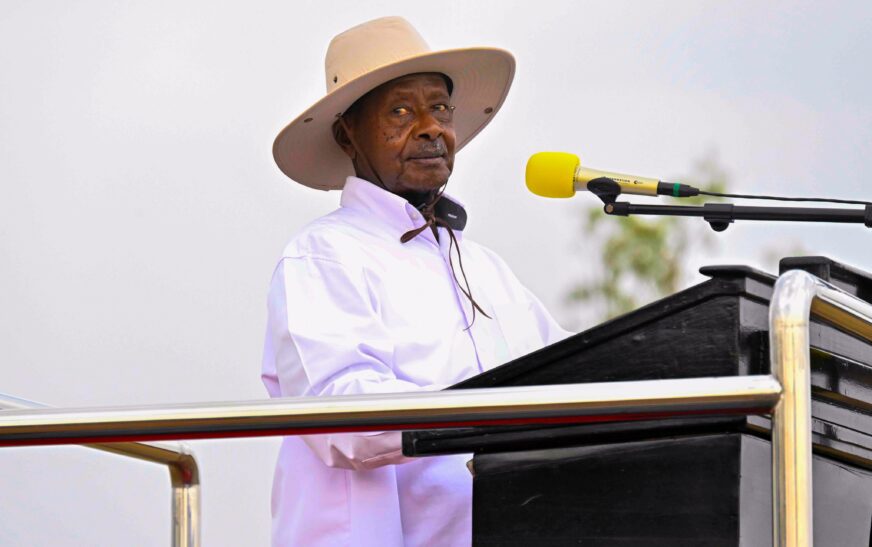
President Yoweri Museveni has ordered an audit into more than Shs 231 billion disbursed to veterans of Uganda’s 1981–1986 liberation struggle, in a move that brings renewed focus to long-standing concerns over the management of funds intended to support former fighters.
The directive, issued during the 37th Heroes’ Day celebrations at State Lodge Nakasero, signals a rare admission that programmes designed to uplift veterans may not have delivered as intended.
Museveni instructed leaders of veterans’ associations to account for the funds, which were allocated over the years to support wealth creation initiatives and improve livelihoods among former combatants and civilian contributors to the National Resistance Army (NRA) war effort.
“We are going to have a meeting to find out what happened to that money,” Museveni said, hinting at possible gaps in oversight and implementation.
The funds originate from a 2009 government commitment to provide Shs 5 million—commonly referred to as akasiimo—to veteran leaders and their spouses, and Shs 1.5 million to other cadres. However, the programme has since been dogged by complaints of delays, inconsistencies and limited reach among beneficiaries.
The planned audit is likely to revive scrutiny of how veterans’ associations and related structures have managed public resources, particularly as many intended beneficiaries continue to report unmet expectations.
Museveni urged veterans to strengthen governance within their savings and credit cooperative organisations (SACCOs), suggesting that weak institutional structures may have undermined effective utilisation of funds.
Beyond the audit, the President outlined fresh interventions aimed at supporting veterans, including the establishment of seedling breeding centres at presidential farms in Kawumu, Gomba and Ngoma to supply planting materials for income generation.
“I will now use Kawumu, Gomba and Ngoma to supply seedlings to veterans and their children,” he said.

He also directed his Principal Private Secretary to expedite access to treatment for veterans at Entebbe Grade B Hospital, an effort aimed at reducing their dependence on expensive private healthcare.
At the same event, Museveni revisited the historical justification of the 1981–1986 war, describing it as a response to political instability, economic collapse and insecurity, and crediting veterans for laying the foundation for Uganda’s current stability.
Vice President Jessica Alupo and other government officials paid tribute to veterans, emphasising their role in securing peace and development.
Yet, even as tributes were made, the announcement of an audit underscored a more pressing reality: that decades after the liberation struggle, questions about how veterans are supported—and how funds meant for them are managed—remain unresolved.
The outcome of the audit could prove critical in determining whether the government’s veteran support programmes are delivering tangible benefits or merely recycling longstanding promises.
This year’s Heroes’ Day celebrations were held under tight Ebola-related restrictions, with fewer than 25 invited guests attending the ceremony at State Lodge Nakasero.