
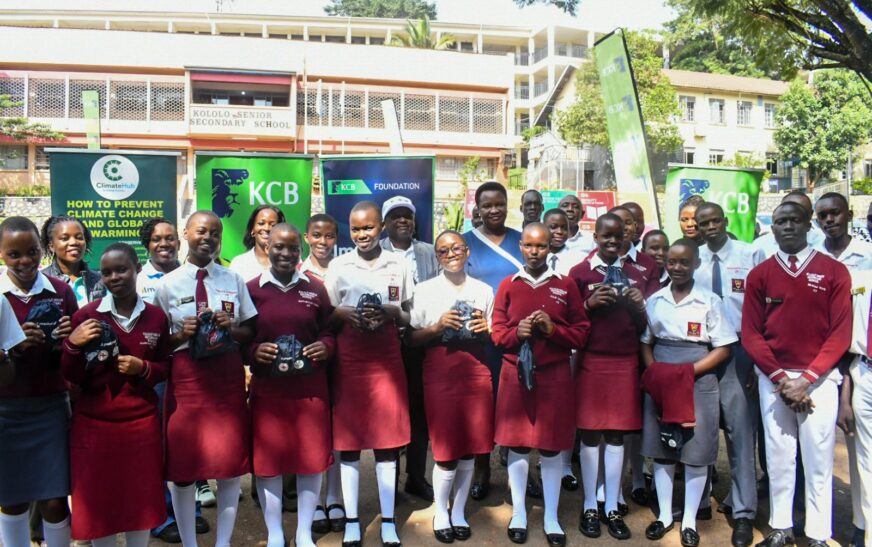
KCB Bank Uganda has stepped up its youth empowerment agenda with a multi-pronged initiative at Kololo Secondary School, combining financial literacy training, environmental action and school safety improvements to better prepare students for life beyond the classroom.
The programme, implemented by KCB staff in partnership with school administrators, introduced learners to practical money management skills, including saving, budgeting and responsible financial decision-making. It also facilitated the opening of bank accounts for students, in a move aimed at expanding financial inclusion among young people.
Speaking during the engagement, KCB Bank Uganda Managing Director Edgar Byamah said the initiative reflects the bank’s people-centred approach to development, anchored in long-term community impact.
“At KCB Bank Uganda, we believe that banking is ultimately about people. Education remains one of the most powerful investments any society can make,” Byamah said.
He added that the KCB Foundation is currently supporting 56 financially disadvantaged students transitioning from O-Level to A-Level across eight schools, including 10 beneficiaries from Kololo Secondary School.
The programme also tackled menstrual health challenges that often disrupt girls’ education. The bank donated reusable sanitary pads to female students, a move aimed at improving school attendance, retention and participation.
KCB Bank Uganda Head of Human Resources Patience Arinaitwe urged students to remain ambitious despite challenges, encouraging them to “allow your ambitions to exceed your anxieties,” while emphasising the importance of confidence, resilience and leadership.
In line with its sustainability agenda, the initiative included a tree-planting exercise, with students and bank staff planting fruit trees within the school compound to promote environmental awareness and long-term ecological benefits.

The bank also contributed to improving school safety by supporting the painting of a zebra crossing and the construction of a pedestrian walkway to reduce road-related risks for learners.
School headmistress Betty Mwesigwa welcomed the intervention, describing it as timely and holistic.
“This programme addresses key aspects of student wellbeing, including financial literacy, environmental stewardship, health and safety,” she said.
The initiative forms part of KCB Bank Uganda’s broader Environmental, Social and Governance (ESG) strategy, which aligns corporate investment with education, livelihoods and community resilience.
As Uganda increasingly prioritises youth-driven development, such private sector interventions are playing a critical role in bridging gaps in education support, skills development and social protection within schools.