
African governments, financial institutions and development partners have been urged to move beyond climate finance pledges and ensure that money reaches bankable projects, businesses and communities confronting the effects of climate change.
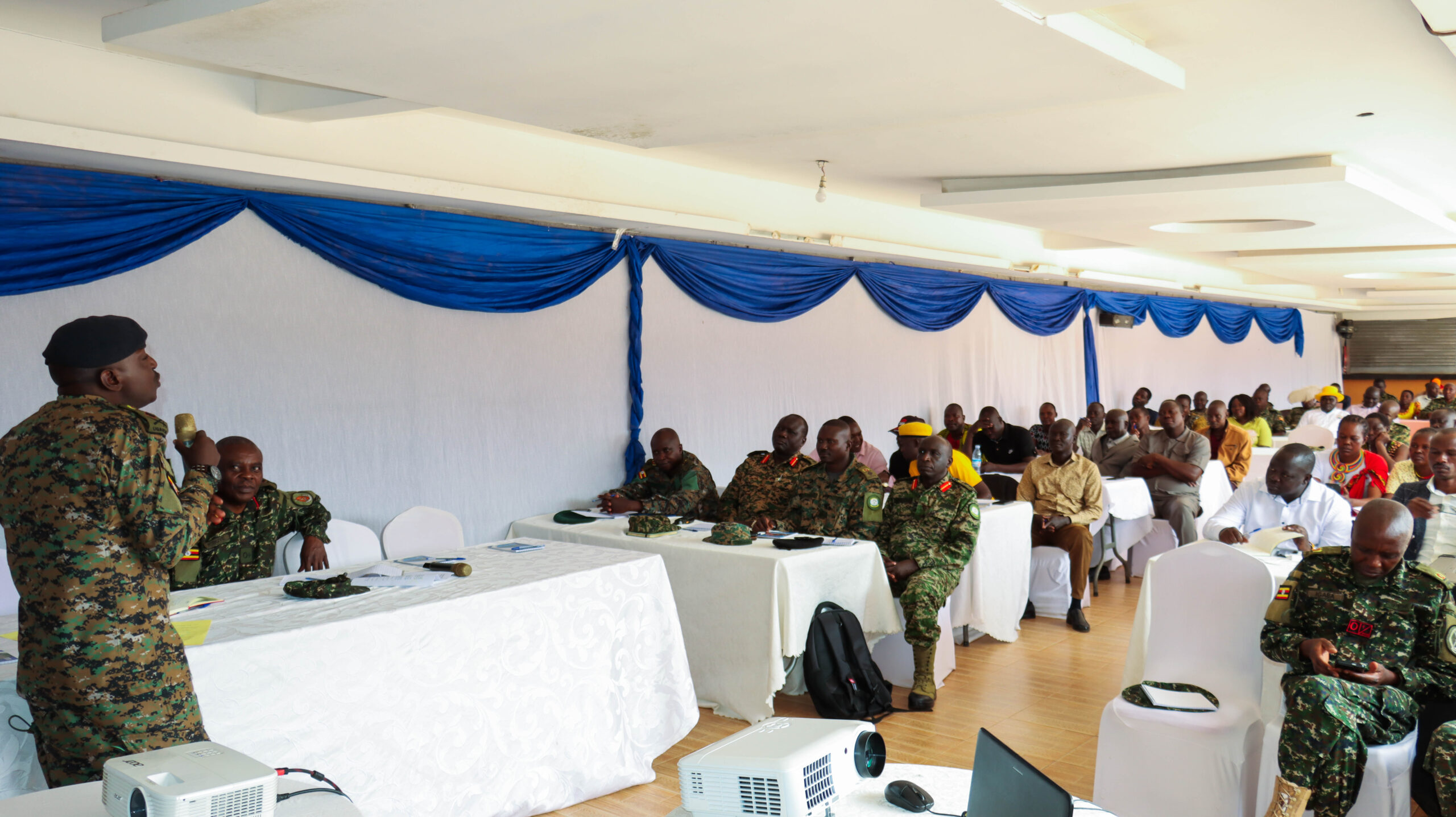
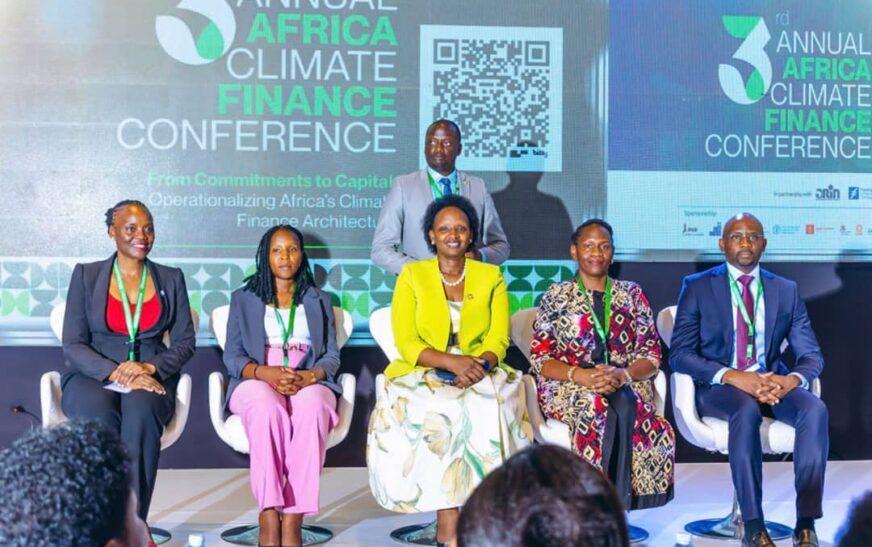
The call was made at the close of the Third Annual Africa Climate Finance Conference (#3ACFC26) in Kampala, where policymakers, bankers, researchers, private-sector players, development partners, innovators and civil society representatives spent two days examining how to make climate finance work for African economies.
Held under the theme “From Commitments to Capital: Operationalizing Africa’s Climate Finance Architecture,” the conference focused on the persistent gap between money committed to climate action and the ability of African countries and businesses to access and deploy it.
Dr Maria Nantongo, executive director of the Climate Finance and Sustainability Centre (CFSC) at Makerere University Business School (MUBS), said the conference was created to bring together stakeholders whose work often happens in isolation.
«“At the university, we do research and capacity building. But we also realised that we have the space, as a neutral voice, to convene people, and that is why we started these conferences,” Nantongo said.»
She said CFSC’s role goes beyond producing research to connecting evidence, policy, finance and implementation.
Nantongo said climate finance must ultimately respond to the needs of communities most affected by climate change, particularly women, young people, small businesses and vulnerable households whose livelihoods depend on agriculture, water, food and energy.
The conference consequently called for stronger pipelines of investment-ready projects, improved project preparation, appropriate financing instruments and greater capacity among local institutions and enterprises to access climate capital.
Climate finance must deliver
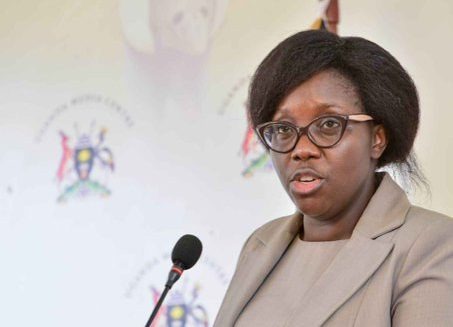
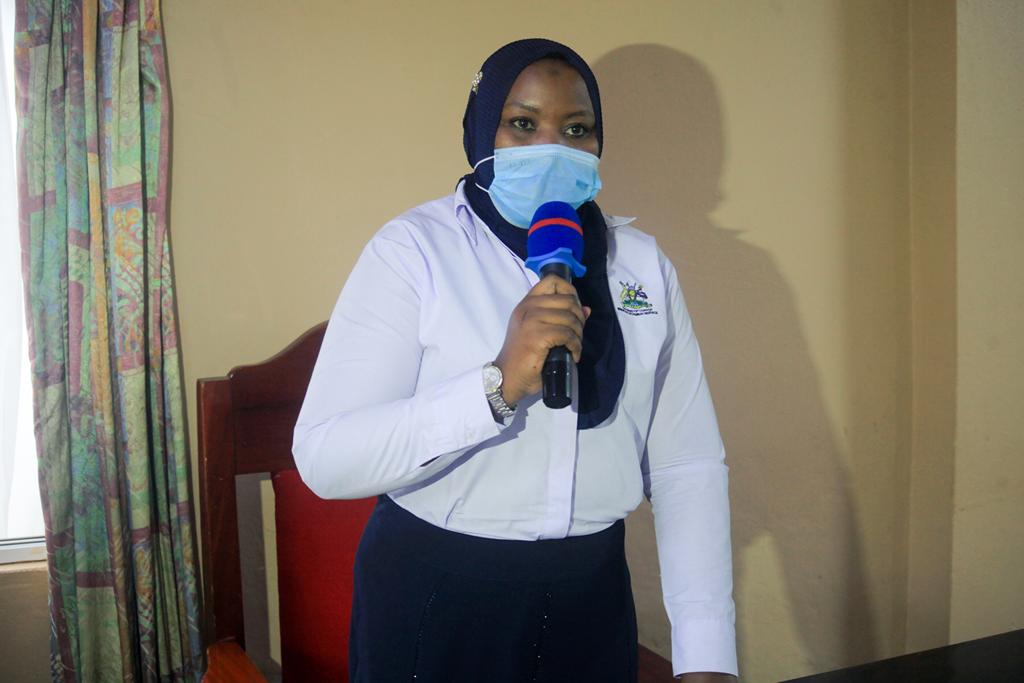
State Minister for Finance, Planning and Economic Development in charge of Microfinance, Shartsi Kutesa Musherure, challenged stakeholders to judge Africa’s climate finance architecture by the investment and economic activity it generates rather than the number of strategies and frameworks produced.
«“We should not confuse architecture with outcomes. A strategy is useful if it mobilises capital. A taxonomy is useful only if it influences financing decisions. A pipeline is useful only if projects reach financial close. A tracking system is useful only if it improves decisions and accountability. And an institution is useful only if it delivers,” Musherure said.»
She said climate finance should be treated as an economic and development priority, rather than only an environmental issue, because climate shocks increasingly affect agriculture, infrastructure, energy, water, household incomes and government expenditure.
Uganda has been developing its climate finance framework through initiatives including the Climate Finance Unit, Climate Finance Strategy 2025–2030 and the National Green Taxonomy, alongside efforts involving blended finance, guarantees, green bonds, insurance and carbon markets.
MUBS wants climate debate taken to communities
Prof Moses Muhwezi, principal of MUBS, said climate finance discussions should not remain confined to conference rooms, government offices and financial institutions.
He challenged the media, researchers and practitioners to take the conversation to communities experiencing the effects of climate change but with limited access to decision-makers and financing opportunities.
Muhwezi said government alone cannot finance the transition to a climate-resilient economy.
He called for greater involvement of financial institutions, investors, businesses, communities and development partners in financing climate solutions.
For MUBS, he said, the responsibility also extends to research and education.
«“Our research must be tied to what the community requires,” Muhwezi said.»
He also called for stronger collaboration among African countries, arguing that climate challenges transcend national borders.
Africa urged to change its climate finance story
Dr Akinyi J. Eurallyah, programme manager at the Africa Science Policy Fellowship at the Africa Research and Impact Network (ARIN), said Africa should not be presented only as a continent vulnerable to climate change.
Instead, she said, the continent should also be viewed as a destination for investment in climate-resilient development.
«“Africa’s climate story should not be reduced to vulnerability. The continent also possesses extraordinary opportunities for a different development trajectory,” Eurallyah said.»
She said Africa continues to receive a small share of global climate finance despite the scale of its financing needs.
«“We need to change the way we talk about Africa’s climate finance gaps. The problem isn’t just one of volume but also a problem of structure, access and allocation,” she said.»

The observation underscored a recurring theme at the conference: increasing the amount of available money will not, on its own, solve Africa’s climate finance problem unless countries also improve project preparation, risk allocation, institutional capacity and access to finance.
Banks urged to prepare for climate investment
Goretti Masadde, chief executive officer of the Uganda Institute of Banking and Financial Services (UIBFS), said climate commitments require financial systems capable of converting ambition into investment.
«“For nearly a decade, global climate discourse has been dominated by commitments, declarations and frameworks. However, intent without an operationalised infrastructure is merely a liability,” Masadde said.»
She said financial institutions and finance professionals have a critical role in developing products, risk frameworks and investment structures capable of mobilising and deploying climate capital.
The conference examined how banks, development finance institutions, pension funds, insurers, SACCOs and capital-market players can act as intermediaries between climate finance commitments and the real economy.
Matchmaking links projects to financiers
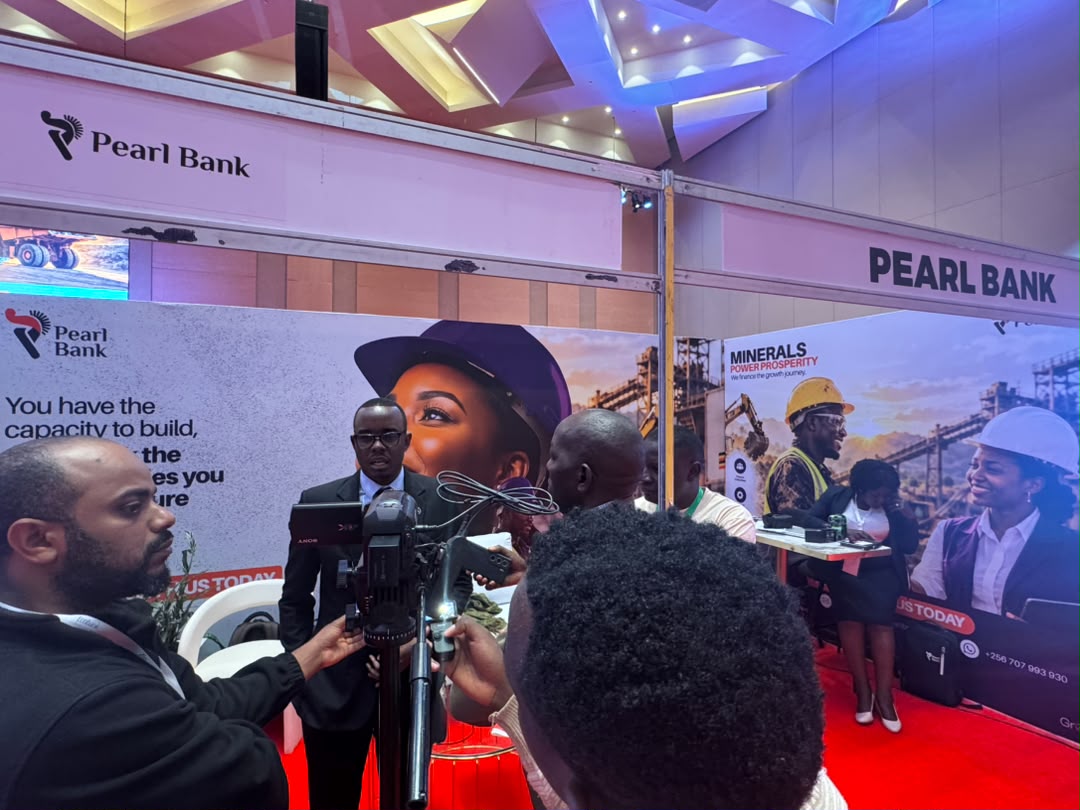
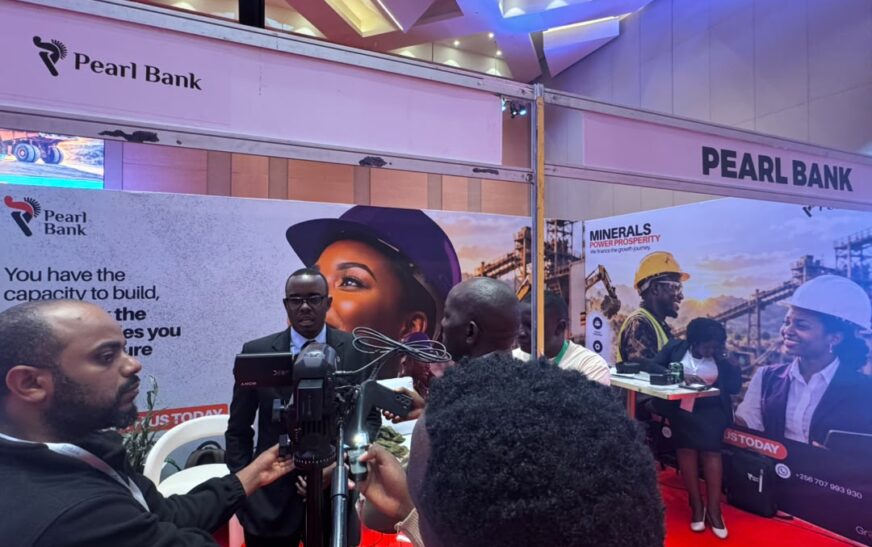
The conference featured a Green Finance Matchmaking and Partnership Hub, which brought climate-focused enterprises and project sponsors into direct contact with investors, banks, development finance institutions, insurers, pension funds and development partners.
The initiative was intended to move the conference beyond dialogue by creating opportunities for investment discussions, referrals, follow-up meetings and partnerships.
The organisers said the objective was to help projects move from ideas and early-stage enterprises towards investment readiness and eventually access to capital.
Local projects still struggle to access finance
Delegates also highlighted the difficulty of moving climate finance beyond national institutions and large projects to local governments, small businesses, farmers, women, youth and communities.
They called for simpler and proportionate financing and reporting requirements, stronger local institutional capacity, better project-preparation support and financing products tailored to smaller enterprises and community initiatives.
The conference also highlighted the need to develop a stronger pipeline of investment-ready projects instead of focusing only on raising more money.
Youth enterprises seek a path to scale
Youth-led climate solutions were another focus of the conference, with delegates examining how innovations and pilot projects can be transformed into commercially viable enterprises.
Stakeholders identified incubation, mentorship, market access, technical support, appropriate financing and partnerships as key requirements for scaling youth-led climate businesses.
Green enterprises and innovators also exhibited their solutions, giving them an opportunity to engage potential financiers and partners.
What next after the conference?
As the conference closed, organisers said its success would ultimately depend on what happens after the discussions.
The CFSC is expected to lead the development of a conference communiqué capturing key recommendations and areas for further action.
The conference brought together CFSC, MUBS, ARIN, Frankfurt School of Finance and Management and UIBFS, with participants calling for stronger collaboration among government, financial institutions, academia, businesses, development partners and communities.
Among the priorities identified were stronger climate finance tracking and accountability, improved project preparation, increased mobilisation of private and institutional capital, blended-finance and risk-sharing instruments, stronger African financial institutions as climate finance intermediaries and better access to finance at community level.
The conference will also feed into the Africa Climate Finance Outlook 2026, an Africa-led evidence-building initiative through which ARIN and its partners are documenting climate finance trends, barriers and emerging approaches across the continent.
The Kampala conference ended with a message that climate finance must now move from pledges and policy documents to projects, investment and measurable impact.