
Youth in Busoga are increasingly turning to agriculture and agribusiness as they seek alternative sources of income amid limited employment opportunities in the region.
Recent regional data estimates youth unemployment in Busoga at about 23 per cent, highlighting the challenge facing young people who struggle to find formal employment. For some young people, however, interventions targeting agriculture are creating opportunities to earn from farming, livestock and value addition.
One of the initiatives seeking to address the challenge is the Stimulating Agribusiness for Youth Employment (SAYE) project, a five-year initiative running from 2023 to 2029 and led by Heifer International in partnership with the Mastercard Foundation and local partners.
The project targets 250,000 young people aged 16 to 35 in Uganda’s Busoga sub-region, with a focus on creating dignified and sustainable employment opportunities through agriculture.
It operates in 11 districts of Busoga, including Jinja, Mayuge, Iganga, Kamuli, Kaliro, Namutumba, Bugweri, Luuka, Buyende, Bugiri and Namayingo.
The project focuses on high-potential agricultural value chains including poultry, horticulture, oilseeds, dairy and beef, while supporting young people with practical skills, access to inputs, finance, markets and business development services.
For 27-year-old Wabwire Richard of Penza Village in Namutumba District, the intervention changed his perception of groundnut farming.
Wabwire, a member of Namutumba Cooperative Society working under the Basoga Kawuvula Group, says he previously viewed groundnuts as a crop that could not provide a meaningful income after witnessing the struggles his parents faced while growing them.
“Before HEIFER came, I looked at groundnuts as something I could not earn money from,” he says.
After dropping out of school at Senior Six, Wabwire travelled to Kampala, where he found work. However, when his contract ended, he returned to the village and started selling watermelons. He says the income from selling watermelons was not enough to sustain him, prompting him to reconsider agriculture as a source of livelihood.
He later joined the SAYE-supported programme, where he received training in improved groundnut production and was encouraged to view farming as a business rather than subsistence activity. His first major harvest changed his perception.
Wabwire says that in his first season of fully participating in groundnut farming, he harvested about 600 kilogrammes and earned about Shs2.5 million.
He later increased production to more than 2,000 kilogrammes, earning more than Shs13 million from his harvest.
Notably, the SAYE project has helped link groundnut farmers like Wabwire to markets. He buys groundnuts from his cooperative society, providing a market for other farmers while also expanding his own agricultural business.
The income has enabled him to improve his living conditions and invest further in agriculture. He has constructed a better house and put up structures for his farming activities, including storage facilities for fertiliser.
Wabwire says the training has also helped him make better use of his land while creating employment opportunities for other people working on his farm.
“I had seen the hardships my parents went through while growing groundnuts, so I thought it was a waste of time. But through HEIFER’s training, I learnt how to earn from groundnuts,” he says.
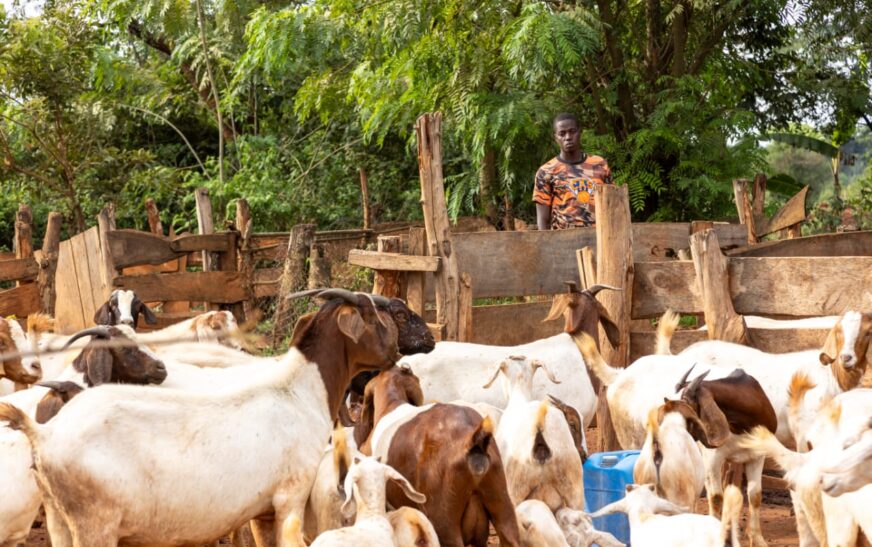
Another beneficiary, Muganda Charles Ngobi, has turned goat farming into an expanding agricultural enterprise.
Ngobi joined the SAYE programme with 30 goats and says his herd has since increased to 98 goats. Of these, 53 belong to him, while the remainder are owned by his group.
He says farmers were first taken to established goat farms where they learnt improved methods of rearing goats.
Before receiving the animals, the farmers were provided with pasture grass, which they planted to ensure a reliable source of feed.
The goats were sourced from a farm in Kayunga District, where farmers also received practical training on goat rearing.
According to Ngobi, the programme also trained farmers in cooperative management, saving, pasture production and crossbreeding, as well as the treatment and management of animals.

“We were first taken around to established goat farms where we learnt how to rear goats,” he says.
The goats have provided farmers with an additional source of household income and access to a ready market. Ngobi says he markets the animals by phone, allowing him to connect with potential buyers.
The group, which has 30 members, initially received 15 goats as a group and has since expanded its herd significantly.
The farmers have also benefited from equipment, including a chaff cutter, while the programme linked them to veterinary services to support treatment of sick animals.
Ngobi says proceeds from goat farming and other agricultural activities have enabled him to expand his agricultural land from 10 acres to 35 acres.
Over the past two years, he estimates that he has earned about Shs250 million, which he has invested in expanding his agricultural enterprise.
He now hopes to establish a model goat farm that can serve as an example to other farmers while continuing to expand his business.
While farmers such as Wabwire and Ngobi are earning from primary production, other opportunities are emerging through value addition.
Agrinet Uganda Ltd is processing groundnuts and soybeans into products including cooking oil, soya cake, soy milk and groundnut paste.
The company’s managing director, Paul Nyende, says Agrinet has a processing capacity of six tonnes of raw material a day, creating a potential market for farmers producing groundnuts and soybeans.
The company works with agricultural hubs in Busoga, which aggregate produce from farmers before supplying it to the processing facility.
Nyende says the company has strengthened its supply chain by working with about 12 agri-hubs in the region.
The processing of groundnuts and soybeans allows farmers to participate in a wider value chain in which agricultural produce is transformed into products for consumers and other industries.
Soya cake, for example, is sold to animal producers, while cooking oil and groundnut paste are supplied to consumers and other buyers.
Nyende says Agrinet has a ready market for its products, with demand for cooking oil, seed cake and groundnut paste exceeding the company’s current ability to supply.
The company also works with farmers to ensure that the raw materials meet the specifications required for processing. It promotes groundnut and soybean varieties based on their suitability for processing, including varieties with high oil and protein content.
Through cooperatives and agri-hubs, farmers are supported with seed, fertiliser and pesticides, while production, harvesting and quality are monitored before the produce is purchased.
The model links production, aggregation, processing and marketing, creating opportunities for young people at different stages of the agricultural value chain.
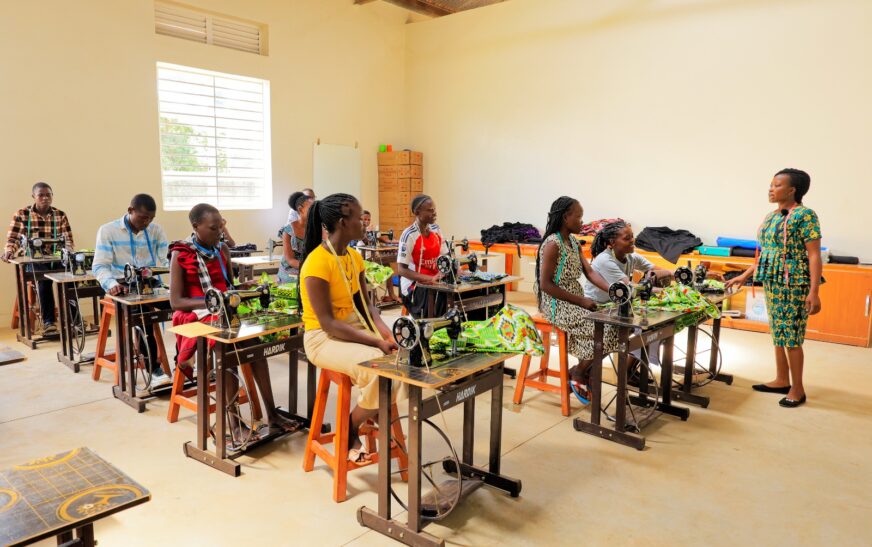
SAYE seeks to strengthen this value chain approach by providing young people with market-aligned skills, business incubation and mentoring, access to finance, internships, apprenticeships and job-placement support.
For young people such as Wabwire and Ngobi, agriculture has provided an opportunity to move beyond subsistence farming and build enterprises capable of generating income and creating work for others.
The experience also demonstrates how agricultural value addition can expand opportunities beyond the farm, connecting young people to processing, aggregation, marketing and other businesses along the value chain.