
As Uganda joined the rest of the world to celebrate World Tourism Day, President Museveni said the country remains open for business and tourism, with government committed to the safety and wellbeing of Ugandans and visitors.
Museveni made the remarks during the World Tourism Day celebrations in Mbale, shortly after the World Health Organisation (WHO) and Africa Centres for Disease Control and Prevention formally declared Uganda free of the 2026 Ebola outbreak caused by the Bundibugyo virus.
“We must continue strengthening our preparedness because health and security challenges can arise anywhere in the world. What matters is the ability to detect them early, respond effectively, and maintain confidence,” Museveni said.
He said Uganda’s experience in managing the Ebola outbreak had demonstrated the country’s capacity to detect, contain and respond to public health emergencies through its health systems, professionals, institutions and partnerships.
“The message to the international community should therefore be clear: Uganda is open for business, Uganda is open for tourism, and Uganda remains committed to the safety and wellbeing of its people and visitors,” Museveni said.
The President said the tourism sector had continued to grow, with Uganda recording 1.64 million international tourist arrivals in 2025, while tourism receipts rose to about $1.62 billion, equivalent to approximately Shs5.83 trillion.
Tourism directly supports more than 876,000 jobs and has become an important contributor to Uganda’s service exports.
Museveni said government had addressed some of the infrastructure constraints that previously affected tourism by investing in roads, airports, energy, water, telecommunications and other infrastructure intended to open up different parts of the country.
“The development of infrastructure is not only about making it easier for tourists to travel. It is about opening economic opportunities for Ugandans. The improvement of utilities and communication infrastructure is consequently creating the conditions for investment in tourism across the country. We must now ensure that the private sector takes advantage of these opportunities,” he said.
He, however, cautioned that tourism growth must go hand in hand with the conservation of the natural resources on which the sector depends.
“Tourism cannot grow if we destroy the very resources that tourists come to see,” Museveni said.
He described tourism as an instrument for investment and the promotion of Uganda’s image, noting that visitors who have positive experiences can become informal ambassadors for the country.
He said visitors can promote Uganda’s people, hospitality, food, culture, landscapes and wildlife, while their experiences can also create business and investment opportunities.
“A visitor who sees Uganda’s potential may return as an investor. A businessperson who attends a conference in Kampala may discover opportunities in agriculture, manufacturing, ICT, construction or tourism. A traveller who experiences our cultural heritage may become a market for Ugandan creative products,” he said.
Museveni said tourism promotion should therefore be linked to Uganda’s broader investment and commercial diplomacy.
“We should not only tell the world to visit Uganda. We should also tell the world to invest in Uganda, trade with Uganda, and build partnerships with Uganda,” he said.
He also urged the tourism industry to move beyond the traditional focus on national parks and wildlife by developing and packaging a wider range of tourism products.
He said Uganda has mountains, rivers, lakes, forests, wetlands, adventure tourism, cultural institutions, historical sites, religious tourism, community tourism, culinary experiences and sporting events.
Museveni singled out the Elgon region, saying it has Mount Elgon and its landscapes, waterfalls, caves, coffee experiences, cultural heritage, Imbalu ceremonies, adventure activities and community experiences that can attract more visitors.
“I therefore encourage the tourism industry and the leadership of this region to move deliberately towards product diversification and packaging,” he said.
“A tourist should not come to Mbale for only one attraction. We should create reasons for that visitor to stay longer, spend more and return.”
The President also highlighted the growing importance of digital technology and artificial intelligence in tourism, saying Uganda must ensure its tourism businesses are visible and competitive in the digital marketplace.
He said tourists increasingly discover destinations online, compare experiences, communicate with operators, make bookings, navigate destinations and share their experiences through digital platforms.
“Artificial Intelligence can assist us in destination marketing, visitor information, product development, customer engagement, conservation management and understanding visitor behaviour,” Museveni said.
The Minister of Tourism, Wildlife and Antiquities, Hon. Col. (Rtd) Tom Butime, said the World Tourism Day theme, “Digital Agenda and Artificial Intelligence to Redesign Tourism,” reflected Uganda’s efforts to embrace science, technology, innovation and enterprise while maintaining its cultural heritage and natural resources.

Butime said Uganda had moved beyond post-pandemic tourism recovery, recording 1.64 million international tourist arrivals in 2025, with visitors staying an average of 8.8 nights and generating $1.62 billion in foreign exchange earnings.
He said tourism contributes 5.9 per cent to Uganda’s GDP and directly supports more than 876,000 jobs.
Butime said government had increased the tourism development allocation to Shs567 billion for the 2026/27 financial year to support conservation infrastructure and global marketing.
He said Uganda’s digital tourism campaigns had demonstrated the country’s ability to generate international visibility, but the next challenge was to convert that visibility into actual business.
“We must convert impressions into enquiries; enquiries into bookings; bookings into arrivals; arrivals into longer stays; and longer stays into greater tourism receipts,” Butime said.
He said artificial intelligence could help tourism businesses understand markets, personalise promotion, improve visitor experiences, support conservation and connect tourists with local businesses.
Butime, however, said technology must ultimately benefit Ugandans, including small hotels, tour guides, craft producers, farmers supplying tourism facilities, taxi operators, cultural performers and young people developing tourism technology.
“AI can sell the destination. But only Ugandans can deliver the experience,” he said.
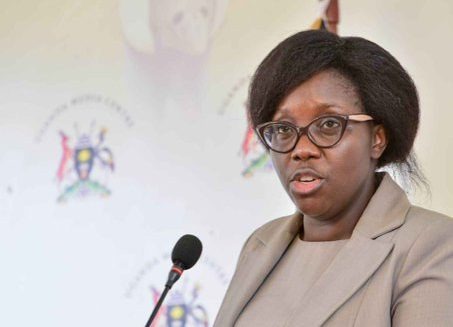
The Permanent Secretary in the Ministry of Tourism, Wildlife and Antiquities, Doreen S. Katusiime, said the tourism industry was undergoing rapid changes as technology, digital platforms, data and artificial intelligence increasingly influence how tourists discover destinations, make decisions, book experiences and share them.
“The question before Uganda is not whether these technologies will transform tourism. They already are. The question is whether we will build the capacity to use them effectively,” Katusiime said.
She said Uganda must equip tourism institutions, businesses, young people and communities with the skills required to use modern technologies if the country is to compete with destinations across Africa and the rest of the world.
“Our message must therefore be clear: We cannot promote a 21st-century tourism destination using yesterday’s tools,” she said.
Katusiime also acknowledged the contribution of development partners to strengthening tourism institutions, building capacity, supporting digital transformation, improving tourism statistics and information systems, developing tourism products and supporting communities.
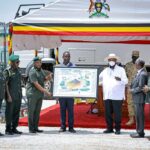
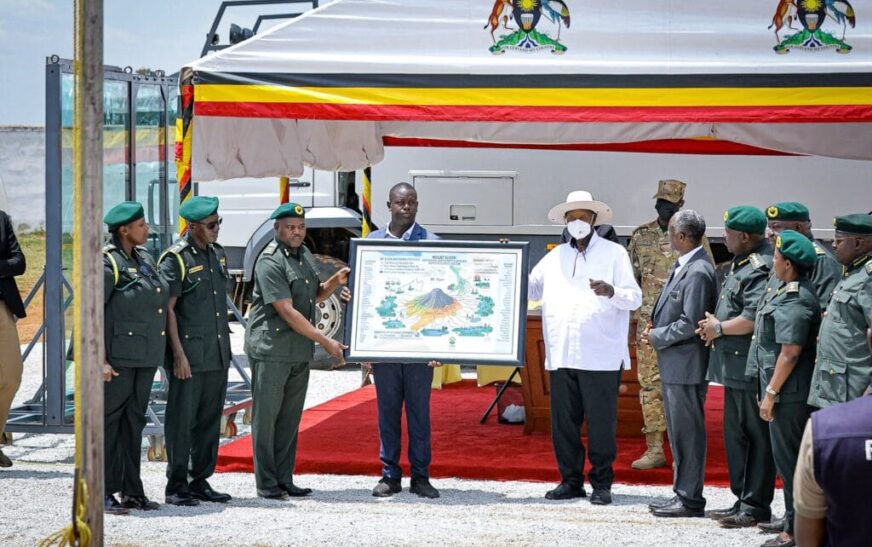
Museveni also congratulated the Ministry of Tourism, Wildlife and Antiquities, Uganda Wildlife Authority and the people of Mbale for establishing a regional wildlife centre in the city.
He said the centre would bring wildlife education and appreciation closer to communities, particularly young people, families, schools and visitors who might otherwise have to travel long distances to experience Uganda’s wildlife.
He said the facility should form part of a wider tourism circuit incorporating attractions across the Elgon region.
“The wildlife centre should become part of a broader tourism circuit incorporating the attractions of the Elgon region. We must diversify, connect and package the products of this region if Elgon is to compete effectively for domestic, regional and international visitors,” Museveni said.
He welcomed increased investment in hotels and other tourism facilities in the region but urged Mbale City and the wider Elgon region to make tourism investment a priority.
Museveni said local authorities should create an environment in which investors can identify land, access information and utilities, understand available opportunities and establish businesses efficiently.
He also called for greater emphasis on domestic tourism, urging Ugandans to travel and discover their own country.
“We cannot expect the international visitor to appreciate our country if we, ourselves, do not know and appreciate what we have,” he said.
Museveni encouraged families, schools and companies to travel to different parts of the country and urged young people to explore Uganda’s mountains, forests, rivers, cultures and history.
He said a stronger domestic tourism market would also make the industry more resilient during periods when international travel is disrupted by global shocks.