

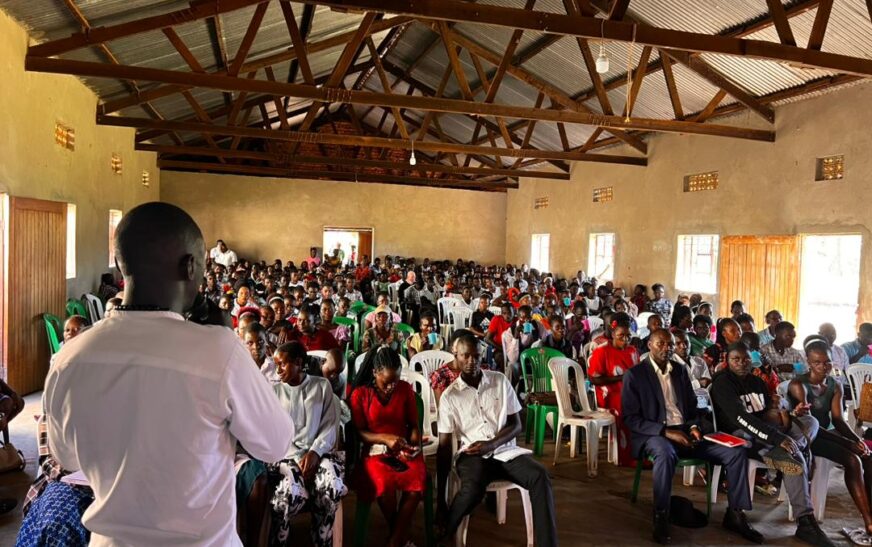
Women entrepreneurs and young business owners in Kikuube District are increasingly embracing digital record keeping as a way of strengthening their businesses, improving accountability, and gaining greater financial independence both at home and in their communities. Many say using mobile phones to track business transactions is helping them make informed decisions, reduce unnecessary spending, and better plan for the future of their enterprises.
The change is being promoted through the “Business Ku Ssimu Yo” campaign, an initiative by United Nations Capital Development Fund in partnership with Outbox Uganda and Mastercard Foundation. The campaign is focused on equipping youth and small business owners across Uganda with practical digital and financial management skills that can easily be applied using mobile phones.
During a business clinic held in Kikuube District, participants received hands-on training in digital business management, including how to keep records of daily sales, monitor expenses, save customer contacts, and track profits using simple mobile phone applications. Trainers encouraged business owners to move away from relying on memory or handwritten books, which are often lost or poorly maintained.
Facilitators at the clinic explained that digital record keeping not only helps businesses become more organised, but also increases opportunities for entrepreneurs to access loans and financial support from banks and savings groups. They noted that financial institutions are more likely to trust business owners who can clearly show records of income, expenditure, and business performance over time.
For many women entrepreneurs attending the clinic, the use of digital records is also changing relationships within their households. Several participants said keeping proper records on their phones allows them to separate family expenses from business capital, making it easier to understand how much profit the business is generating and avoid unnecessary domestic conflicts over money.
Some women shared that digital tools have improved transparency and trust within their families because both income and expenditure can now be properly tracked. Others explained that being able to monitor business performance has increased their confidence and strengthened their role in household decision-making, especially in matters involving savings, school fees, and investment.

Claire Gitete, Coordinator at the Federation for Small and Medium Enterprises, said digital skills are becoming increasingly important for the survival and growth of small businesses, especially for women and youth operating in rural areas where many enterprises still lack proper financial management systems.
“Women are now able to monitor their businesses better, make informed decisions, and build confidence both at home and in business through digital record keeping,” Gitete said, adding that many small businesses fail to grow because owners do not keep clear records that can guide planning and accountability.
Organisers of the clinic noted that although many young people are already using mobile phones daily, a large number still do not fully utilise them as business management tools. They said the Business Ku Ssimu Yo campaign is designed to bridge that gap by helping entrepreneurs understand how digital solutions can improve efficiency, increase profits, and connect them to wider economic opportunities.
Through the nationwide campaign, UNCDF and its partners are targeting more than 66,000 young people across Uganda with digital and financial literacy training aimed at building sustainable businesses. The organisers believe that empowering youth and women with digital skills will not only strengthen small enterprises, but also contribute to household stability, economic inclusion, and long-term community development.