
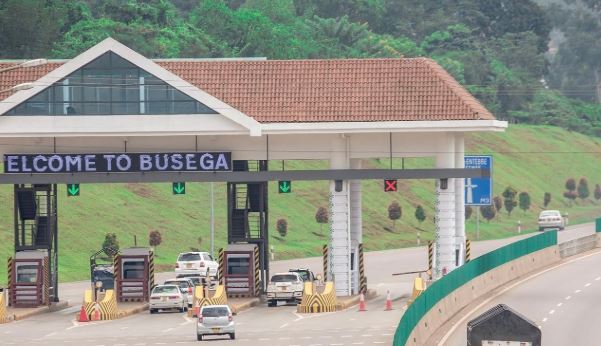
The Kampala-Entebbe Expressway was opened to motorists without payment this morning amid reports of a staff strike over alleged non-payment of salaries.
Motorists using the expressway reported that they were allowed through without paying toll fees at the Busega, Kajjansi and Mpala toll gates.
However, Joy Nabasa, the communications officer for Egis, the company contracted by the Ministry of Works and Transport to manage operations, maintenance and toll collection on the expressway, denied reports of a staff strike.
Nabasa said the disruption was caused by a brief system breakdown, which affected toll collection at the gates.
The incident comes as Parliament continues to scrutinise the management of the expressway and the collection of toll fees.
The expressway is also subject to an ongoing audit into its operations and toll revenue collection, with MPs raising questions over the management of the road and the financial arrangements surrounding toll collection.
The latest disruption has therefore added to scrutiny of the systems used to collect and account for toll revenue on the expressway.
Parliament’s Committee on Physical Infrastructure has questioned the decision to award Pinnacle Security Ltd a Shs 36 billion annual contract to collect toll fees on the Kampala-Entebbe Expressway, saying the arrangement could expose government to revenue losses.
The committee, chaired by Mwine Mpaka, raised the concerns during an on-spot inspection of the expressway’s tolling operations, where MPs questioned the procurement process, revenue-sharing arrangement and the effectiveness of the toll collection system.
The committee’s vice chair Eng. William Taylor Tiyo said Pinnacle appeared to have been handed the contract without adequate due diligence, following the expiry of the contract held by Egis, the previous toll operator.
“It will look like Egis now said that we have mentored a child and it is called Pinnacle, and therefore there was no need for new due diligence. They just pressed enter and the contract was produced,” Tiyo said.
Mpaka questioned why government had committed such a significant amount of revenue to a private contractor when the expressway generates an average of Shs42 billion annually from toll collections.
“Since you committed us to such an arrangement, for example, one year, our average revenue from road tolls is Shs42 billion and you have given a private contractor Shs36 billion,” Mpaka said.
He said government must establish who would bear responsibility for any losses arising from the arrangement.
“All the losses that are made, someone must account for them,” Mpaka said.
The MPs also questioned the Shs200 million reportedly spent by Egis on training, seeking clarification on the purpose and beneficiaries of the expenditure.

The committee established that after the Egis contract expired in May 2026, Pinnacle Security Ltd was contracted through direct procurement to collect toll fees at an annual cost of Shs36 billion.
This is despite the expressway generating an average of Shs42 billion in toll revenue annually, leaving only about Shs6 billion before other operational costs are considered.
The MPs further established that Ivan Katamba, the former general manager of Egis, is also the general manager of Pinnacle Security Ltd.
The development raised questions about the relationship between the two companies and the extent to which the previous operator may have influenced the award of the new contract.
Katamba told the committee that Egis had been responsible for marketing, branding and provision of the tolling software, while much of the actual toll collection and patrol operations were being carried out by Pinnacle.
“Pinnacle Security Ltd was the one conducting patrols, collecting money and operating the call centre,” Mpaka said, questioning what functions Egis was performing under its contract.
The MPs also questioned why Pinnacle was selected without open advertising or a fresh due diligence process.
The 49.5-kilometre Kampala-Entebbe Expressway was commissioned in 2018 after construction by China Communications Construction Company (CCCC).
The project, which started in 2012, was financed through a US$476 million loan from the Export-Import Bank of China, with a repayment period of 20 years.
The expressway currently serves an average of 28,000 vehicles daily, while more than 4,570 motorists use Upesi electronic smart cards to pay toll fees.
Over the past three years, the expressway has recorded 25.3 million vehicle passages, highlighting its importance to Uganda’s transport network.
The road has significantly reduced travel time between Kampala and Entebbe and has become a major transport corridor for motorists accessing Entebbe International Airport and surrounding areas.