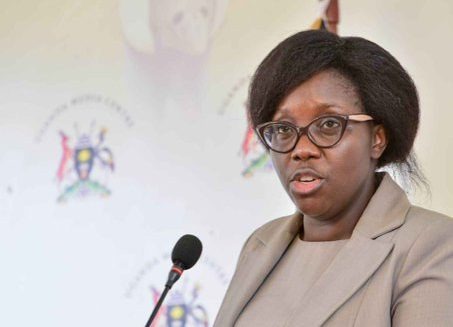

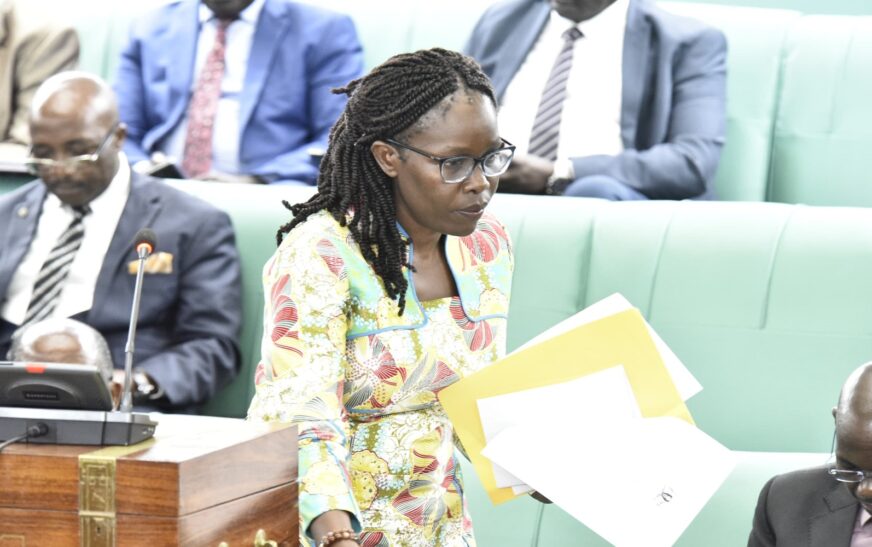
Uganda risks losing more of its farmland and protected areas to roads, railways and other developments unless the country strengthens long-term land-use planning, Minister of Lands, Housing and Urban Development Judith Nabakooba has warned.
Nabakooba said the rapid transformation of land for infrastructure and settlements could undermine Uganda’s ability to preserve productive land for future generations.
“We realised that because of the good environment, many of the significant land uses are disappearing. The farmland is going, the protected areas are going,” Nabakooba said.
She was speaking at the Architects Symposium 2026, held as the Uganda Society of Architects marked 60 years of existence and the Architects Registration Board celebrated 30 years of professional regulation.
Nabakooba said some land that had previously been protected or reserved for specific purposes was increasingly being converted for roads, railways and other developments.
“Where we are heading, 50, 60 years to come, whether we are wrong or not, it’s not good news,” she said.
She called for closer cooperation between government and architects to strengthen land-use planning, including at the local government level.
Nabakooba said the Ministry of Lands, Housing and Urban Development would engage architects on how their expertise could be integrated into local government planning and land-use management.
“We need to put our brains together and see how we strategise to have long-lasting strategies, but also solutions that can help us redeem our arable land,” she said.
Her warning comes as Uganda’s population and urban centres continue to expand, increasing demand for housing, roads, schools, hospitals, workplaces and other infrastructure.
Nabakooba said Uganda has about 45.9 million people living in nearly 10.7 million households, with the population projected to reach about 55 million by 2030.
She challenged architects and other built-environment professionals to ensure that population growth does not simply result in more construction, but in better-planned and sustainable communities.
“Millions more Ugandans will need homes, they will need schools for their children, they will need hospitals, workplaces, markets, roads,” she said.
Nabakooba said sustainable urbanisation and housing are central to the government’s Fourth National Development Plan, which seeks to accelerate economic transformation through increased household incomes, employment and productive infrastructure.
She said government’s urban development priorities include well-planned urban centres, affordable housing, improved infrastructure, drainage and waste management, as well as stronger policy and regulatory frameworks.
“This means that the built environment is one of the foundations of Uganda’s development agenda,” she said.

Nabakooba said Uganda cannot achieve industrialisation, expand tourism or improve human development without properly planned towns and cities.
“We cannot industrialise without well-planned industrial and urban spaces. We cannot grow tourism while our cities and towns are poorly planned, overwhelmed by congestion, flooding, informal settlements and inadequate infrastructure,” she said.
She also called for stronger enforcement of professional and building standards, warning that poor planning and unqualified practice can have serious consequences.
“When buildings fall, people lose property and at times they lose lives,” Nabakooba said.
She said government, regulators and professionals must work together to address unqualified architectural practice and improve compliance with planning, building and professional standards.
Nabakooba said government was also reviewing the Architects Registration Act to bring it in line with the realities of the modern built environment.
She added that government was advancing the Real Estate Bill, which seeks to strengthen regulation of real estate agency and development, improve professionalism and accountability, and protect consumers.
The minister urged the Architects Registration Board, the Uganda Society of Architects and other stakeholders to ensure that the reforms are informed by evidence and meaningful consultation.
She also called for greater access to professional architectural services outside Kampala.
“Professional excellence should not be concentrated only in Kampala,” she said, urging the profession to expand its presence to municipalities and emerging urban centres across the country.
Nabakooba further challenged the architectural profession to invest in young professionals through mentorship, practical exposure, continuing professional development and clearer pathways to professional registration and leadership.
She identified affordable housing, climate-responsive construction, technology and professional ethics among the key issues that architects must address as Uganda enters its next phase of development.
“Architecture must ultimately serve the people,” she said.
The minister said the next chapter of Uganda’s development would require stronger cooperation between government, Parliament, local governments, developers, investors and professionals to create safe, functional and sustainable communities.