
Uganda’s agricultural sector is undergoing a quiet but significant transformation—one driven not just by policy, but by farmers who are rethinking agriculture as a business. At the centre of this shift is dfcu Bank, whose long-running Best Farmers platform is helping to turn smallholder ventures into scalable agribusinesses.
Since 2014, dfcu Bank, in partnership with Vision Group, the Embassy of the Kingdom of the Netherlands, KLM Royal Dutch Airlines, and Koudijs Animal Nutrition, has used the Best Farmers Awards to spotlight excellence while building a pipeline of commercially minded farmers.
More than 130 farmers have been recognised for achievements in productivity, sustainability, and agribusiness management. But beyond the accolades, the initiative has opened doors to global exposure, with winners travelling to the Netherlands to learn modern farming practices.
Backed by additional support from Rabobank, dfcu has also established a dedicated agribusiness unit under the dfcu Foundation to tackle one of the sector’s biggest constraints—access to finance. The initiative aims to reach over 100,000 farmers with capital, markets, infrastructure, and technical support, reinforcing agriculture’s role as a driver of economic growth.
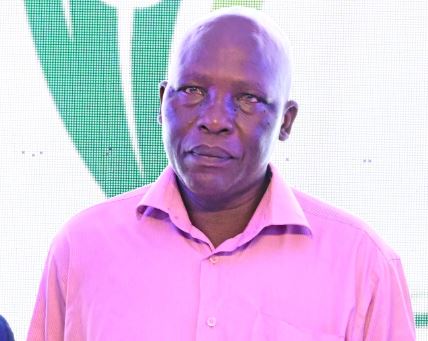
The impact of this approach is best illustrated in the story of Zubairi Mukaaya, a farmer from Kamuli District whose journey reflects the evolving face of Ugandan agriculture.
Raised in a farming household, Zubairi saw firsthand the struggles of traditional farming. His father’s coffee yields were often undermined by poor soil fertility, a challenge linked to limited access to organic manure. That early experience would later shape his approach.
In 2007, he started modestly with 100 chickens under the NAADS programme. What began as a small poultry project gradually expanded through reinvestment and careful management, growing to 1,000 birds within a few years.
Zubairi’s breakthrough came from integration. By using poultry waste as manure, he restored soil fertility in his coffee fields, improving yields while cutting input costs. He later diversified into cassava, maize, and fish farming, creating a system where each enterprise feeds into the other.
The result is a resilient, efficient farming model that reduces waste, spreads risk, and maximises output.

Today, Bakuseka Majja Farm operates at a commercial scale. Zubairi manages nearly 20,000 mudfish in ponds, maintains 2,000 parent stock layers, and runs up to 20,000 broiler chickens at any one time, with the ability to supply up to 40,000 birds during peak demand.
But his influence extends beyond his own farm. Through radio programmes and hands-on demonstrations, he trains farmers across Kamuli, Jinja, Kayunga, Buyende, and Buwenge, offering practical guidance on modern farming techniques. His farm has become a learning hub, attracting farmers seeking incubation services and business advice.
His structured approach to farming earned him recognition as Best Farmer for Eastern Uganda in 2025 under the dfcu Bank Best Farmers Awards. Judges pointed to his strong record-keeping, modern incubation systems, and innovative fish farming practices as key strengths.
The recognition has since accelerated his growth. Zubairi has expanded his operations with a new poultry house capable of holding 20,000 birds, financed through coffee earnings, while additional support from the awards—including Shs 7 million worth of animal feed—has boosted production capacity.
Perhaps most significantly, his success is reshaping attitudes toward farming within his own family and community. By involving his children—including an engineering graduate and a midwife—he is demonstrating that agriculture can be modern, structured, and profitable.
Through initiatives like the Best Farmers platform, dfcu Bank is helping to redefine agriculture in Uganda—not as a subsistence activity, but as a viable business with the potential to drive jobs, incomes, and long-term economic transformation.