
Government has unveiled an ambitious financing plan exceeding Shs1 trillion to accelerate Uganda’s preparations for the 2027 Africa Cup of Nations (AFCON), with major investments targeting sports infrastructure, transport, health services and hospitality.
Presenting a statement to Parliament, Minister of State for Sports Peter Ogwang said the preparations are being implemented through a coordinated, whole-of-government approach involving multiple ministries, departments and agencies under the supervision of the Ministry of Education and Sports and the Local Organising Committee.
“Government’s planning for AFCON 2027 is based on the understanding that the tournament will be jointly hosted by Uganda, Kenya and Tanzania. An inter-sectoral committee has already identified key requirements, and these have been prioritised in the Financial Year 2026/2027 with Cabinet approving the requisite budget,” Ogwang said.
To boost accommodation capacity, government has earmarked Shs101.1 billion under a special credit facility through the Uganda Development Bank to support the upgrading of selected hotels in Hoima and Masindi. Engagements between hotel owners and the bank are expected to commence later this month.
In transport infrastructure, Shs213.76 billion has been committed for the upgrade of at least 47.53 kilometres of roads around key venues, including Hoima City Stadium and Mandela National Stadium, as well as Kinawataka Road, pedestrian walkways and street lighting to enhance accessibility and safety.
Government has also allocated Shs184.9 billion for the establishment of a passenger terminal at Kabalega International Airport to operationalise it as an international gateway ahead of the tournament.
Further allocations include Shs5.2 billion to the Federation of Uganda Football Associations for upgrading Kadiba Stadium as a training facility, and Shs12.55 billion to prepare the national team, the Uganda Cranes.
Ogwang said the allocations are directly informed by gaps identified during inspections by the Confederation of African Football.
“Allocations for infrastructure such as stadium upgrades, roads, health facilities and the passenger terminal are directly drawn from gaps identified in the CAF inspection report, including traffic management and required hosting standards,” he said.
Additional funding includes Shs56.2 billion for the remodelling of Mandela National Stadium, Shs6.44 billion for ICT infrastructure, and Shs91.05 billion to upgrade Hoima Regional Referral Hospital, Masindi General Hospital and Buseruka Health Centre III to meet emergency and intensive care standards.
Government has also set aside Shs13.75 billion for sanitation and environmental hygiene in Hoima, Masindi and Kira, Shs6.25 billion for water supply in Hoima City, and Shs4.69 billion for electricity connections to key facilities, including Hoima City Stadium and Kabalega International Airport.
In addition, Shs23.33 billion will go towards upgrading and maintaining railway infrastructure along the Kampala–Mukono line, while Shs37.85 billion has been committed for destination marketing under the AFCON 2027 brand.
Government is also planning to waive visa fees for all visitors for at least three months around the tournament period and is pursuing a joint “Pamoja visa” arrangement with Kenya and Tanzania to ease cross-border movement of fans.

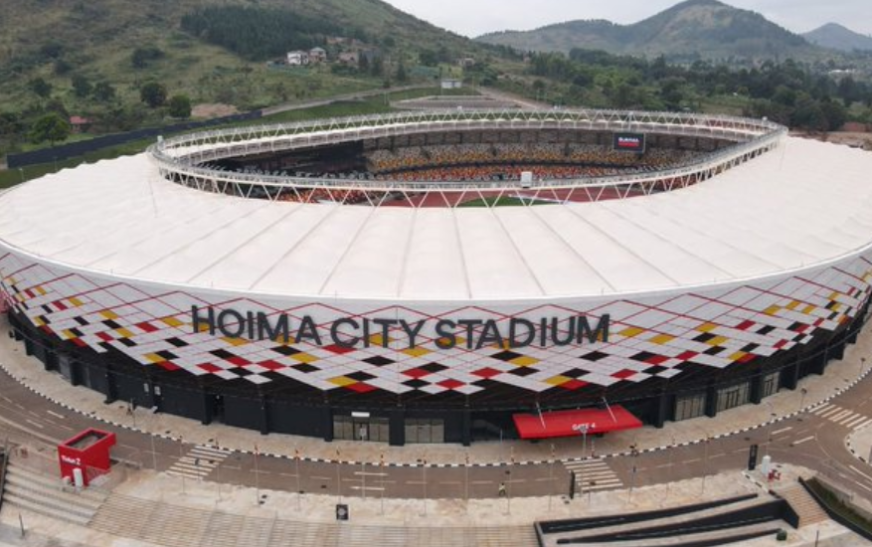
On sports infrastructure, Ogwang said construction of Hoima City Stadium is complete, with the defects liability period running until December 2026 to allow the contractor to address issues raised by CAF.
“At the stadium, CAF identified specific deficiencies, and the contractor is responsible for correcting them to meet certification standards. Government is not expected to incur additional costs for those works,” he said.
He added that expansion works at Mandela National Stadium under phase two will increase seating capacity from 38,268 to 45,000 and improve key facilities, including VIP lounges, media areas and medical units.
However, legislators raised concerns over the adequacy of the government’s update, questioning whether the country is on track to meet CAF requirements ahead of the next inspection.
Patrick Nsamba said the statement did not sufficiently address key issues raised earlier regarding the CAF inspection findings.
“Parliament needs a clearer account of the gaps identified, what the government is doing to close them, and when CAF will return to assess whether Uganda has made enough progress,” Nsamba said.
Helen Nakimuli also questioned the timelines and planning behind the stadium projects.
“The response does not directly address the specific concerns about preparedness. We need clear timelines on when these gaps will be fixed before CAF returns in August,” she said.
She further pressed government to clarify whether stadium designs meet required standards, including concerns around changing room sizes and other facility specifications.
Despite the concerns, Ogwang expressed confidence that Uganda will meet all requirements ahead of the next inspection.
“CAF is expected to return in August to assess progress, and we are committed to ensuring that all identified gaps are fully addressed,” he said.