
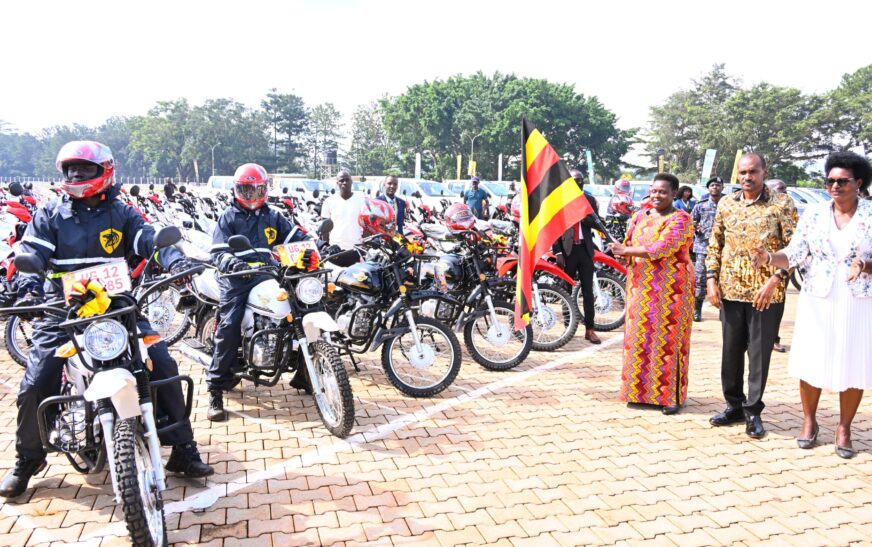
Government has stepped up efforts to bridge the gap between extension workers and farmers, with Vice President Maj. (Rtd) Jessica Alupo flagging off a fleet of 109 vehicles and 1,034 motorcycles to boost agricultural service delivery across Uganda.
The equipment, distributed to 69 districts under the Uganda Climate Smart Agricultural Transformation Project (UCSATP), is expected to ease long-standing mobility challenges that have hindered last-mile support to farmers.
Funded by the World Bank and implemented by the Ministry of Agriculture, Animal Industry and Fisheries (MAAIF), the six-year project is part of a wider USD 354 million investment targeting 3.9 million beneficiaries, including communities hosting refugees.
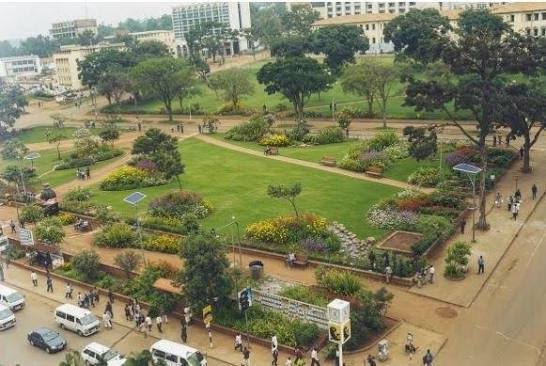
Speaking during the flag-off ceremony at Kololo Independence Grounds on Tuesday, April 21, 2026, Alupo said the intervention marks a turning point in how government reaches farmers.
“For years, limited mobility has slowed down extension services. Today, we are removing that barrier,” she said. “These vehicles and motorcycles will ensure our extension workers reach farmers faster, offer timely guidance, and strengthen accountability in service delivery.”
She described the handover as a fulfilment of government’s pledge to empower frontline agricultural officers with the tools needed to drive transformation in the sector.
Alupo, however, issued a stern warning against misuse of the equipment, stressing that the assets must strictly serve public and project-related activities.
“These are public resources meant to serve our farmers. There should be no excuses for failure to deliver services,” she said, urging district leaders to prioritise maintenance, transparency, and proper utilisation.
The Vice President also called for renewed commitment from implementing agencies and partners to fast-track project activities and deliver tangible results within the set timelines.
She further appealed to the World Bank to sustain its support, particularly in advancing the AgriConnect initiative, which is expected to unlock investment in mechanisation, irrigation, value addition, and market access.

“The success of this project will depend on how well we work together from government to districts to development partners,” she noted.
Alupo pointed to gains in the agriculture sector, especially in exports, revealing that Uganda has emerged as Africa’s leading coffee exporter, earning USD 2.4 billion over the past year an indication of improving household incomes among farmers.
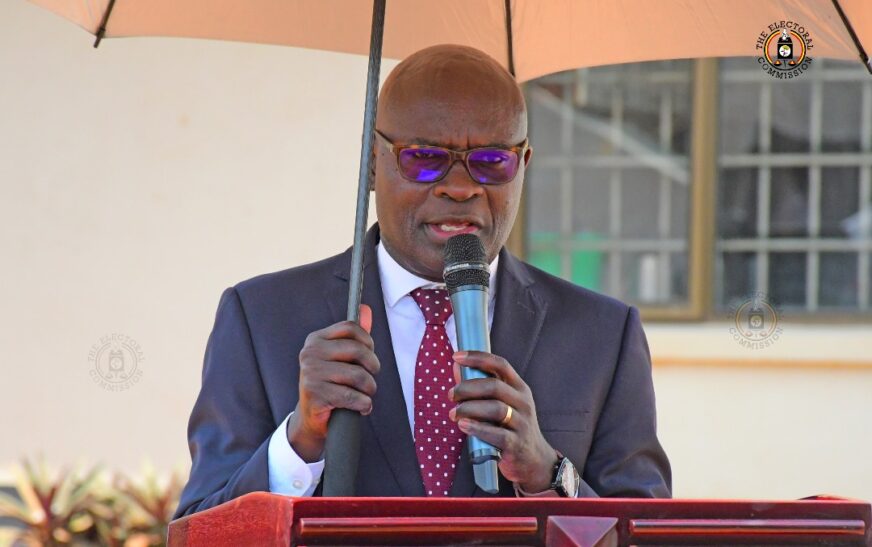
Agriculture Minister Frank Tumwebaze said the deployment of the fleet aligns with the ministry’s policy to ensure extension workers are fully equipped to conduct field outreach, provide advisory services, and collect data effectively.
He urged local leaders including Members of Parliament, LC5 chairpersons, Resident District Commissioners (RDCs), District Internal Security Officers (DISOs), and councillors to safeguard the equipment and ensure it is used for its intended purpose.
Tumwebaze also commended the World Bank for its continued investment in Uganda’s agricultural sector.
The newly deployed fleet is expected to serve as the backbone of field operations in the 69 districts, strengthening coordination between farmers and extension workers.
UCSATP targets critical bottlenecks in agriculture, including low productivity, limited access to quality inputs, weak extension systems, climate shocks, unreliable rainfall, and poor market linkages.
It also seeks to address low mechanisation and heavy reliance on manual labour through investments in climate-smart research, improved seeds and breeds, irrigation, mechanisation centres, and development of livestock, fisheries, and aquaculture.