
Uganda’s preliminary national budget resource envelope for the financial year 2027/28 has been set at Shs79.22 trillion, representing a reduction of Shs5.17 trillion from the Shs84.39 trillion budget for the current financial year.
The new figure was announced by the Permanent Secretary and Secretary to the Treasury (PSST), Ramathan Ggoobi, as the Ministry of Finance, Planning and Economic Development formally commenced preparations for the FY2027/28 budget.
Ggoobi has issued the first Budget Call Circular (BCC) to all accounting officers, as well as chief executive officers of State-owned enterprises and public corporations, directing them to begin preparing their Budget Framework Papers and preliminary budget estimates for the next financial year.
The Ministry of Finance published the circular on September 18, 2026, marking another stage in the annual budget preparation process. The circular provides detailed guidance to government programmes, ministries, departments, agencies and other public entities on the preparation of their budget submissions.
“All Accounting Officers are required to prepare the Budget Framework Paper for FY2027/28 in accordance with the Budget Strategy and the budget process calendar for FY2027/28,” Ggoobi said.
The preliminary resource envelope is significantly below the current financial year’s Shs84.39 trillion, placing greater emphasis on domestic revenue mobilisation, expenditure prioritisation and reducing the government’s dependence on borrowing and external financing.
Ggoobi said the lower resource envelope would require government entities to align their proposed spending with the strategic priorities of the new budget rather than seeking funding for programmes outside the agreed national framework.
“The preliminary resource envelope for FY2027/28 stands at Shs79.22 trillion. This underscores the need for stronger domestic revenue mobilisation and reduced reliance on borrowing and external financing,” Ggoobi said.
The FY2027/28 Budget Strategy is built around seven strategic shifts that government says will guide the allocation and use of public resources.
The first is revenue-led fiscal consolidation, which will place domestic revenue mobilisation at the centre of budget formulation. Government plans to broaden the tax base through increased use of data and technology, address revenue leakages, improve compliance and strengthen complementary sources of financing, including non-tax revenue.
The second shift is prudent management of oil revenues as Uganda moves towards commercial oil production. The government says oil revenues will be managed transparently and sustainably in accordance with the Public Finance Management Act, Cap 171.
The third shift is mobilisation of private capital to support the Agriculture, Tourism, Minerals and Science, Technology and Innovation (ATMS) sectors. Government plans to explore innovative financing mechanisms, strengthen public-private partnerships and improve the business environment to attract more private investment and foreign direct investment.
The fourth shift is faster implementation of the Tenfold Growth Strategy through the ATMS sectors and their enablers.
“Our strategy is to deepen investment in the ATMS as the principal drivers of tenfold growth,” Ggoobi said.
The fifth strategic shift places jobs, exports and household incomes at the centre of economic planning, with government seeking to ensure that economic expansion translates into productive employment, increased exports and higher incomes.
The sixth focuses on strengthening wealth creation programmes, including the Parish Development Model, Emyooga and the Presidential Skilling and Industrial Hubs.
The seventh shift involves enforcing budget reforms aimed at strengthening budget discipline, credibility and accountability, including improvements in resource allocation, internal controls, audit systems, procurement and accountability for results.
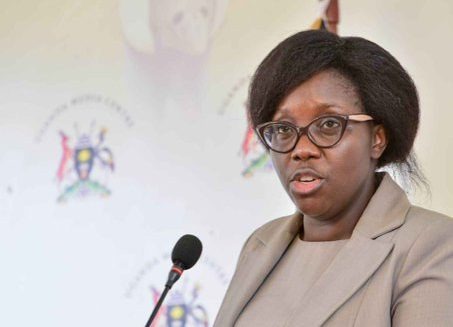
Finance Minister Henry Musasizi said the budget strategy is intended to provide policy direction for the preparation of the national budget while deepening implementation of the Tenfold Growth Strategy, the Fourth National Development Plan, the NRM Manifesto for 2026–2031 and the Charter for Fiscal Responsibility.
“The strategy provides policy direction for preparation of the national budget and deepens implementation of the Tenfold Growth Strategy, the Fourth National Development Plan, the NRM Manifesto 2026–2031 and the Charter for Fiscal Responsibility,” Musasizi said.

The budget will retain the theme, “Full Monetisation of Uganda’s Economy through Commercial Agriculture, Industrialisation, Expanding and Broadening Services, Digital Transformation and Market Access.”
Musasizi said the government expects the economy to grow by 7.6 percent in FY2026/27 before accelerating to 9.1 percent in FY2027/28, with the projected increase largely linked to the expected commencement of commercial oil and gas production and its effects on construction, manufacturing, services and exports.
“I stated that the economy is projected to grow by 7.6 percent in FY2026/27 and 9.1 percent in FY2027/28, driven principally by the expected commencement of commercial oil and gas production and its wider linkages to construction, services, manufacturing and exports,” Musasizi said.
The government’s budget strategy places particular emphasis on the ATMS sectors and their supporting infrastructure, including agro-industrialisation, tourism, mineral development, science, technology and innovation.
Other areas identified for priority investment include infrastructure, irrigation, industrial parks, wealth creation programmes, regional integration and access to export markets.
The strategy also calls for stronger domestic revenue mobilisation, increased private capital, improved sustainability of the Parish Development Model, recovery of government loans and development of value chains capable of increasing household incomes.
The Ministry of Finance has also directed government institutions to ensure that their proposed interventions are aligned with the national development priorities and can demonstrate measurable results from public spending.
At the national budget conference held in Kampala, government officials said every new budget intervention would be assessed against its contribution to export growth and diversification, private investment, productivity, job creation and household incomes.
Prime Minister Robinah Nabbanja launched the Presidential Advisory Committee on Budget (PACOB), urging its members to identify priorities within priorities and ensure that public resources produce measurable results.
The budget process is being undertaken within the wider implementation of the Fourth National Development Plan and the Tenfold Growth Strategy, under which government is pursuing a long-term target of transforming Uganda into a much larger economy.
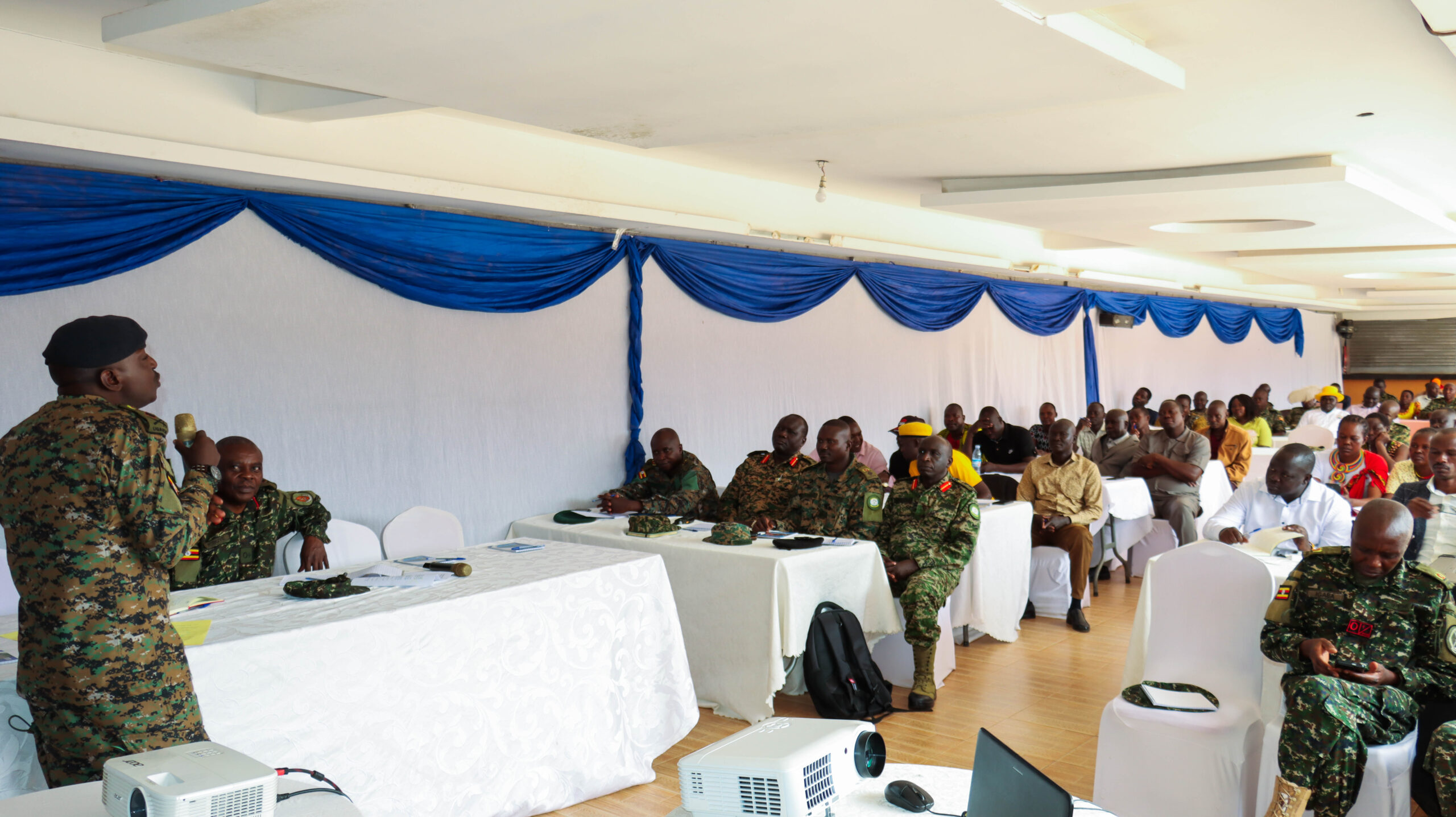
The Ministry of Finance has also commenced consultations with local governments across the country. The consultations began on September 14 and are scheduled to run until October 2, 2026, covering regional centres including Lira, Jinja, Masaka, Mbale, Hoima, Fort Portal, Kabale, Mbarara, Arua, Gulu and Seeta-Mukono.
The first Budget Call Circular now requires votes to prepare and submit their Budget Framework Papers for consolidation by the Ministry of Finance. According to the Ministry, the Minister of Finance is expected to submit the National Budget Framework Paper to Parliament by December 31, 2026, in line with the Public Finance Management Act.
The lower preliminary resource envelope comes as government seeks to strengthen fiscal consolidation while maintaining funding for programmes expected to drive production, investment and economic transformation.
The FY2027/28 budget will also be the second year of implementation of the NRM Manifesto for 2026–2031, giving the preparation process an additional focus on translating the manifesto commitments into funded government programmes.
The Ministry of Finance said the budget process will therefore focus not only on the amount of money available to government but also on how effectively the available resources can be directed towards interventions that increase production, productivity, exports, employment and household incomes.
The Shs79.22 trillion figure remains a preliminary resource envelope, meaning it is part of the budget preparation process and can change before the final estimates are approved by Parliament.
The FY2027/28 budget process will now move through the preparation and consolidation of Budget Framework Papers, consultations with stakeholders and further refinement of the resource envelope before the final national budget is presented to Parliament.