

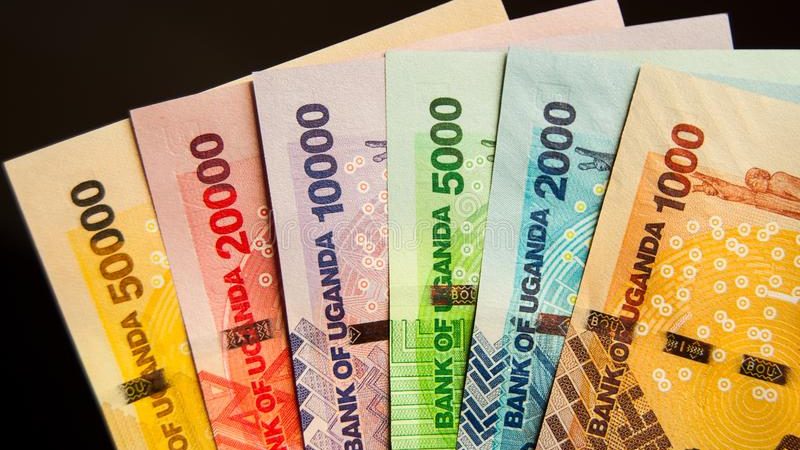
The Uganda shilling weakened further against the US dollar this week, sliding to near record lows as strong demand for foreign currency from manufacturers, energy and telecommunications companies put renewed pressure on the local unit.
The shilling opened the week at Shs3,895/3,905 against the dollar before weakening to Shs3,945/3,955 on Friday, bringing its year-to-date depreciation to about 8.3 per cent.
Richard Nsubuga, Ag Head of Trading, CIB Markets at Absa Bank Uganda, said dollar demand was particularly strong from the manufacturing, energy and telecommunications sectors, with offshore participation adding to the pressure.
The depreciation has also been linked to elevated importer demand, rising energy costs and uncertainty arising from the conflict in the Middle East. Remittances and export proceeds, although providing some support, have not always been sufficient to meet demand for hard currency.
The pressure on the shilling comes as the Bank of Uganda moves to tighten liquidity in the financial system. The central bank increased the cash reserve requirement ratio for commercial banks by 250 basis points to 13.50 per cent, a move expected to withdraw structural liquidity from the banking system.
Nsubuga said renewed interbank dollar sales, stronger commodity export receipts and remittance inflows could provide some support to the shilling, while possible intervention by the Bank of Uganda could also help ease pressure.
“In the near term, the currency is expected to trade within the Shs3,880 to Shs4,000 range against the US dollar, with risks remaining tilted toward further depreciation,” Nsubuga said.
Money markets remain liquid
Despite the tighter monetary stance, money markets remained liquid during the week, although overnight funding rates moved higher.
Overnight rates rose from 8.75 per cent on Monday to 9.54 per cent on Tuesday before easing slightly to 9.50 per cent on Wednesday and 9.21 per cent on Thursday.
The Bank of Uganda actively managed excess liquidity through a three-day mop-up repo on Monday, followed by the sale of Bank of Uganda bills and a seven-day repo on Thursday.
Nsubuga said secondary market activity remained relatively subdued, with most participants staying on the sidelines, although pricing developed a firmer bias towards the end of the week as offers gradually improved.
“Overall, liquidity conditions remained comfortable, but the increase in the cash reserve ratio signals a tighter monetary stance and could moderate excess liquidity, raise interbank funding costs and support firmer yields across the government securities market in the near term,” he said.
Kenyan shilling remains stable
The Kenyan shilling recorded modest volatility but remained broadly stable against the dollar during the week, trading within the 129.20 to 129.90 range.
The currency is expected to trade within the 129.40 to 130.00 range in the near term, with the 130.00 level remaining an important resistance point.
Oil prices retreat
Oil prices ended the week lower after initially rising sharply on concerns over possible disruptions to Middle East supply routes.
West Texas Intermediate (WTI) fell 1.3 per cent to $100.07 a barrel, while Brent crude declined 2.9 per cent to $102.64.
Both benchmarks initially rallied after drone strikes disrupted Saudi Arabia’s East-West pipeline, while increased Houthi activity around the Bab al-Mandeb Strait heightened concerns about disruptions along key regional supply routes.
WTI climbed to a four-month high of $105.83 a barrel and Brent to $108.75 on Tuesday before the rally reversed.

The decline followed indications from Saudi Aramco that about half of the pipeline’s capacity could be restored within days, with full operations expected within six weeks.
The prospect of recovering Saudi supply reduced the geopolitical risk premium and triggered three consecutive sessions of selling.
Gold gains 2 per cent
Gold ended the week about 2 per cent higher at $4,387.89 an ounce after recovering from an intra-week low of around $4,264.
Bullion initially came under pressure as rising oil prices heightened inflation concerns and strengthened expectations of tighter monetary policy.
Volatility increased after the Federal Reserve raised interest rates by 25 basis points, its first increase since 2023, while signalling that further hikes remained possible.
Gold initially rallied ahead of the decision but reversed as the Fed’s hawkish stance pushed Treasury yields higher.
The metal rebounded strongly on Thursday and extended gains on Friday as oil prices retreated, easing inflation concerns and allowing bond yields to decline.
Investor demand also remained supportive, with gold-backed exchange-traded funds recording eight consecutive days of inflows and total holdings reaching their highest level since March.
However, the possibility of further US monetary tightening remains a key headwind for gold.
Dollar strengthens against euro, sterling
The US dollar strengthened against both the euro and sterling during the week, supported by the Federal Reserve’s rate decision and its hawkish guidance.
EUR/USD fell 1.01 per cent from 1.1599 to 1.1482, while GBP/USD declined 1.14 per cent from 1.3524 to 1.3370.
The dollar’s gains were reinforced by the rise in US Treasury yields, with the 10-year yield moving above 5 per cent and strengthening the greenback’s yield advantage.
EUR/USD briefly fell to a one-month low of 1.1465 and moved below its 100-day moving average, amid reduced expectations for an October European Central Bank rate hike, French political uncertainty and a narrowing euro-area current account surplus.
Sterling also came under pressure after the Bank of England held interest rates unchanged in a 6-3 vote, prompting markets to scale back expectations for further monetary tightening.
Elevated UK gilt yields and uncertainty surrounding the upcoming Budget added to the pressure on sterling.
Nsubuga said the dollar’s yield advantage was likely to remain the main headwind for both currencies, while ECB policy expectations and French political developments would remain important for the euro, and UK fiscal risks and gilt-market pressures would continue to influence sterling.