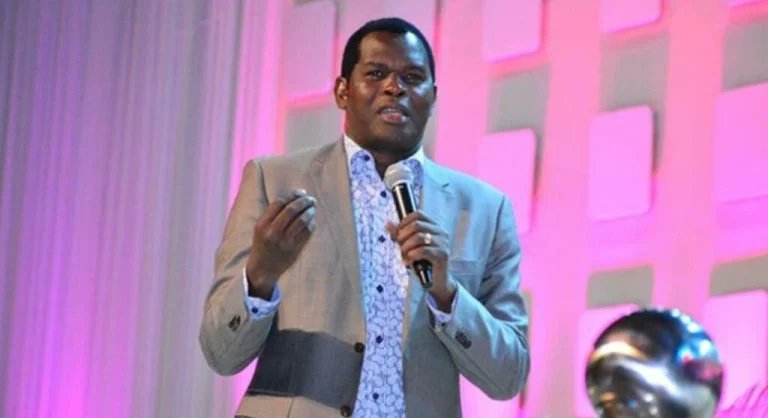

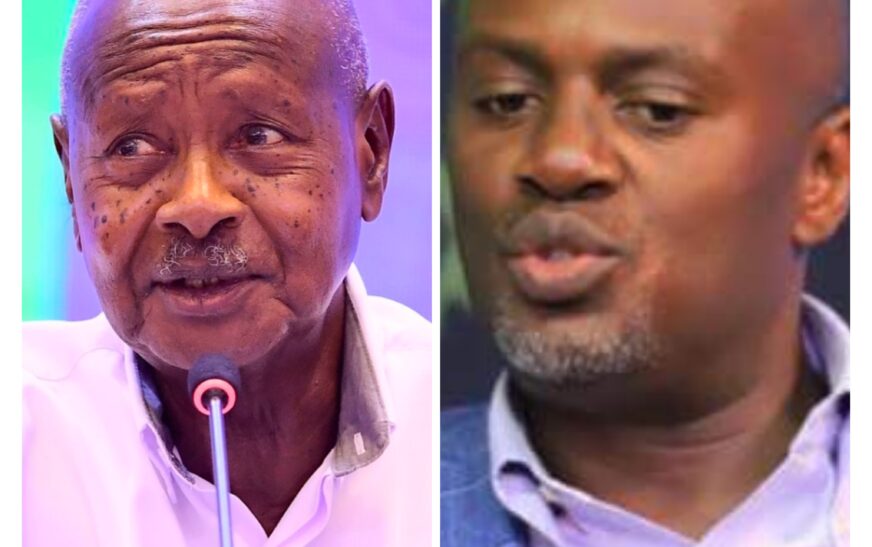
President Yoweri Kaguta Museveni has strongly defended Uganda’s industrialisation and value-addition agenda, accusing veteran journalist and political commentator Andrew Mwenda of consistently undermining local innovation, wealth creation programmes and strategic national development projects.
In a lengthy and sharply worded statement released on his official X account on Saturday, Museveni dismissed criticism questioning his judgment and leadership, saying that despite being 82 years old, he remains fully capable of defending both Uganda and his personal legacy.
“Mr. Mwenda, thank you for declaring me senile and incapable of judging right,” Museveni wrote. “You will, however, discover that at 82, I am still able to defend Uganda and myself with the Bible, the AK-47 and the pen.”
The President’s statement appeared to be a direct response to recent criticism by Mwenda regarding government-backed investments and industrial projects, with Museveni accusing the journalist of promoting neo-colonial thinking that discourages African countries from industrialising and adding value to their raw materials.
Museveni challenged Mwenda to investigate and report on the achievements of Ugandan entrepreneurs and innovators whom critics have allegedly dismissed as fraudsters or beneficiaries of state patronage.
“You are supposed to be a journalist. Why do you not interview these ‘conmen’ such as Magoola, Senfuka, etc.? They are here in Uganda. They are where you can reach them and even the assets they have put on the ground,” Museveni wrote.
The President specifically referenced businessman Magoola’s factories in Matugga and Kamuli, herbal researcher Senfuka’s treatment programmes, Tugume’s factory in Ntungamo, and Professor Muranga’s banana project in Bushenyi as examples of local initiatives that deserve recognition rather than ridicule.
Museveni also mounted a strong defence of Kiira Motors Corporation, Uganda’s flagship automotive manufacturing project, saying its critics are uncomfortable with efforts aimed at transforming Uganda from a raw-material exporting economy into an industrialised nation capable of manufacturing finished products.
“You are ashamed and you dare not talk about Kiira Motors because that is a shamer of the neo-colonial agents,” Museveni said.
According to the President, critics such as Mwenda claim to be protecting taxpayers from loss-making ventures while at the same time supporting an economic structure that keeps African countries dependent on exporting unprocessed commodities at low prices.
Museveni used the example of gold exports to illustrate what he described as Africa’s historical exploitation in global trade. He said exporters of semi-processed gold receive far less revenue compared to those dealing in refined gold products.
“The parasites that abound in Africa export gold at 84 percent purity and get USD 60,000. A kilogram of fully refined gold of the purity of 99.9 percent goes for USD 168,000,” Museveni stated.
He also cited coffee exports, saying processed and branded coffee earns between USD 25 and USD 40 per kilogram internationally, while raw coffee beans fetch as little as USD 2.5 per kilogram.
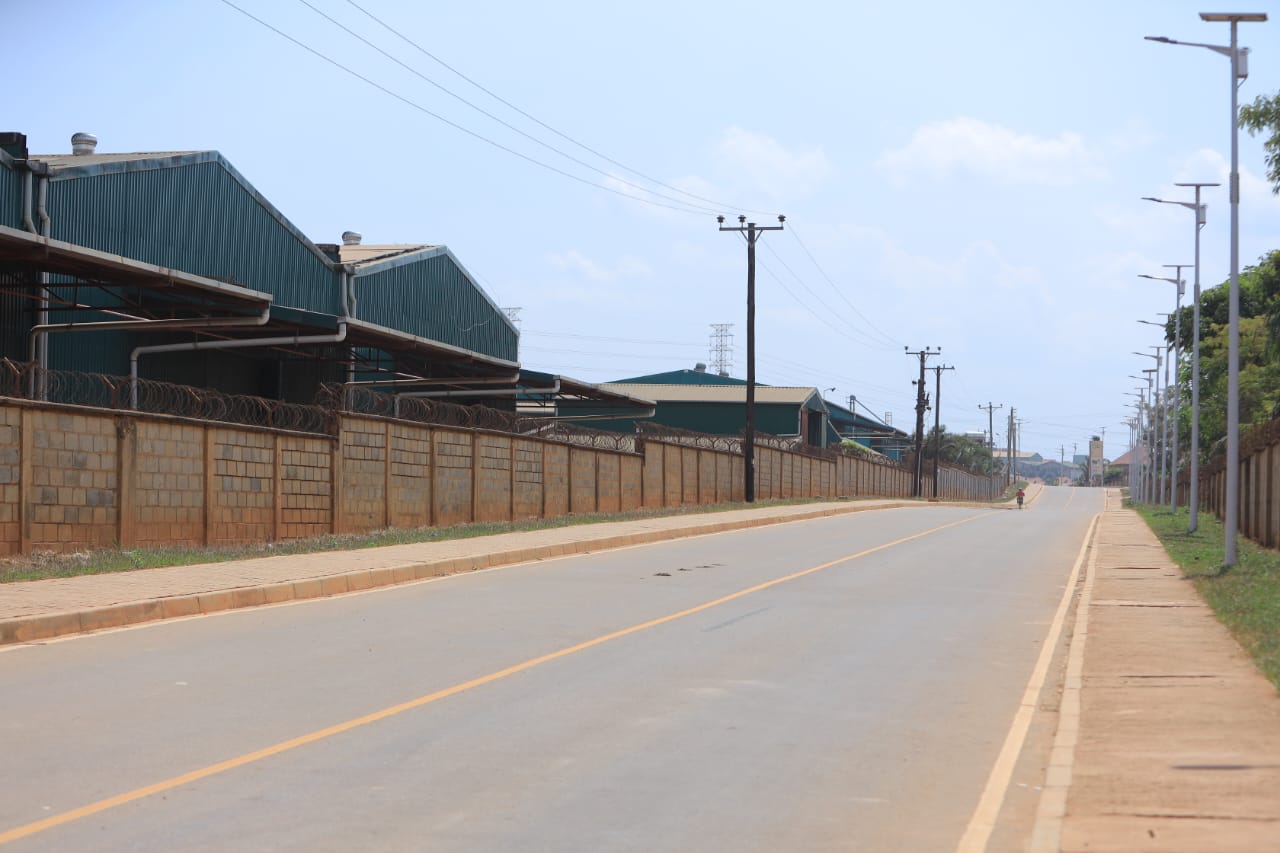
Museveni defended his government’s policy banning the export of unprocessed minerals, saying the strategy has already yielded positive results through the establishment of gold refineries and increased export earnings.
“The stubborn old man of Uganda who is senile banned the export of all unprocessed minerals,” Museveni wrote sarcastically, adding that Uganda now has 10 gold refineries and that gold exports have risen to USD 7.48 billion.
The President also dismissed Mwenda’s criticism of government poverty alleviation programmes, particularly the Parish Development Model (PDM), saying such initiatives are already changing livelihoods in rural Uganda where implementation has been effective.
“The great Mwenda is talking about small capital for small holders. Does this great Andrew Mwenda live in Uganda?” Museveni asked.
He credited government wealth creation programmes and deliberate agricultural interventions for the rapid growth of Uganda’s coffee sector from three million bags annually to 8.8 million bags, earning the country approximately USD 2.4 billion.
Museveni said his ideological commitment remains rooted in patriotism, Pan-Africanism, socio-economic transformation and democracy, insisting that he would not be distracted by what he termed “traitors and foreign agents.”

“As a freedom fighter, I am always stubbornly standing for patriotism, Pan-Africanism, social-economic transformation and democracy. I am never swayed by traitors and foreign agents,” he said.
The President further accused Mwenda of damaging Uganda’s image among investors and development partners by publicising internal government disagreements and Cabinet discussions on social media.
According to Museveni, such conduct risks undermining confidence in Uganda’s economy at a time when the country is recording strong growth.
“What could be the real motive of Andrew Mwenda of externalizing in the social-media our internal discussions, including the Cabinet? It is to scare away our partners because the likes of Andrew Mwenda are worried by the success of Uganda’s economy, now growing at 6.3 percent per annum,” he wrote.
Museveni also revived old disagreements surrounding the Bujagali Hydroelectric Power Station project, accusing Mwenda and others of contributing to delays and electricity shortages after allegedly frustrating a partnership with AES on the Bujagali dam project in 2003.
“He was part of those that caused load-shedding in Uganda in 2005 and onwards, having sabotaged our partnership with AES,” Museveni claimed.
The President maintained that Uganda’s industrial and agricultural expansion has continued despite opposition from critics.
He pointed to growth in the dairy sector, where milk production has reportedly increased from 200 million litres to 5.3 billion litres, as well as expansion in banana growing, fruit processing, palm oil cultivation, steel manufacturing and coffee production.
Museveni said regions such as Teso, Luwero, Kayunga, Masaka, Kalangala, Buvuma, Bundibugyo and Maruzi have all benefited from targeted government interventions that critics once dismissed.
“The growth of the commercial dairy industry in the cattle corridor, the banana industry, the fruit industry, the palm oil industry, the coffee industry and the steel industry are always opposed by the likes of Andrew Mwenda. We have succeeded in spite of their sabotage,” he said.
Drawing parallels from his guerrilla warfare experience during the liberation struggle, Museveni argued that temporary setbacks should never discourage strategic national goals such as industrialisation and economic transformation.
“We attacked Kabamba two times, not succeeding. On the third attempt, we had great success. Failure from which we learn lessons, is success,” he wrote.
Using a Runyankore proverb, the President compared Uganda’s industrialisation efforts to a child learning how to walk, saying genuine patriots should encourage progress instead of predicting failure.
“With the Banyankore, if a baby is learning how to walk and falling down, we encourage the baby saying: ‘Siinga abarezi, siinga abarezi, tengerera, tengerera.’ We do not do what Mwenda is doing by saying: ‘The child will never stand.’”
Museveni concluded the statement with the liberation movement slogan “Aluta Continua, Victory is Certain,” signing off as “Ssaabalwanyi.”