
Introduction
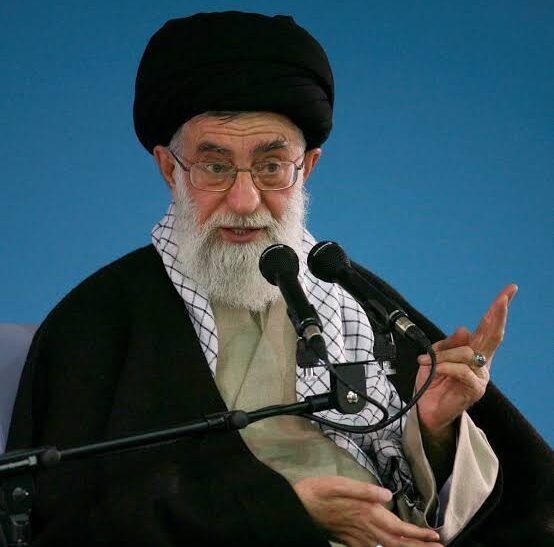
The Imam with his unique philosophical statesmanship developed a historical and civilizational approach to an original statecraft for the Islamic Republic of Iran – free of western secularism. He developed the multi-layered statecraft with sovereignty at its heart, encapsulated in Iranian history and Persian civilization.
Application of sovereignty
The sovereignty applied to political independence; economic freedom; social emancipation; psychological liberation; freedom from physical, mental, and spiritual poverty; and aversion to western perceptual bias. The bias translated itself into psychological oppression that functioned as an instrument of control by colonialism and imperialism.
Fearless sovereignty
He developed sovereignty as a fearless universal decolonial concept as a guarantee of security, safety, and peace. It was in a historical context in which colonialism and imperialism had made wars as if wars were a natural habit of humanity. It included the transition of national bourgeoisies of USA, Canada, Europe, and Japan into a single international bourgeoisie in defence of the post-WWII war industry as a site for the accumulation of private capital. It was also a context in which newly independent states in Asia, Africa, and Latin America lacked the capacity and capability to assert their full and free right to non-negotiable sovereignty.
Crisis of sovereignty
The crisis of sovereignty that the underdeveloped Third World (Alfred Sauvy:1952) (now Global South) faced, afflicted many former colonies. Many courageous liberation leaders compromised with imperialism and saw their countries descend into neo-colonialism and fiscal profligacy as a debt trap. The IMF and the World Bank (WB) laid out their structural adjustment program (SAP) as the foundation of neo-colonialism. The USA controlled IMF and Europe controlled the WB. The imperialist countries afflicted the neo-colonial leaders with political flattery and a seat at their side-table of feasting.
Historical need to solve the crisis
The crisis of sovereignty of each country is the inherited crisis of the whole of the Global South. It has to be solved singly and wholly while the Global North is trying to disrupt it by various means. The colonial structures of dependence that serve the Global North are still in place and they interfere with sovereign rights.
Retaking control
The focus of the struggle for full sovereignty is presently concentrated on the Islamic Republic as the main obstacle to USA imperial hegemony in West Asia, which is a well-established source of oil and gas that drive the Global North economies. The struggle for sovereignty includes retaking control of human minds by its citizens, indigenous cultures, religions, value systems, knowledge systems, mineral wealth, technology, military and more.
The road to further liberation
The factual military defeat of the USA army by the Islamic Republic and the removal of the pounded USA bases from the Gulf states will help accelerate the liberation of Palestine, Lebanon, Iraq, Syria, and Yemen. The liberation will spread further to South and Central Asia and weaken USA unipolarity and strengthen decolonial restructuring. Dependency complex is being broken. Economic freedom becomes a greater reality of interdependent relationships of equals. Re-globalisation around energy, technology, and data becomes possible for the Global South.
Family dynasties as obstacle to liberation

History has witnessed many powerful family dynasties collapse. While they enjoyed the use, misuse, or abuse of power they did not acknowledge its ephemeral nature. Some held political or economic sway even in their waning years and some became delegitimised. Whatever power they held collapsed because they were not invested in truth and justice. The Pahlavi family dynasty is an example and a lesson to history.
Family dynasties of Gulf countries
The family dynasties in the Gulf countries were manufactured by British colonialism as its local agents to look after its oil and gas interests. Their subservience to USA imperialism, the successors to British colonialism, is so deep that the Gulf’s 32 Sovereign Wealth Fund (SWF) have invested $4-trillion to $6-trillion in fixed-income securities such as USA government bonds since the 1990s (Gulf Sovereign Wealth Funds and the Cost of Crisis Resilience: Situation Assessment, May 2026: Middle East Council on Global Affairs). As some of the funds are invested in the USA where else would the rest of the subservient funds be invested? Would they be siphoned through the 14 Overseas Territories of the UK or money laundering centres like Isle of Man or Guersney?
The Gulf SWF equates to 40% of global SWF assets. Some of these single assets equate to 300%-578% of their respective GDPs. They are content with earning risk-free passive income instead of inventing new products in the real economy and creating new wealth.
Dispute over control of petrodollars
One of the major disputes between President Trump and UK Premier Keir Starmer was that Trump was wanting to take control of all petrodollars away from Starmer. Historically, British colonialism shifted cash from all its colonies (including the Gulf vassal states) to Britain. The 50-year contract on petrodollar investment by Saudi Arabia in USA bonds expired in 2025. The petrodollar now faces strong competition from the petroyuan because China is the largest purchaser of oil in the world.
GCC and USA entanglement
The GCC countries are so entangled with USA imperialism that they, being blind to independent military theory, agreed to the establishment of USA military bases in their flat desert planes in return for the USA military providing security guarantees to them. They have become complicit in the USA/Israel wars of aggression against Iran and Iraq (and previously against Afghanistan).
Imam Khamenei’s steadfastness on sovereignty
The Imam, in contrast, resisted pressures to shift from an Islamic Republic to a neo-colonial state. He defended the independence of Iran and achieved and maintained its sovereignty.
The Islamic Revolution since its birth and for the next 47 years faced imperialist hostility of all kinds. Imam Khomeini resisted, which Imam Khamenei continued as a civilisation-building, historical, and Islamic project. Persian civilization precluded him from layering the Islamic statecraft with tribalism and ethnonationalism but with equality of citizenship and political democracy.
He consolidated traditionalism and modernism that let cultures, languages, and religions flourish.
By Haroon Aziz, South Africa