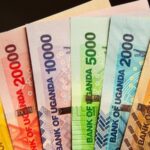

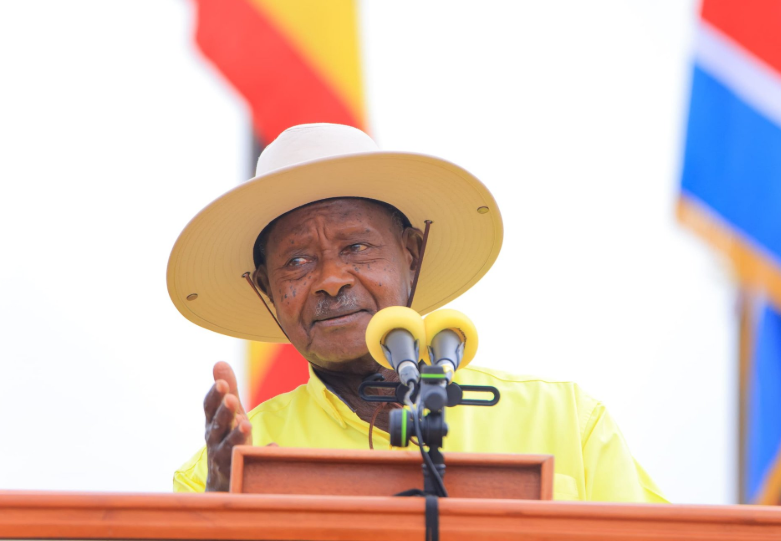
President Yoweri Museveni has renewed calls for the fast-tracking of the East African Community (EAC) monetary union, warning that continued delays risk undermining trade and weakening confidence in the bloc’s long-promised economic integration.
During a meeting with EAC Secretary-General Stephen Patrick Mbundi at State Lodge Nakasero, Museveni cast the proposed single currency as an overdue reform—one he suggested is critical to easing the cost of doing business in a region still grappling with fragmented markets and volatile exchange rates.
The discussion laid bare a growing sense of urgency within the EAC, where ambitions for deeper integration have often outpaced implementation.
Mbundi acknowledged that currency fluctuations across member states are already eroding gains from regional trade, with businesses and ordinary citizens bearing the brunt through higher transaction costs and uncertainty in cross-border transactions.
“Our citizens are really suffering because of fluctuations in currency. It is a big hindrance to business,” Mbundi said.
In a notable departure from the bloc’s traditionally cautious approach, Mbundi floated the idea of a “coalition of the willing,” where a few ready member states could move ahead with the monetary union instead of waiting for all eight countries to meet convergence benchmarks.
“If we could start with three or four countries, then the others can join later, otherwise we are not doing a good service to the population,” he said.
The suggestion hints at growing impatience within the Secretariat over the slow pace of reforms, and raises the prospect of a multi-speed integration process within the EAC.
The East African Monetary Union, a key pillar of the bloc’s integration agenda, is expected to reduce exchange-rate risks and streamline trade. Yet its rollout has repeatedly stalled, weighed down by concerns over fiscal discipline, inflation targets and institutional readiness among partner states.
Museveni, who currently chairs the EAC Summit, maintained that integration remains indispensable to the region’s economic transformation, but his remarks also suggested a need for more decisive action if the bloc is to realise its ambitions.
Beyond monetary policy, the President turned to the persistent bottlenecks in regional transport, which he said continue to inflate the cost of trade despite years of planning.
He reiterated his long-held position that railways should handle bulk cargo and petroleum products, leaving roads for passengers and lighter goods—a shift he argued would significantly cut logistics costs if properly implemented.
“Railway transport should carry heavy goods and petroleum products, while roads remain for passengers and light cargo,” Museveni said.

He urged regional authorities to move from discussion to execution, directing the transport committee to “concretize” plans and accelerate coordination across member states.
“I totally support it. I will tell our Minister of Transport, and the Minister for East African Affairs will coordinate them to meet and work out all these connections,” he added.
Museveni also backed a proposal requiring non-EAC countries exporting into the regional market to contribute financially to the bloc, describing it as a fresh and potentially transformative idea.
“These people who are selling things from here, why don’t they contribute? It’s a new idea and a very good idea,” he said.
First Deputy Prime Minister and Minister for EAC Affairs Rebecca Kadaga acknowledged the heightened expectations placed on Museveni’s leadership of the bloc, noting that his long-standing advocacy for integration raises the stakes for delivery.
“We have a very heavy burden because you are the chair of the summit. You are well known as the champion of integration, so we have a bigger burden to deliver,” Kadaga said.
She expressed hope that tangible progress could be achieved on the remaining pillars of integration, particularly the monetary union, during his tenure.
Mbundi, whose appointment was recently endorsed by the Summit, pledged to steer the Community toward deeper integration while addressing emerging regional challenges such as climate change, food security and energy access.
Still, the renewed push for a common currency underscores a familiar dilemma within the EAC: strong political commitment on paper, but slow and uneven implementation in practice.
For many observers, the question is no longer whether the monetary union is necessary, but whether the bloc can muster the cohesion and discipline required to finally deliver it.