
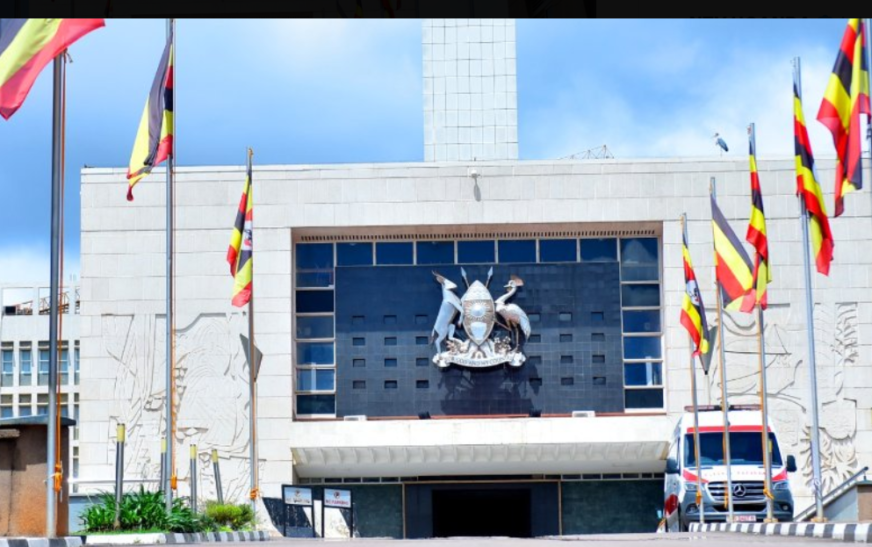
Parliament has passed the Protection of Sovereignty Bill, 2026 after adopting the committee report and completing clause by clause consideration, capping weeks of intense debate over the proposed law.
The bill, tabled on April 15, 2026 by State Minister for Internal Affairs David Muhoozi, has drawn sharp reactions from lawmakers, legal experts, civil society organisations and academia.
It was earlier subjected to scrutiny by Parliament’s committees, with the ruling National Resistance Movement caucus signalling support for its passage.
At the heart of the law is an attempt to regulate foreign funding and influence in Uganda, with government arguing that the measures are necessary to safeguard national sovereignty from external interference.
The legislation establishes a framework for the registration, monitoring and control of individuals and entities deemed to be agents of foreign interests, while tightening oversight on financial flows, partnerships and related activities.
Key amendments
During scrutiny, the committee raised concerns about vague provisions in the original draft, particularly the introduction of offences such as economic sabotage and interference without clear definitions.
Lawmakers subsequently pushed for clarity and proposed adjustments to sanctions.
The committee also flagged the broad definition of a foreigner and an agent of a foreigner, noting that it risked capturing Ugandans in the diaspora. Amendments were introduced to refine these definitions and to protect legitimate economic, academic, humanitarian and civic activities.
Parliament further amended clause 21 to restrict the requirement for declaration of funding sources to individuals and entities classified as agents of foreign interests.
Under the law as passed, clause 13 criminalises economic sabotage, with penalties including a fine of Shs2 billion for organisations and Shs1 billion for individuals, or up to 10 years in prison.
The offence is defined as acts by an agent of a foreigner who knowingly publishes false information or engages in conduct that weakens or undermines the country’s economic system.
Minority dissent
Despite the amendments, opposition lawmakers raised strong objections to the bill.

In a minority report, Busiro East MP Medard Sseggona argued that the legislation was fundamentally flawed.
“The bill was rejected by the President and the majority of stakeholders the committee engaged, together with the purported sponsor,” Sseggona said, adding that it does not address any clear mischief.
Mukono Municipality MP Betty Nambooze criticised the process, citing limited public participation.
She said the committee largely ignored views from hundreds of stakeholders and only considered a handful of submissions, which she argued undermined citizens’ right to be heard.
Kilak South MP Gilbert Olanya warned that the law introduces a punitive sanctions regime that could harm the economy, calling for its withdrawal and redrafting.
Erute South MP Jonathan Odur questioned the validity of the certificate of financial implications issued by Minister Amos Lugoloobi, arguing that it did not align with the bill’s provisions.
Odur also accused some committee members of procedural irregularities, claiming dissenting voices were stifled during deliberations.
He further argued that substantial changes made to the bill altered its original intent and should have required it to be reintroduced and subjected to fresh committee review.
Law takes shape
Despite the objections, the bill was passed, marking a significant step in government’s push to tighten control over foreign influence in Uganda’s political and economic landscape.
The legislation now awaits presidential assent to become law.