
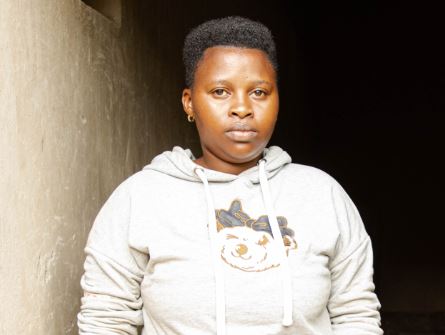
As Uganda marks World Food Day today under the theme, “Innovate today. Nourish tomorrow”, the story of Lilian Kobusingye highlights the importance of creating inclusive agricultural opportunities that enable young women to access productive resources, build viable enterprises and participate meaningfully in the country’s coffee value chain.
In Nkoni village, Kyotera District, 28-year-old Lilian Kobusingye is working to build a livelihood through poultry farming. With just 25 birds, she earns approximately Shs 450,000 (US$120) in annual profit. While the income helps meet her immediate needs, Lilian has a bigger ambition: to establish a coffee farm.
“I want to start a coffee farm,” she says. “But I have no land, and I need more capital.”
Her experience reflects the challenges facing many young women seeking to enter Uganda’s agricultural sector. Despite their ambition and potential, limited access to land, affordable finance, technical skills and markets continues to constrain their participation in commercially viable agricultural enterprises.
Agriculture remains a major source of livelihoods in Uganda, while coffee is one of the country’s leading export commodities, supporting millions of people. However, opportunities across the coffee value chain are not equally accessible. Young women are often concentrated in informal, low-income activities, with fewer opportunities to progress into more profitable areas such as aggregation, processing and trade.
Addressing this gap requires more than encouraging young women to participate in agriculture. It demands deliberate investment in the resources, skills, markets and institutional support they need to build sustainable livelihoods.
Creating pathways into the coffee value chain
Launched in 2025, the Empowering Young Women Entrepreneurs in Agriculture Stimulated by Coffee (EYE-C) Programme seeks to address these barriers by creating dignified employment opportunities for 300,000 young women aged 16–35 across Uganda’s coffee value chain.
The programme is implemented by aBi Development Limited in partnership with the Mastercard Foundation, alongside Café Africa Uganda, the skilling partner, and the International Women’s Coffee Alliance (IWCA) Uganda Chapter.
Its ambition aligns with Uganda’s broader coffee sector growth aspirations, including the government’s target of producing 20 million bags of coffee annually by 2030. Achieving this ambition will require increased production alongside opportunities for young women to participate in and benefit from the sector’s expansion.
A defining feature of EYE-C is its co-creation approach. Rather than imposing predetermined solutions, the programme engages young women to understand their aspirations, identify the barriers they face and explore opportunities suited to their circumstances.
For Lilian, this approach provided an opportunity to share her ambitions and discuss the constraints limiting her progress.
“EYE-C staff came to my village. They asked me what business I’m doing and what I want to become. I’m happy they came,” she says.
By placing young women at the centre of programme design, EYE-C recognises them as active participants in shaping their economic futures, rather than simply recipients of support. The approach also acknowledges that opportunities within the coffee industry extend beyond farming to include aggregation, processing, enterprise development and trade.
Building partnerships for sustainable employment

Creating dignified employment at scale requires more than individual training or enterprise support. Young women must also be able to operate within markets and institutions that recognise their potential and respond to their needs.
Recognising this, EYE-C has convened multiple stakeholders in Kampala, Mbale and Mbarara to build a shared understanding of the opportunities and barriers within Uganda’s coffee value chain. These engagements have brought together government representatives, private sector actors, farmer organisations and development partners to explore how their respective roles can contribute to more inclusive participation.
The emphasis on collaboration reflects the interconnected nature of the challenges facing young women entrepreneurs. Skills development, for example, can help a young woman improve her business practices, but its impact may be limited if she cannot access finance, secure productive assets or reach reliable buyers.
Similarly, financial products alone may not be sufficient if women lack the business skills, market information or institutional support needed to grow their enterprises.
“Sustainable job creation does not happen in isolation,” said aBi Development Chief Executive Officer Moses Nyabila. “It requires coordinated action, access to finance, market linkages, policy support, and the cultural shifts that allow women to participate fully and equitably.”
This ecosystem approach places responsibility across the value chain. Financial institutions have a role in developing products that reflect young women’s circumstances. Private sector companies can expand access to markets and commercial networks. Government institutions can strengthen enabling policies and support inclusive sector growth, while farmer organisations and communities can help challenge the social norms that limit women’s participation.
By bringing these actors together, EYE-C seeks to create conditions in which young women can enter the coffee economy, sustain their enterprises and progress towards more productive and rewarding opportunities.
Making agricultural growth more inclusive
As Uganda reflects on food security and agricultural transformation during World Food Day, EYE-C highlights an important principle: strong food systems depend not only on what a country produces, but also on who can access productive resources, participate in markets and benefit from the value generated.
Coffee sector growth can create opportunities across the value chain, but these benefits will not automatically reach young women facing barriers to entry. Deliberate efforts are needed to connect them to land, finance, skills, technology and commercial networks.
For Lilian, establishing a coffee farm will require more than determination. Access to capital, productive resources and relevant support could help transform her ambition into a viable enterprise.
Although EYE-C remains in its early stages, its co-creation model and emphasis on collaboration provide a foundation for advancing inclusive growth. Realising its ambitions will require sustained partnerships and tangible opportunities that enable young women to establish enterprises, increase their incomes and progress into dignified work.
Ultimately, the question is not whether young women like Lilian belong in Uganda’s coffee industry, but whether the systems and institutions shaping the sector will enable them to participate and thrive. Through EYE-C, efforts are underway to help ensure that Uganda’s coffee revolution creates opportunities for young women to contribute to and benefit from the country’s agricultural transformation.