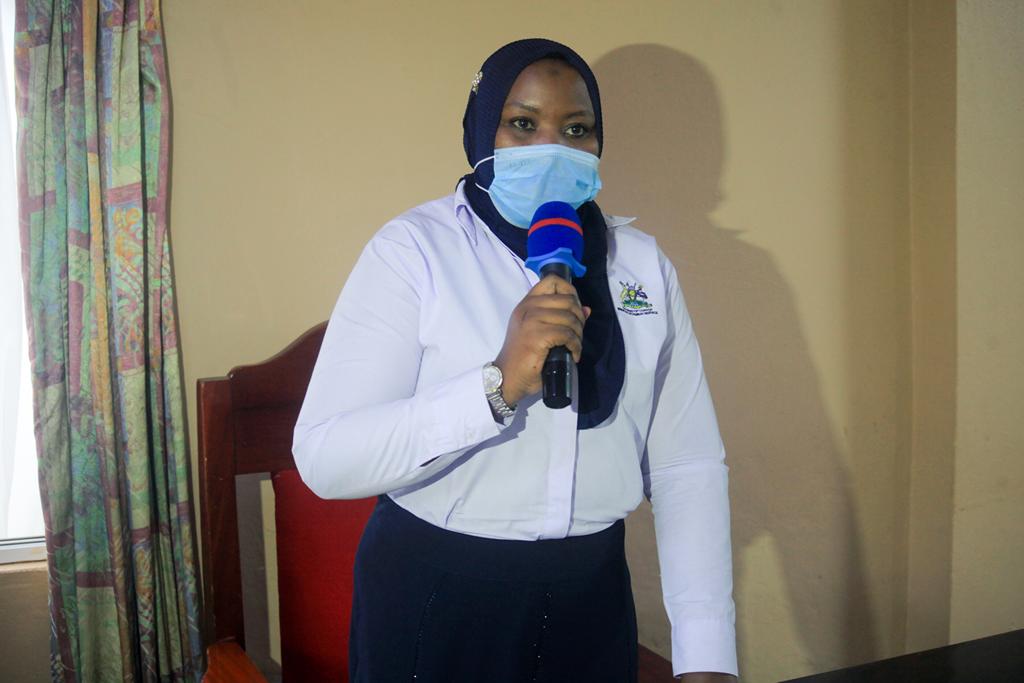

The Permanent Secretary of the Ministry of Education and Sports, Dr Kedrace R. Turyagyenda, has commended Ndejje University for promoting Science, Technology, Engineering and Mathematics (STEM), saying Uganda needs universities that equip graduates with practical skills to drive national development.
Turyagyenda said the country’s development ambitions require professionals capable of designing, building, producing, maintaining and innovating, particularly in addressing infrastructure challenges, advancing scientific discovery and translating technology into productive enterprise.
“Our development ambitions require engineers who can solve infrastructure challenges, scientists who can advance discovery, and professionals who can translate technology into productive enterprise,” she said.
She made the remarks on Friday, October 16, while officiating at Ndejje University’s 28th graduation ceremony at its main campus in Luweero District, held under the theme “I Am Doing a New Thing…”, drawn from Isaiah 43:19.
Turyagyenda challenged the university to align its academic programmes with Uganda’s skills needs, particularly in science, technology and engineering, as the country pursues industrialisation, employment creation and wealth generation.
She cited the National Planning Authority’s National Development Plan IV Human Resource Development Plan, which identifies shortages in fields such as artificial intelligence, advanced cybersecurity, big data analysis, biomedical engineering, digital forensics and process safety engineering.
The plan also identifies gaps in civil, electrical and mechanical engineering, software engineering, renewable energy, agro-processing, special needs education, and water and sanitation engineering.
Turyagyenda urged Ndejje University’s council, senate and management to assess these shortages against the institution’s capacity and consider strengthening existing programmes, introducing specialised training pathways and collaborating with other institutions.
She said the efforts would require investment in qualified staff, equipment, infrastructure and quality assurance to ensure graduates acquire the competencies needed in the labour market.
The Permanent Secretary also called on the university to strengthen partnerships with employers through curriculum development, industrial placements, joint research and exposure to emerging technologies.
She said universities should help students turn their ideas into practical products, viable businesses and solutions to community challenges.
“An industrial attachment should develop competence. A research project should help answer an important question. An innovation should have a pathway towards practical use,” she said.
Turyagyenda further urged the institution to embrace competence-based education and training, saying the effectiveness of higher education should be measured by what graduates can do with the knowledge acquired.
She called for practical projects, supervised industrial placements, functioning laboratories and workshops, and assessment methods that allow students to demonstrate their abilities.
Ndejje University Vice-Chancellor Rev. Canon Prof. Olivia Nassoko Banjo said the institution was preparing to implement competence-based education and training, with curriculum reviews underway across its schools and seven faculties ahead of the 2027/2028 academic year.
Banjo said the university was strengthening staff capacity, practical learning infrastructure, industry partnerships and quality assurance systems to produce graduates equipped with the knowledge, skills and values required in their professions.
“As we celebrate the 28th graduation ceremony, I would like to assure you all that Ndejje University remains committed to producing competent, ethical, and work-ready graduates who can make meaningful contributions to society,” she said.
She said the university had continued expanding its academic programmes, particularly in science-related disciplines, with the former Faculty of Engineering and Survey growing into the School of Engineering and Built Environment.
The university also established a centre for technical and vocational education and training programmes to comply with national guidance requiring diploma programmes to fall under the TVET Council.

Banjo said the university’s Faculty of Environment and Agricultural Sciences was contributing to national development through training and research in sustainable agriculture, animal production, agribusiness, forestry, environmental management and agro-informatics.
She said the programmes were intended to support agricultural modernisation, food security, agro-industrialisation, employment creation and sustainable natural resource management.
The Vice-Chancellor also highlighted partnerships supporting the university’s teaching and research capacity, including a three-year European Union-supported project focused on climate-resilient and green-energy solutions for farming communities.
The project is being implemented in partnership with Soroti University, with support from research and education institutions in Uganda and Europe.
Banjo also appealed to the Ministry of Education and Sports and the government to expedite accreditation of the university’s proposed School of Medicine.
She said the university had invested in facilities and equipment for the programme but had not yet received accreditation, leaving the infrastructure underutilised.
The university hopes to begin training medical personnel to supplement Uganda’s healthcare workforce once the required approval is granted.
On access to higher education, Turyagyenda commended Ndejje University for efforts to keep tuition fees affordable, saying this gives younger people from different backgrounds an opportunity to pursue university education.
“For many families, university education represents years of saving, sacrifice and hope. Every responsible effort to contain costs gives another deserving young person a chance to develop their potential,” she said.
However, she cautioned that affordability should not compromise the quality of teaching, staffing, laboratories, libraries and student support services. She also called for greater support for students from disadvantaged households, young women pursuing science and engineering, and learners with disabilities.
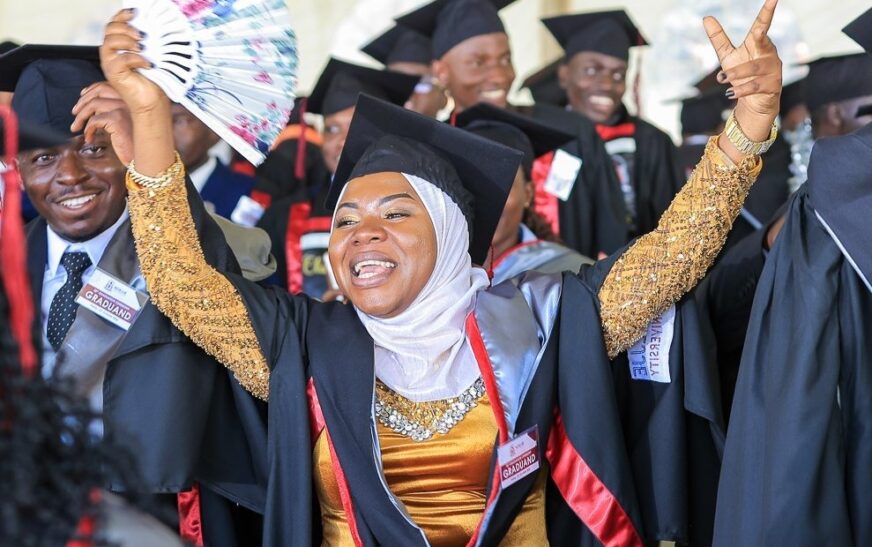
Notably, the 28th graduation ceremony saw 1,104 students graduate, comprising 573 males and 531 females. Nakirijja Flavia emerged as the overall best student and best female student with a cumulative grade point average (CGPA) of 4.79, while Upyem Kevin, from the Faculty of Business and Administration, was the best male student with a CGPA of 4.76. The university also celebrated 48 first-class graduates, comprising 30 males and 18 females.
Turyagyenda also urged graduands to continue acquiring new skills as technology and professional demands evolve. She also challenged them to reject corruption, laziness and immorality, saying Uganda needs graduates who combine professional competence with ethical conduct.
“Uganda needs graduates who combine ability with conscience; graduates who improve the institutions they join and strengthen the communities in which they live,” she said.
Banjo similarly encouraged graduates to approach new opportunities with faith, courage and a sense of purpose while upholding integrity and contributing to the transformation of their communities.
She urged them to remain connected to the university through its alumni association, mentor current students and contribute their knowledge and resources to the institution’s continued growth.