
Uganda needs $28.1 billion to meet its climate commitments by 2030, but has secured less than 10 per cent of the required funding, prompting the European Investment Bank (EIB) to support efforts to strengthen climate-risk management in the country’s financial sector.
The partnership between the EIB and the Bank of Uganda (BoU) will help develop a framework for assessing climate-related financial risks, improve disclosure and reporting requirements, and encourage financial institutions to channel more investment into environmentally sustainable activities.
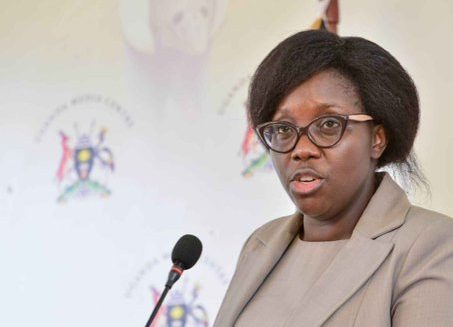
Gloria Namazi, a country engagement specialist at the NDC Partnership, said the funding shortfall remained a major challenge to implementing Uganda’s climate commitments.
“Uganda needs about $28.1 billion to meet its NDC commitments. As we see now, only less than 10 per cent of the required resources have been secured,” Namazi said during the launch of the cooperation programme.
She said closing the gap would require stronger financial institutions, improved climate-risk management and greater mobilisation of domestic and international private-sector investment.
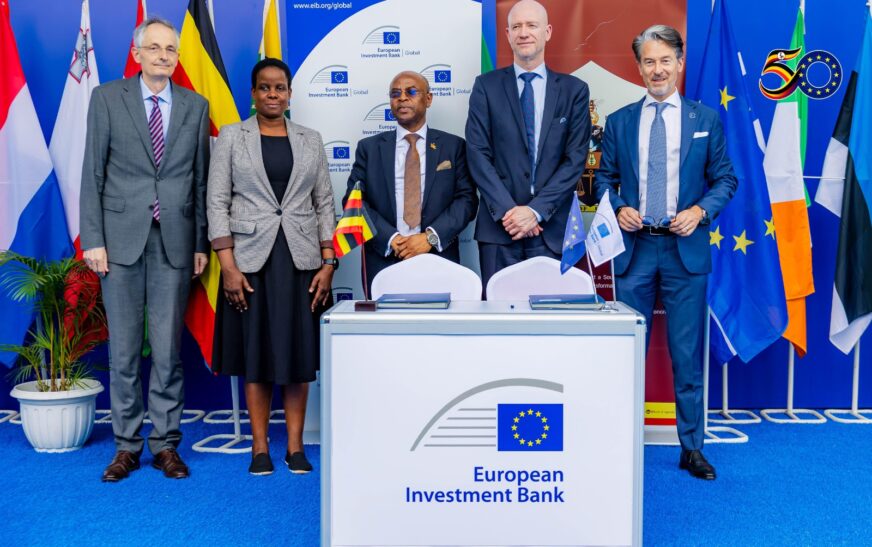
Under the agreement, EIB Global, the development arm of the EIB Group, will provide technical assistance to help the central bank develop a roadmap for greening the financial sector, strengthen climate-risk supervision and improve disclosure practices among financial institutions.
The support will also help the central bank implement Uganda’s National Green Taxonomy, launched in 2025 to establish common standards for identifying economic activities that qualify as environmentally sustainable.
Selected commercial banks are also expected to benefit from the programme, with Housing Finance Bank identified as the first Ugandan lender scheduled to receive technical assistance.
Edward Claessen, head of the EIB’s Regional Hub for East Africa in Nairobi, said the programme would help the Bank of Uganda develop systems for identifying, monitoring and reporting climate-related risks affecting investments.
“By having better means to identify, to report, and to monitor climate change effects on investments, it will give private sector investors as well as businesses more confidence to invest in the green economy in Uganda,” Claessen said.
He said Uganda would become the fifth African country to benefit from the programme, following Kenya, Rwanda, Ethiopia and Nigeria.
The programme has total financial backing of €30 million, although Claessen said the EIB had not disclosed the amount allocated to individual countries.
He said the assistance would primarily support the central bank in developing regulatory frameworks and supervisory procedures rather than provide direct loans to businesses.
The programme is expected to help financial institutions assess how climate change could affect lending and investment decisions, particularly where extreme weather events threaten borrowers’ ability to repay loans.
Financial sector risks
Bank of Uganda Deputy Governor Professor Augustus Nuwagaba said climate change posed a growing risk to the financial sector because economic activities, including production and transport, depend heavily on weather conditions.
He said droughts, floods and other extreme weather events could disrupt businesses, weaken borrowers’ repayment capacity and expose financial institutions to losses.
“The problem which hits one is a problem for all,” Nuwagaba said, warning that problems affecting an individual commercial bank could spread to other institutions and threaten the stability of the wider financial system.
He explained that financial institutions were interconnected, making climate-risk management a collective responsibility rather than an issue that individual banks could address in isolation.
Nuwagaba said the technical assistance would help the central bank and financial institutions develop better models for identifying, measuring and mitigating climate-related risks, while establishing clearer guidelines for incorporating them into lending and investment decisions.
He urged commercial banks and other supervised financial institutions to integrate climate-risk assessment into their routine operations instead of treating it as a separate regulatory requirement.
“When you are giving out loans, when you are assessing loans, when you are carrying out these activities, when you are having your models,” he said, financial institutions needed to account for climate-related risks as part of their normal operations.

He said banks should consider the potential effects of extreme weather when evaluating borrowers, allocating credit and developing risk-management models to ensure that climate-related disruptions do not undermine loan repayments.
The intervention, he added, would help protect borrowers, sustain lending to productive businesses and maintain confidence in the financial system.
Nuwagaba said the Bank of Uganda remained committed to maintaining price stability and a sound financial system as Uganda pursued socio-economic transformation. However, he warned that achieving these objectives required institutions to understand emerging risks and establish effective mitigation measures.
EU backs green transition
European Union Ambassador to Uganda Jan Sadek said the agreement marked an important milestone in relations between Uganda and the European Union, particularly as the country pursues economic growth and a green transition.
Sadek said climate change was not only an environmental challenge but also an economic concern affecting businesses, livelihoods and financial stability.
“Uganda has ambitious plans for economic growth and green transition. And achieving these ambitions will require substantial investment, and public finance alone will not be sufficient,” Sadek said.
He said the agreement would help create conditions for sustainable investment by strengthening financial institutions’ ability to manage climate risks and identify emerging opportunities.
Sadek added that the initiative aligned with the European Union’s Global Gateway strategy, which combines expertise, financing and partnerships to mobilise investment benefiting businesses and communities.
He commended Germany and Luxembourg for financing the programme and congratulated the EIB and the Bank of Uganda on the agreement.
The programme is being implemented through the EIB Group’s Greening Financial Systems technical assistance programme, financed by Germany and Luxembourg through the Greening Financial Systems Fund, in coordination with the NDC Partnership.
Claessen said the EIB had invested close to €700 million in Uganda over several decades, supporting sectors including energy, transport and digital infrastructure.
He said the bank would continue supporting Uganda’s green transition, with the anticipated benefits including job creation, stronger businesses and a more resilient economy.
The initiative also builds on Uganda’s National Climate Finance Strategy 2025–2030, which seeks to improve the country’s capacity to mobilise climate finance and strengthen the financial system’s resilience and transparency.
Namazi said Uganda had made progress in integrating climate action into national planning since joining the NDC Partnership in 2016.
She cited collaboration among the Ministry of Water and Environment, the Ministry of Finance, Planning and Economic Development, and the National Planning Authority in advancing climate policies and financing arrangements.
She added that the Bank of Uganda’s request for a diagnostic assessment of the financial sector and the development of a climate-risk disclosure framework would help identify policy and regulatory gaps and guide financial institutions in incorporating climate considerations into their operations.
With less than a tenth of its estimated climate-financing needs secured, Uganda faces the challenge of translating technical assistance into stronger financial-sector regulation, improved climate-risk reporting and increased investment in climate-resilient economic activities.
The country will also need to mobilise substantially more public and private capital if it is to turn its climate commitments into funded projects by 2030.