

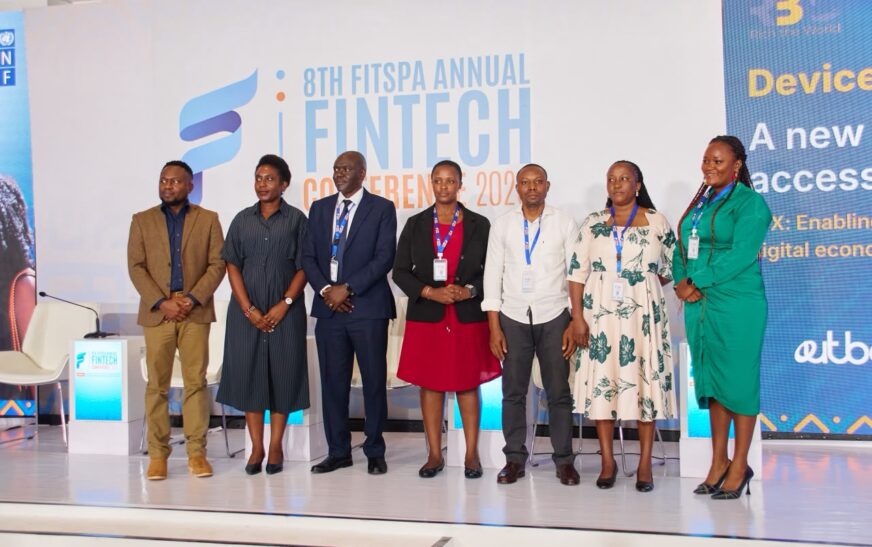
The United Nations Capital Development Fund (UNCDF), in partnership with the Mastercard Foundation, has unveiled a device financing initiative expected to expand access to 22,000 smartphones, laptops and tablets for entrepreneurs and small businesses across Uganda.
The initiative, implemented through Richblack Communications Limited, targets approximately 18,000 micro, small and medium enterprises (MSMEs), with a focus on young entrepreneurs, women-led businesses, refugees, persons with disabilities and other underserved groups.
Announced at the eighth Annual Fintech Conference at Sheraton Kampala Hotel on October 9, the initiative seeks to address the high upfront cost of digital devices, which continues to prevent many small businesses from adopting technology and participating in the digital economy.
Under the arrangement, Richblack Communications will procure devices in bulk and offer them to eligible entrepreneurs through structured payment plans, allowing businesses to spread the cost of acquiring technology.
The devices are expected to help entrepreneurs manage their businesses, conduct digital financial transactions, maintain records and reach customers beyond their immediate communities.
Harriet Asiimwe, the director of Richblack Communications, said affordable access to technology was essential for entrepreneurs seeking to grow their businesses and tap into new economic opportunities.
“Access to digital devices is essential for entrepreneurs seeking to grow their businesses and participate in the digital economy. Through this partnership, we aim to make device ownership more accessible to young people, women entrepreneurs and small businesses, particularly those in underserved communities, enabling them to embrace digital solutions and unlock new opportunities for growth,” Asiimwe said.
The initiative comes amid disparities in access to digital technology across Uganda. Research by UNCDF, citing the GSMA Consumer Survey 2024, indicates that smartphone ownership among adults stands at approximately 33 per cent in urban areas, compared with 20 per cent in rural areas.
The figures highlight the affordability and access barriers facing entrepreneurs, particularly those operating outside major urban centres.
Beyond providing devices, the programme aims to demonstrate whether financing productive digital assets can become a commercially viable business model in underserved markets.
UNCDF is using concessional financing to reduce investment risks that have historically discouraged the provision of affordable device financing to businesses that struggle to obtain conventional credit.
The arrangement will allow Richblack Communications to develop and test a financing model tailored to entrepreneurs who may not qualify for traditional loans.

Evidence gathered during implementation, including customer demand and repayment performance, is expected to guide future investment decisions and encourage financial institutions and private investors to support similar initiatives.
The partnership is being implemented under the 10X: Enabling the Growth of MSMEs through the Digital Economy Programme, delivered by UNCDF, Outbox, Women in Technology Uganda and Refactory in partnership with the Mastercard Foundation.
The programme seeks to expand economic opportunities for young women and strengthen women-led enterprises through improved access to markets, finance, digital skills and more efficient business operations.
Access to digital devices can also help small businesses establish transaction histories through digital payments, potentially improving their financial profiles and access to financial services. Online platforms can further connect enterprises to new customers, suppliers and markets.
The initiative was announced during the eighth Annual Fintech Conference, which brought together policymakers, financial institutions, technology innovators, development partners and private sector players to discuss financial inclusion and Uganda’s digital transformation.
UNCDF said the partnership demonstrates how development finance can be combined with private sector distribution networks to address barriers that prevent underserved businesses from accessing essential technology.
The fund has called on financial institutions, device distributors and other private sector players to build on the lessons from the initiative and explore ways of expanding affordable device financing for small businesses.
The long-term objective is to develop a sustainable market for financing productive digital assets, attract additional private capital and enable more entrepreneurs to access the technology needed to establish, strengthen and grow their businesses.
By lowering the cost barrier to digital device ownership, the partners hope to improve enterprise productivity, expand financial inclusion and create more economic opportunities for young people and other underserved groups.