
Horticultural farmers in the Bunyoro Region have moved a step closer to international markets after entering a joint venture with local exporter KK Foods to supply fresh produce to Western Europe, including the United Kingdom.
The farmers, operating under the Albertine Farmers Association (AFA), signed a Memorandum of Understanding (MoU) with KK Foods following a capacity-building programme facilitated by the Stanbic Business Incubator Limited (SBIL).
The partnership was launched at the Ageteraine Agro-Processing Facility in Hoima City over the weekend, marking a transition from training to commercial export production.
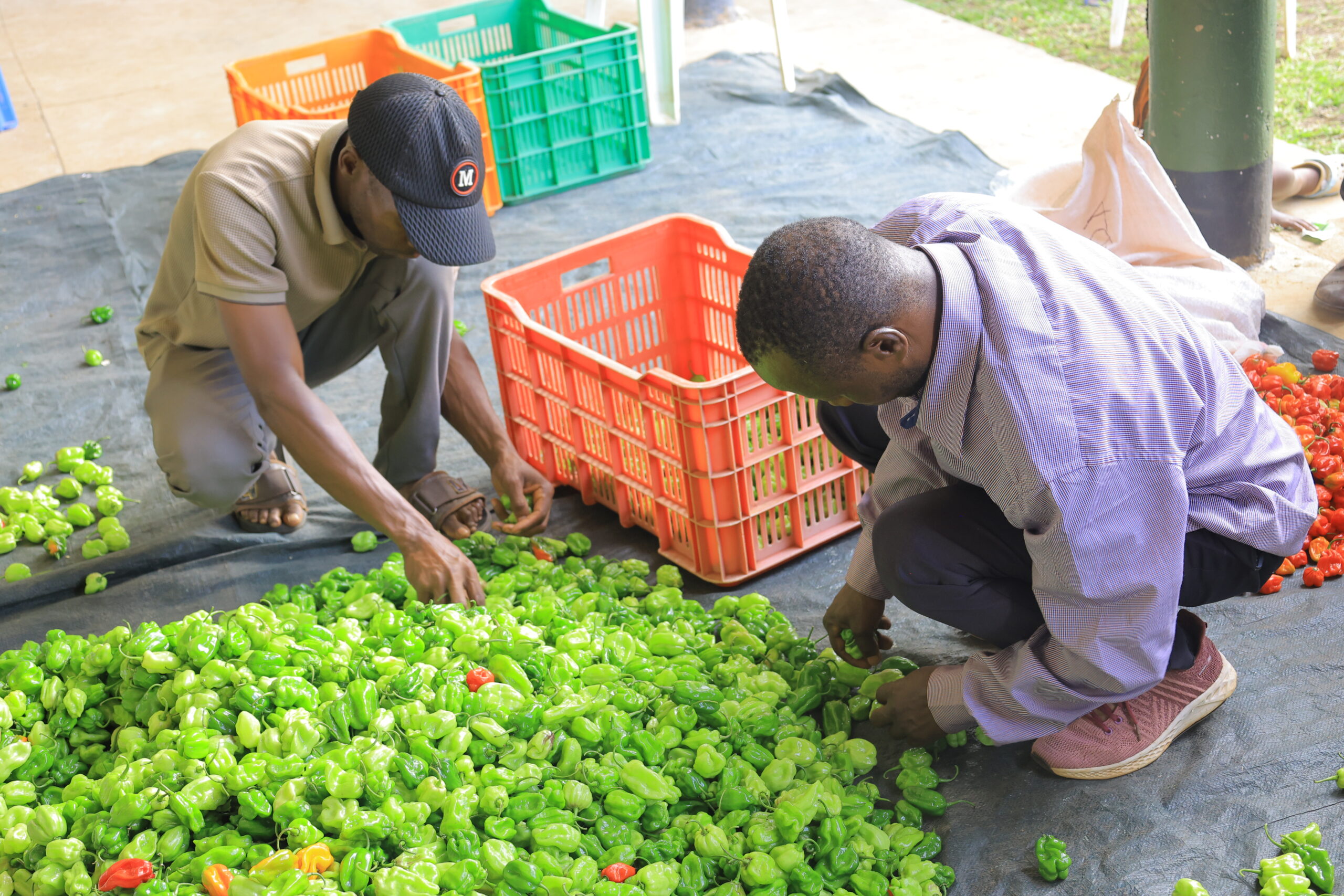
According to AFA chairperson Julius Kwamya, the venture will initially focus on hot pepper and chilli, with plans to expand into other high-value crops.
“During the training, we agreed on the way forward. We agreed to start with hot pepper and chilli for now, but we will scale to other enterprises,” Kwamya said. “These crops have a high turnover and short production cycle, which makes them ideal for entry into export markets.”
He noted that demand for such products is rising in Europe, driven by changing dietary preferences and increased demand for spicy foods, with key markets including France, Spain, the UK and Germany.
The initiative stems from an August 2025 training programme under SBIL’s Albertine Agribusiness Development Programme, implemented in partnership with the Uganda National Oil Company (UNOC), which equipped more than 30 farmers with export-readiness skills.
Kwamya said the association has grown to 1,930 members and aims to reach 10,000 farmers by 2026, although limited extension services remain a key bottleneck.
Stanbic Business Incubator CEO Catherine Poran said the development reflects the importance of linking farmers to structured markets.
“It is one thing for farmers to grow food, but it is another to connect them to markets and see the value of their labour realised,” she said. “Our focus is supporting enterprises to scale and unlock their potential.”
KK Foods Production Manager Nicholas Atukwase said the company is targeting up to 50 tonnes of produce per week to meet export demand, stressing strict compliance with quality standards.

“Farmers must ensure consistency, quality, and adherence to customer and regulatory requirements,” he said.
UNOC National Content Officer Percy Mucunguzi said the model of farmer clustering and knowledge sharing is critical for scaling agricultural impact, especially in regions where direct government reach is limited.
He also encouraged diversification beyond horticulture, noting that Uganda’s oil and gas sector will generate opportunities in support services such as food supply chains, transport, insurance, and healthcare.
At the Ministry of Agriculture, Senior Agricultural Inspector Emmanuel Blair Niyitegeka warned that export markets, particularly in the European Union and United Kingdom, operate under strict phytosanitary standards.
He said farmers must prioritise pest control, proper pesticide use, and compliance with international safety requirements to remain competitive.
Hoima District Production Officer Dr Charles Kajura said farmers targeting export markets will be required to undergo certification and farm coding to ensure traceability.
He added that the district is shifting towards group-based extension services and training community facilitators to bridge staffing gaps.
“We are training community-based facilitators so they can support farmers at parish level, especially where extension workers cannot reach every individual farmer,” he said.