Parliament has approved a series of tax amendments introducing new levies and adjusting existing rates on selected goods and services, as government seeks to raise additional revenue to finance public expenditure in the 2026/27 financial year.
The approved bills include the Value Added Tax (Amendment) Bill, 2026; the Stamp Duty (Amendment) Bill, 2026; the External Trade (Amendment) Bill, 2026; the Tax Procedures Code (Amendment) Bill, 2026; and the Excise Duty (Amendment) Bill, 2026.
The legislation was considered and adopted following scrutiny by the House Committee on Finance, whose report was presented to the House chaired by Speaker Anita Among on Tuesday, April 21, 2026.
One of the key reforms under the Value Added Tax (Amendment) Bill is the increase of the VAT registration threshold from Shs150 million to Shs300 million, aimed at easing compliance pressures on small and medium enterprises.
Presenting the committee report, Finance Committee Chairperson Amos Kankunda said the threshold had remained unchanged since 2015 despite inflation and growth in business activity.
“As a result, many small businesses are required to register for VAT, file monthly returns and often hire accountants, which is costly and time consuming,” Kankunda said.
He noted that businesses within the Shs150 million to Shs250 million range contribute a relatively small share of VAT revenue, estimated at about 3 percent.
However, a minority proposal by Karim Masaba (NUP) to raise the threshold to Shs500 million was rejected. Masaba argued that a higher threshold would further reduce compliance costs and allow small businesses to grow.
State Minister for Finance (General Duties) Henry Musasizi cautioned that the higher threshold would result in revenue loss, noting that a Shs500 million ceiling would reduce expected collections by about Shs6.99 billion.
Parliament also passed amendments under the External Trade (Amendment) Bill, introducing a 30 percent environmental levy on imported second-hand clothes, commonly known as “mivumba.”
Government said the measure is intended to promote local textile industries and align with the East African Community (EAC) objective of gradually reducing second-hand clothing imports under the Buy Uganda Build Uganda (BUBU) policy.
The proposal, however, faced opposition from Brenda Nabukenya (NUP, Luweero District), who argued that the tax would disproportionately affect low-income earners who depend on affordable clothing.
In a separate reform, Parliament passed the Tax Procedures Code (Amendment) Bill introducing a sweeping tax amnesty that will clear all tax arrears, penalties and interest accrued up to June 30, 2016.
Kankunda said the amnesty is intended to clean up Uganda Revenue Authority (URA) records, resolve long-standing disputes, and allow the agency to focus on current tax obligations.
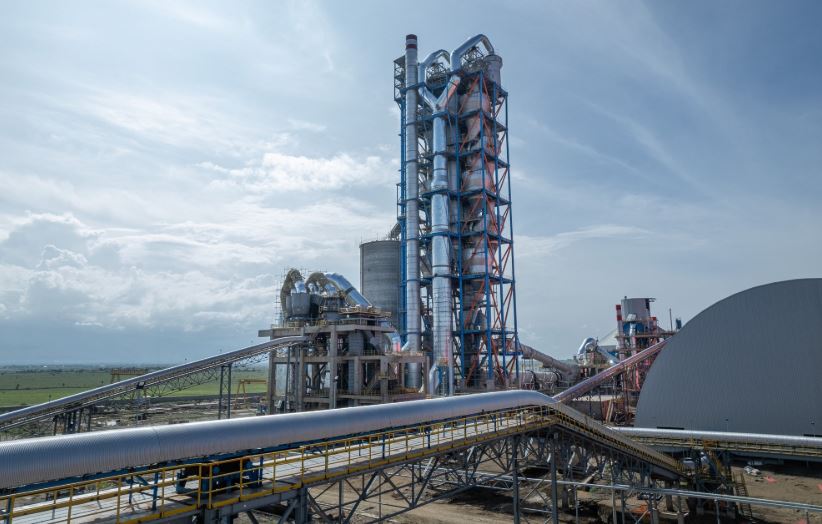
Further changes were made under the Excise Duty (Amendment) Bill, which increases duty on cement, adhesives and grout from Shs500 to Shs750 per 50 kilogramme bag, citing unchanged rates since 2015.
The House also approved higher taxes on imported high-strength spirits, a move aimed at protecting local producers of waragi, vodka and gin.
Additional excise measures include a Shs400 per litre tax on cooking oil, a US$1,500 per tonne levy on plastics to address environmental concerns, and an increase in excise duty on cane sugar from Shs100 to Shs200.
Parliament further raised first registration fees for motorcycles from Shs200,000 to Shs500,000, while approving a 10 percent excise duty on imported paints, varnishes and lacquers, compared to a lower 3 percent rate on locally produced alternatives.
In the Stamp Duty (Amendment) Bill, MPs rejected proposed increases in taxes on land and motorcycle transfers but approved adjustments on motor vehicle transactions.
Overall, government said the reforms are intended to broaden the tax base, support local industry, and strengthen revenue collection for national development priorities.