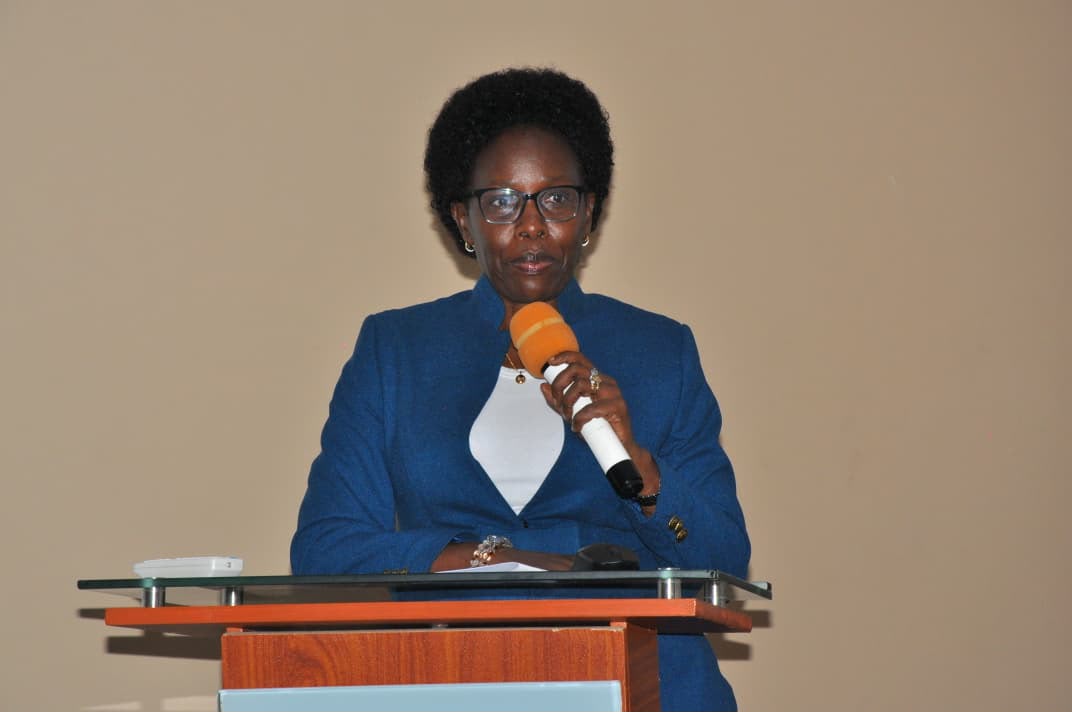


By Fatumah Birungi
My first lesson in digital literacy happened when I was trying to apply for higher education abroad!
Much of the conversation about the future of work focuses on artificial intelligence and digital transformation underscoring the growing importance of digital skills. As I listen to these intriguing discussions, I think about the many rural young people whose realities remain far removed from this vision.
Reflecting on my own journey, growing up in a rural community a few years ago: Digital skills were never part of my education. Access to computers was extremely limited and internet connectivity was almost non-existent. Even by the time I completed secondary school, owning a smart phone was far beyond my reach.
My story is just one example of a much larger reality. For many learners from rural communities in Uganda, digital exclusion starts long before adulthood, it starts in school.
The Rural Digital Divide Begins in School
The primary reason rural learners complete school without basic digital competencies is simple: digital literacy is still treated as an afterthought within Uganda’s education system. As long as it remains optional, governments and school administrators will continue to deprioritise the infrastructure and resources needed to make it accessible.
The consequences are visible in schools across the country. Computer laboratories are either non-existent or woefully inadequate. Even where they exist, a single lab with a few dozen machines is expected to serve hundreds of students.
The numbers are sobering. A recent UNICEF digital readiness assessment of secondary schools, conducted in partnership with the Mastercard Foundation, found that while approximately 80% of schools reported having a computer laboratory, the average ratio stood at just one digital device for every 63 students. Let that sink in: one device for an entire classroom of children.
Connectivity compounds the crisis. The same report revealed that 39% of secondary schools are completely off-grid, while 41% face unstable electricity. A separate study in rural northern Uganda found that over 17,500 primary schools remain offline, with most relying on hazardous lighting such as kerosene. And in many schools, even when infrastructure exists, the shortage of trained teachers trained to deliver digital education cripples any meaningful progress.
I came to understand the cost of this exclusion when I was offered an opportunity to apply for graduate studies at a university in Costa Rica. The application required basic digital competencies: typing, navigating websites, communicating via email. These were skills my peers had acquired years earlier. For me, they represented an entirely unfamiliar language.
We cannot expect rural youth to seize digital opportunities if their first encounter with technology comes at university, in the workplace, or if they are lucky as entrepreneurs. The journey to building future-ready citizens must begin early, making digital literacy an integral part of learning from primary school onward.
What if Digital Literacy Became a Core Subject?
Introducing digital literacy as a foundational subject at the primary school level would allow children from diverse demographics to develop confidence with technology from an early age. They would gradually learn age-appropriate skills such as basic computer operations, digital safety, typing and information literacy.
With a strong foundation already established in primary school, compulsory digital literacy throughout secondary education would then ensure that every learner is equipped with intermediate suuuuuqkills such as digital content creation, internet navigation, responsible use of technology and other competences.

Once digital literacy is made a core subject, it would even provide a stronger basis for government’s sustained investment in digital infrastructure in schools including training digitally competent teachers in using technology.
For me, the consequences of limited digital skills were continuous. I spent my first two semesters learning basic computer skills. While my peers completed coursework within hours, I often needed extra days to type and format the same assignments.
The effect extended beyond the classroom. During my first year at the university, many of my classmates applied for entrepreneurship funding opportunities online. Some secured funding to start their businesses that they continue to operate today. I, however, missed many of such opportunities because I lacked the digital skills to access, navigate and apply for them.
The government, development partners, educational institutions, and the private sector actors have a shared responsibility to ensure that rural youth acquire the digital skills they need.
A Shared Responsibility for Future-Ready Rural Youth
With the learners acquiring strong foundational digital literacy in primary and secondary schools, development partners and other ecosystem actors could then focus their investments to equipping youths with advanced digital skills.
Organisations such as the Mastercard Foundation, Outbox, Refactory Academy, Women in Technology Uganda, Enabel, and the World Bank are already equipping young people with advanced digital skills. But how many rural youths are fully able to take advantage of these opportunities when they begin with limited or no foundational digital literacy?
If rural youth are equipped with basic and intermediate digital skills while they are still at school, this would enable them to deepen their competencies in critical areas such as coding, artificial intelligence, digital entrepreneurship, e-marketing and other emerging technologies.
In my case, once I acquired the digital skills, I was able to apply for and secure an opportunity to pursue master’s studies in the United Kingdom. The same digital competencies allowed me to identify professional opportunities, submit applications online, and ultimately secure employment with an international organization.
A truly shared future for rural youth will begin with shared access to digital skills.
The real question is whether action will be taken quickly enough to ensure that every young person, regardless of their background, has an equal opportunity to participate in the digital future.
Author is Partner – Program Communications at the Mastercard Foundation Uganda