
The Court of Appeal has halted proceedings in a Shs147.7 billion loan dispute involving pharmaceutical companies Dei Industries International Ltd and Dei Biopharma Ltd and their director, Dr Mathias Magoola, pending determination of an intended appeal challenging an audit report on their alleged indebtedness.
Justice Florence Nakachwa, sitting as a single Justice of Appeal, ordered a stay of the hearing and all proceedings in High Court Civil Suit No. 929 of 2024 until the applicants’ intended appeal is heard and finally determined.
The dispute centres on several credit facilities obtained by the applicants from the respondent banks between 2016 and 2021 to finance the establishment of a pharmaceutical manufacturing facility.
The applicants later disputed the outstanding loan balances, arguing that excessive interest and other charges had inflated the amount they were required to pay.
According to an audit report that has become central to the dispute, the applicants’ alleged indebtedness stands at US$39,911,245, equivalent to about Shs147.7 billion.
The applicants and the respondent banks initially agreed to have KPMG review the disputed loan accounts. However, the applicants later challenged KPMG’s involvement, prompting the Commercial Court to direct the Institute of Certified Public Accountants of Uganda (ICPAU) to nominate an independent audit firm.
ICPAU subsequently appointed Clayton & Co, which produced an audit report dated June 28, 2025.
The applicants were dissatisfied with the process, filing Miscellaneous Application No. 1121 of 2025 to challenge the integrity and independence of the process through which Clayton & Co was appointed. The Commercial Court dismissed the application on July 29, 2026.
The applicants then filed a notice of appeal and asked the Court of Appeal to halt proceedings in the main suit until their intended appeal was heard and determined.
The respondent banks opposed the application, arguing that the applicants had no automatic right of appeal against the Commercial Court’s decision and had not obtained the required leave to appeal.
The banks further argued that the applicants could challenge the Clayton & Co audit report during the hearing of the main suit by cross-examining its author and presenting evidence to contest its findings.
However, Justice Nakachwa said she did not have jurisdiction, sitting as a single Justice, to determine whether the applicants’ notice of appeal was competent. She said that question could only be determined by a full bench of three Justices of Appeal.
On the application to stay the proceedings, Justice Nakachwa said the intended appeal raised serious issues concerning the genuineness of the audit report and whether it accurately reflected the applicants’ indebtedness to the respondent banks.
The judge said the applicants had demonstrated the potential consequences of allowing the High Court proceedings to continue before their intended appeal was determined.
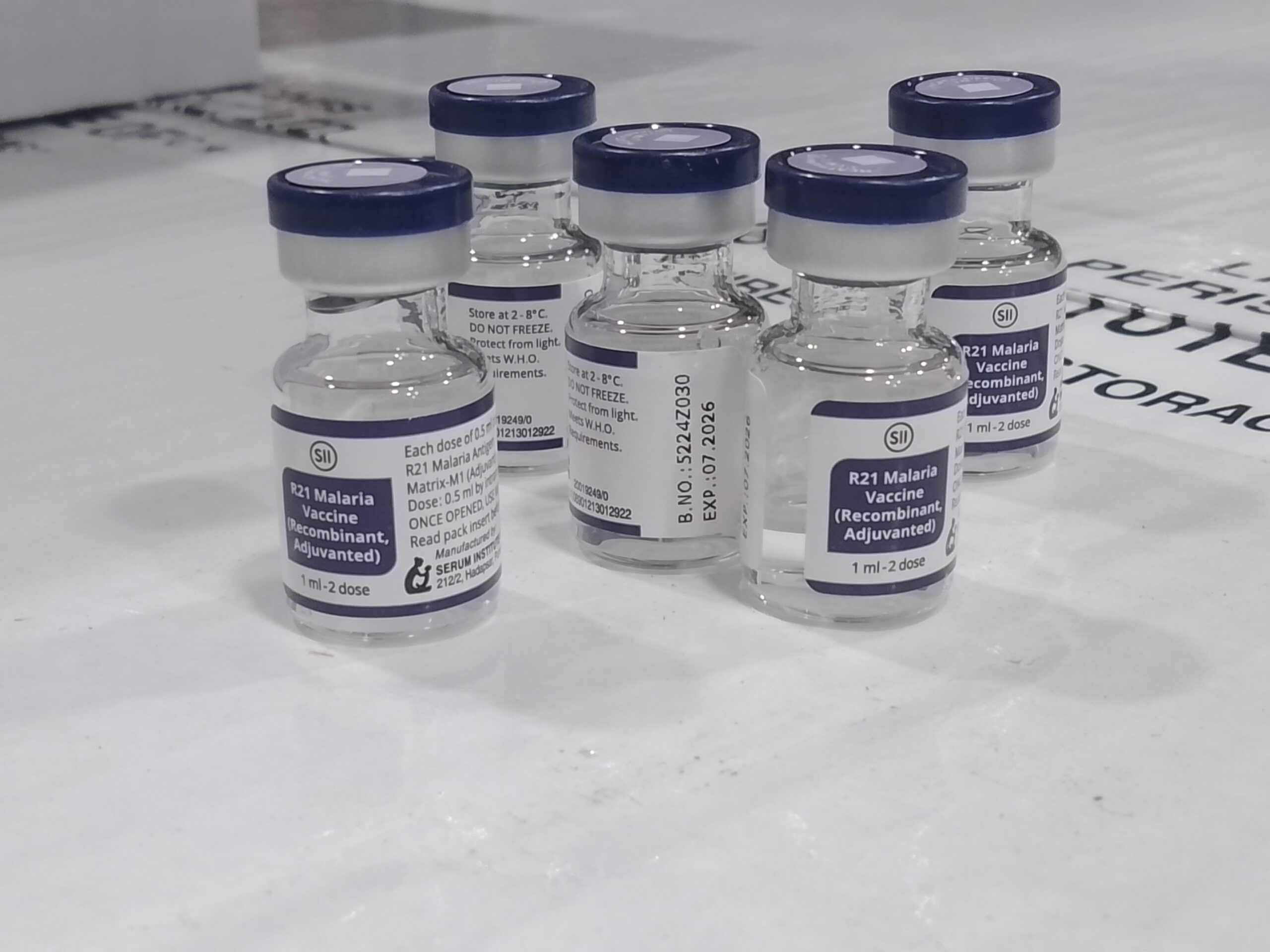
The applicants told court that they operate a pharmaceutical manufacturing business producing essential medicines for conditions including HIV, malaria, cancer, diabetes and neurodegenerative disorders.
Justice Nakachwa found that the applicants had satisfied the requirement of demonstrating substantial loss that could arise if the proceedings were allowed to continue.
On the balance of convenience, the judge referred to the Commercial Court’s finding that ICPAU was not required to consult either the applicants or the respondent banks before nominating an audit firm because such consultation could undermine the independence of the audit process.
She said the Commercial Court’s position showed that it considered the appointment of Clayton & Co to have been made in accordance with its order.

Justice Nakachwa ultimately held that allowing the High Court proceedings to continue while the applicants pursued their intended appeal could render the appeal nugatory.
She therefore ordered a stay of the hearing and all proceedings in Civil Suit No. 929 of 2024 pending the hearing and final determination of the intended appeal.
Magoola’s loan battle
Equity Bank Ltd extended up to $100 million (about Shs 368.7 billion) in financing to support the construction of facilities, importation of hi-tech medical equipment and machinery, as well as working capital. The Uganda Development Bank contributed $20 million (Shs 73.7 billion), while Tropical Bank provided an additional $2 million (Shs 7.3 billion), all in the form of loans.
In January 2023, Kaweesi and Partners Advocates, acting on behalf of Tropical Bank, published a notice to auction some of Magoola’s properties in Matugga to recover outstanding loan obligations. The properties include Kyadondo Block 82 Plots 1081 and 1082, measuring approximately 51 acres, as well as an additional 9.5 acres located near the Dei Pharmaceutical facility.
Magoola had earlier applied for a loan of about $60 million (Shs 221 billion) from Equity Bank to boost Dei Industries. However, when the Covid-19 pandemic struck, his partners identified an opportunity in vaccine production. They persuaded him to shift focus from the initial pharmaceutical manufacturing project to vaccine development.
With limited capital, Magoola returned to Equity Bank and applied for an additional $60 million (Shs 221 billion) under Dei BioPharma Ltd to facilitate the production of Covid-19 vaccines.
Dei Industries later defaulted on the loans after the business failed to perform as expected. This prompted the Bank of Uganda (BoU) to direct Equity Bank to recall both facilities, citing concerns over the client’s ability to service the debt.
“Equity Bank explained to BoU that their client would offset the loans once production and sale of drugs and vaccines commenced, but the regulator declined,” a source said. “BoU’s position is justified, although there is also pressure from importers who risk losing market share if local manufacturing takes off.”
During the same period, Magoola’s company, Dei Minerals, was struggling to pay $72,437,850 (Shs 268 billion) in legal fees to former Urban Development minister and Kampala lawyer Isaac Musumba. The amount represents 30 percent of the decretal sum of $211,459,500 awarded to Dei Minerals International in a dispute with Videocon Industries Ltd, a UK-India-based firm.
The case stemmed from a breach of contract after Videocon allegedly failed to return Dei’s mining licences, leading to the loss of the licences, mines and the associated income.
On December 13, 2022, Equity Bank’s then managing director, Anthony Kituuka, petitioned the then Deputy now Governor of Bank of Uganda, Michael Atingi-Ego, seeking approval to downgrade the credit facilities extended to Dei Industries International Ltd. The bank also requested exemption from provisioning requirements for 12 months and permission to restructure the facilities.
However, in a letter dated January 17, 2023, Atingi-Ego declined the request, noting that the credit facilities had already been restructured multiple times and that any further restructuring would contravene Regulation 13(c) of the Financial Institutions Regulations.
“The wheat factory, which was the primary source of repayment for the credit facility from Equity Bank, is not operational, and therefore there are no cash flows to service the loans as intended,” Atingi-Ego stated.
This publication could not verify how much the petitioners have paid or how much they owe him.