
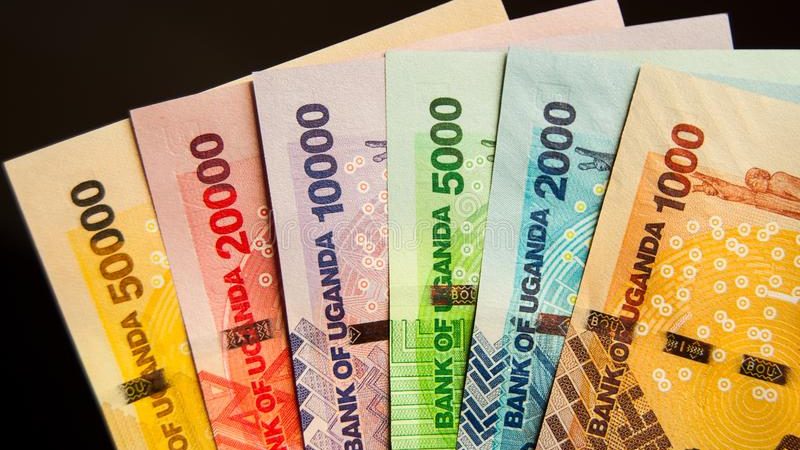
The Uganda shilling remained broadly stable against the US dollar this week, trading within a narrow range despite sustained demand from corporates and the interbank market.
The shilling opened on Monday at Shs3,770/3,780 against the dollar before closing the week marginally weaker at Shs3,775/3,785.
The currency initially depreciated to Shs3,780/3,790 on sustained interbank and corporate dollar demand. However, it staged a strong recovery on Tuesday as month-end inflows from remittances and non-governmental organisations improved dollar supply.
Renewed corporate demand exerted pressure on the shilling later in the week, with aggressive interbank buying pushing the currency to an intraday low of Shs3,780/3,790 on Thursday.
The shilling later recovered on the back of strong receipts from the commodity sector, limiting its losses for the week.
“Despite intermittent demand pressures, the shilling remains well-supported by diversified inflows,” Richard Nsubuga, acting head of trading at CIB Markets, Absa Bank Uganda, said.
“We expect the currency to trade within the Shs3,750 to Shs3,820 range in the near term, though elevated geopolitical tensions and a firmer dollar could tilt the balance towards mild depreciation.”
Market analysts expect the shilling to remain broadly stable, although corporate, interbank and energy-sector dollar demand could exert mild downward pressure.
Continued export receipts and remittances are expected to provide a buffer against excessive depreciation.
Meanwhile, liquidity in the banking system remained abundant, supported by Shs2.725 trillion in maturities injected into the financial system.
Overnight and one-week interbank rates remained steady, averaging 9.75 per cent and 9.90 per cent respectively, reflecting comfortable funding conditions.
The Bank of Uganda continued to manage excess liquidity, absorbing Shs231 billion through a two-day mop-up operation on Tuesday and conducting further open market operations on Thursday.
At the mid-week Treasury bill auction, yields on the 91-day and 182-day securities declined by 25.3 basis points and 25 basis points respectively, to 9.749 per cent and 9.999 per cent. The yield on the 364-day Treasury bill remained unchanged at 10.999 per cent.
Analysts said the high level of liquidity remains more than adequate to meet banks’ funding needs, supporting stable interbank activity while putting downward pressure on short-term yields.
In Kenya, the shilling also remained stable, trading within a narrow range of 129.45 to 129.50 against the dollar.
Month-end corporate conversions and steady remittance inflows broadly matched demand for dollars. Despite muted activity during the middle of the week and increased buyer interest around the 129.50 level, improved interbank liquidity and larger transaction sizes kept the currency supported.
Kenya’s foreign exchange reserves declined by $221 million week-on-week to $14.934 billion, equivalent to about 6.2 months of import cover. The reserves remain sufficient to provide a buffer against short-term external pressures.
Global commodity markets were more volatile as renewed tensions between the United States and Iran pushed oil prices higher.

Brent crude rose by about seven per cent to $95.05 a barrel, while West Texas Intermediate gained a similar margin to $90.67 a barrel.
The increase followed renewed US-Iran hostilities, with a US bombing campaign early in the week followed by Iranian retaliation, raising concerns about possible disruptions in the Strait of Hormuz.
The geopolitical risk premium also pushed the yield on US 10-year Treasury securities to 4.82 per cent, its highest level during the Trump presidency.
Investors questioned whether the Federal Reserve could continue treating energy-driven inflation as temporary amid the renewed pressure on oil prices.
Oil prices later retreated after President Donald Trump downplayed the likely duration of the conflict, although Brent remained above $90 a barrel.
OPEC+ delegates also signalled that production quotas were likely to remain unchanged at their weekend meeting, with the Iran conflict already complicating plans for further increases in output.
Gold prices also experienced significant volatility during the week.
The precious metal fell by as much as six per cent over three sessions through Tuesday, dropping below $4,300 an ounce on Wednesday as rising oil prices and higher bond yields strengthened expectations of tighter US monetary policy.
The trend reversed on Thursday after Federal Reserve Governor Christopher Waller signalled that the central bank could hold interest rates steady if inflation continues to ease.
Gold recorded its biggest single-day gain in two weeks, rising 2.6 per cent as the dollar weakened and bond yields retreated.
The precious metal closed near $4,468 an ounce, posting a modest gain for the week.
Meanwhile, mid-week volatility linked to the US-Iran tensions pushed the US 10-year Treasury yield to about 4.81 per cent, temporarily strengthening the dollar.
The stronger dollar pushed the euro to a two-week low of $1.1566 and sterling to $1.3486 before both currencies recovered.
The euro faced bearish positioning for nine consecutive sessions ahead of next week’s European Central Bank meeting, although broader weakness in the dollar later supported the single currency.
Sterling faced additional pressure from a selloff in UK government bonds, with 30-year yields climbing to 5.89 per cent, their highest level since May 1998.
Markets are currently pricing in two additional Bank of England rate hikes by February, adding to pressure on the pound.