
Uganda’s fintech industry is entering a new phase focused on scaling businesses, improving sustainability and creating long-term economic value after years of rapid innovation and market expansion.
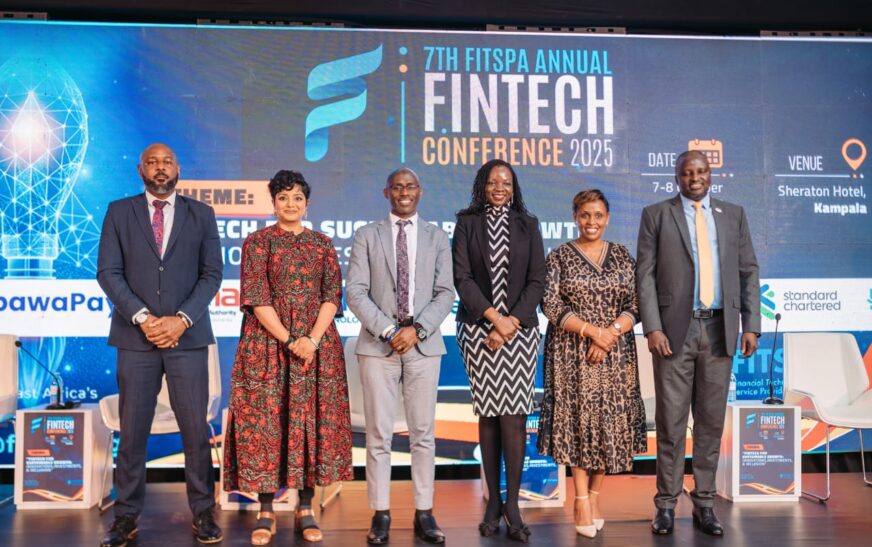
The shift will be at the centre of discussions at the eighth FITSPA Annual Fintech Conference 2026, scheduled for October 6 and 7 at the Sheraton Kampala Hotel under the theme, “Scaling Fintech Innovation for Inclusive Growth and a Resilient Digital Economy.”
The conference, organised by the Financial Technology Service Providers’ Association (FITSPA) in partnership with the Uganda Insurers Association, aBi Finance, the United Nations Capital Development Fund (UNCDF), Fintech Summit Africa, Bank of Uganda and the Bill & Melinda Gates Foundation, is expected to attract more than 500 participants from Uganda’s financial technology ecosystem.
The event is also supported by sponsors including MTN Mobile Money, Furaha, Airtel Money, Agent Banking Company Yo Uganda, PawaPay, Financial Sector Deepening Uganda, Numida, Axiom Zorn, Centenary Bank, Raxio Data Centre, ManageEngine, Yellow Card and Standard Chartered Bank.
The two-day conference will bring together fintech founders and entrepreneurs, investors, regulators, financial institutions, technology companies, telecommunications operators, policymakers and development partners to examine what it takes to turn promising fintech innovations into scalable and commercially sustainable businesses.
Over the past decade, fintech has transformed how Ugandans access and use financial services. Mobile money, digital payments, digital credit, digital banking and other technology-enabled solutions have expanded access to financial services and changed how individuals and businesses make payments, save, borrow, manage their businesses and participate in the formal economy.
However, as the sector matures, entrepreneurs are increasingly facing questions about how to sustain growth and take their businesses to the next level.
According to Zianah Nyiramanza, Managing Director at FITSPA, the conference will provide a platform for industry players and other stakeholders to examine the practical challenges of building fintech businesses capable of sustaining growth.
“At its core, the conference will explore a question increasingly relevant to Uganda’s fintech entrepreneurs: what does it take to move a promising innovation from an idea or early-stage product into a scalable, commercially sustainable solution that can serve millions of people and businesses?” Nyiramanza said.
She said the meaning of innovation is also changing as fintech businesses move into more complex stages of growth.
“For entrepreneurs, innovation is no longer only about developing a new product or technology. It is also about building sustainable business models, accessing growth capital, entering new markets, developing strategic partnerships, navigating regulation and earning the trust of customers,” she said.
Nyiramanza added that creating an environment in which fintech businesses can scale will require greater collaboration across the sector.
“As an ecosystem convenor, FITSPA provides a platform for entrepreneurs and stakeholders across government, the private sector and development community to examine these issues and share insights on how Uganda can build the conditions required for the next generation of fintech businesses to scale. For this to happen, entrepreneurs, investors, regulators, financial institutions and technology providers must work together,” she said.
The conference comes as fintech entrepreneurs across Africa navigate a more demanding growth environment characterised by competition for capital, evolving regulation, pressure to demonstrate viable business models and growing expectations around consumer protection, cybersecurity and responsible innovation.

Discussions will therefore focus on the ecosystem conditions required to enable fintech businesses to scale, including access to capital and investment, digital infrastructure and interoperability, supportive policy and regulatory frameworks, partnerships, market access, consumer trust and the responsible adoption of emerging technologies.
Participants will also examine the growing role of artificial intelligence, blockchain, data analytics and cloud technologies in shaping the future of financial services, as well as the opportunities and challenges they present for fintech businesses.
Ken Njoroge, an entrepreneur and investor and an experienced technology business builder, will deliver the keynote address.
Njoroge co-founded Cellulant in 2003 and led the company as Group Chief Executive Officer through major stages of transformation, from a mobile content business to a banking technology platform and eventually a pan-African payments infrastructure company operating across 35 markets, serving 62 banks and 400 corporates.
During its growth journey, the company attracted US$125 million from European and American investors, providing a practical case study of the capital, partnerships, technology and leadership involved in building and expanding an African technology business.
His experience is expected to bring a practical dimension to discussions on the realities of scaling a fintech company, including raising capital, developing technology infrastructure, navigating regulation, building strategic partnerships, expanding into new markets and managing the pressures that accompany growth.
The conference agenda will feature sessions on digital infrastructure and interoperability, policy and regulatory frameworks, capital and investment, partnerships and collaboration, artificial intelligence and emerging technologies, consumer protection, trust and market integrity, and innovation for inclusion.
Industry experts from Uganda’s fintech ecosystem will lead the discussions, complemented by business showcases and an exhibition where fintech entrepreneurs and technology companies will present their products and solutions, engage with investors and regulators, explore partnerships and demonstrate innovations shaping Uganda’s digital financial services landscape.
The organisers also expect the conference to generate practical outputs, including a policy brief with recommendations for regulators and government, a fintech investment landscape report covering Uganda and the East African region, partnership and collaboration commitments, and a post-conference industry package capturing key sector insights and outcomes.
Over eight editions, the FITSPA Annual Fintech Conference has evolved alongside Uganda’s fintech industry from a platform focused primarily on regulatory and licensing discussions into a broader forum for thought leadership, knowledge exchange, investment, partnerships and ecosystem development.
The 2026 edition seeks to advance that conversation by examining how Uganda can create the conditions for fintech innovations to move beyond reaching the market to scaling sustainably, remaining commercially viable and creating broader opportunities for individuals, businesses and the wider economy.