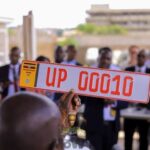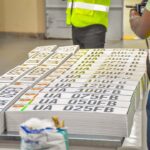

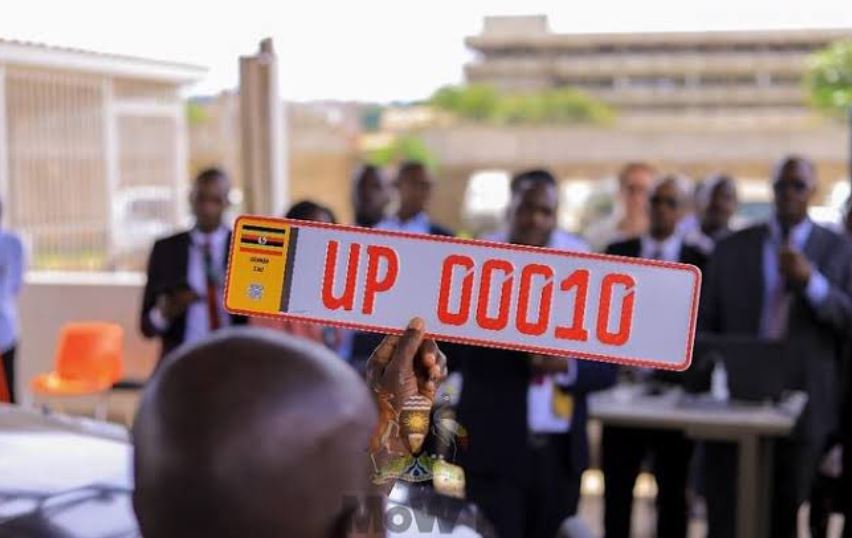
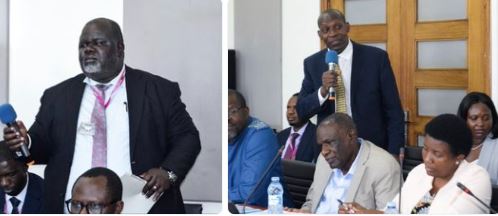
Two government officials have been arrested by Parliament’s Criminal Investigations Directorate (CID) as MPs intensify investigations into how the cost of Uganda’s digital number plates was determined.
The officials are Moses Bekabye, a technical adviser at the Ministry of Finance, and Nathan Negesa, a public officer attached to the Office of the President.
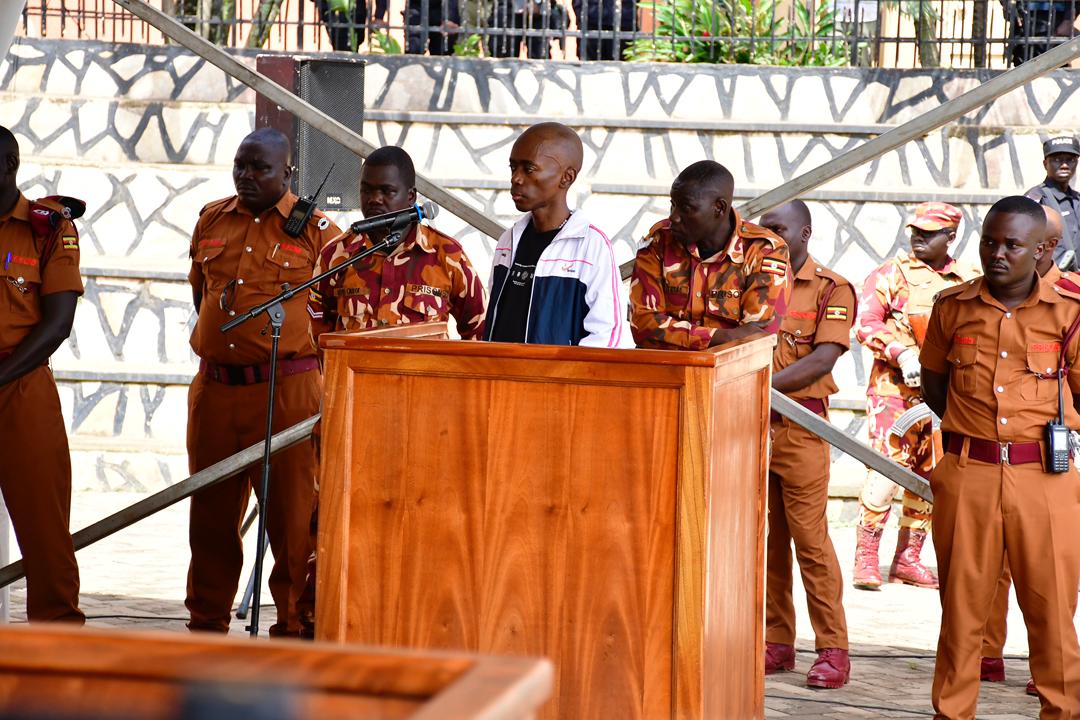
The two were arrested on Monday and handed over to Parliament’s CID for further questioning following a tense session of the Parliamentary Committee on Physical Infrastructure chaired by Mwine Mpaka.
Bekabye was arrested on allegations of giving false testimony to MPs investigating the controversial digital number plate project.
While appearing before the committee last week, Bekabye reportedly told MPs under oath that government officials had travelled to China, Russia and India to benchmark the prices of digital number plates before arriving at the price charged to motorists.
However, questions surrounding the alleged benchmarking exercises prompted MPs to demand further clarification, eventually leading to his arrest for questioning.
Negesa was separately arrested after failing to provide a clear breakdown of the Shs714,300 charged for a digital number plate.
A cost breakdown subsequently presented to the committee reportedly amounted to Shs624,000, leaving a difference of Shs90,300 that officials could not immediately account for.
The arrests come as Parliament investigates the pricing, procurement and implementation of the Intelligent Transport Monitoring System (ITMS), under which Uganda introduced digital number plates.
Russian firm at centre of project
The ITMS is being implemented under a 10-year agreement signed in 2021 between the government and Russia-based Joint Stock Company Global Security, which was contracted as the sole manufacturer of Uganda’s digital number plates.
The system was presented as a major security and transport-management intervention intended to improve vehicle identification, tracking, traffic management and related security operations.
The digital plates were also expected to help security agencies trace vehicles and motorcycles linked to crime and address the problem of forged or duplicated number plates.
Global Security has defended its technical capacity, with its ITMS project manager, Damir Makhmutov, telling MPs recently that the company has the capacity to carry out up to 1,500 installations a day. However, Parliament has heard complaints from motorists, boda boda riders and businesses over delays in obtaining the plates.
The company has also faced questions over its exclusive position in the market. The Uganda Manufacturers Association recently told MPs that the arrangement had sidelined companies that previously manufactured number plates and could be contributing to delays and higher costs.
Parliament is now seeking to establish whether the security and tracking functions of the system justify the more than Shs700,000 motorists are required to pay.
Museveni’s security plan

The digital number plate project has its roots in President Yoweri Museveni’s security strategy announced in Parliament in June 2018 following a wave of murders, kidnappings and other violent crimes, including the killing of Arua Municipality MP Ibrahim Abiriga.
Among the measures announced by the President was the introduction of electronic number plates for motor vehicles and motorcycles fitted with electronic tracking devices.
Museveni said the technology would allow security agencies to establish which vehicle or motorcycle was in a particular area when a crime occurred. He also ordered the installation of CCTV cameras in urban areas and along major highways.
Other measures in the security strategy included fingerprinting firearms, improving police response to crime scenes, regulating the use of drones, strengthening intelligence gathering, regulating the misuse of social media, improving cargo scanning and strengthening security personnel and equipment.
The government subsequently rolled out CCTV surveillance, including cameras capable of recognising number plates, as part of the wider effort to improve crime detection and vehicle monitoring.
The digital number plates therefore represent one of the key components of the security measures that were conceived several years ago.
MPs question the cost
However, almost eight years after the electronic tracking system was proposed, MPs are now questioning whether the financial burden placed on motorists is supported by a clear and verifiable cost structure.
The committee is particularly interested in how government arrived at the Shs714,300 figure, what portion goes to the contractor, the cost of the physical plate and electronic components, and how much is allocated to installation, tracking infrastructure and other services.
The inquiry has also raised questions about whether the security features are functioning as originally promised.
Recent submissions to Parliament have produced conflicting accounts. While some security officials have defended the system as useful in tracking stolen vehicles, other stakeholders have questioned its effectiveness, particularly in relation to motorcycles.
The committee has resolved to inspect the ITMS monitoring centre to establish how the technology works and whether vehicles can actually be tracked through the system.
For Parliament, the central question is now not only how much motorists are paying, but whether the Shs714,300 charge can be fully accounted for and whether the security benefits promised when the project was conceived are being delivered.
The inquiry is continuing, with more government officials and other stakeholders expected to appear before the committee.