
Introduction
Iran, for 189 years (1789-1978) lacked independent foreign policy. It allowed four major world powers to dictate it. It did not respect its own national sovereignty. It existed with abuse and disgrace.
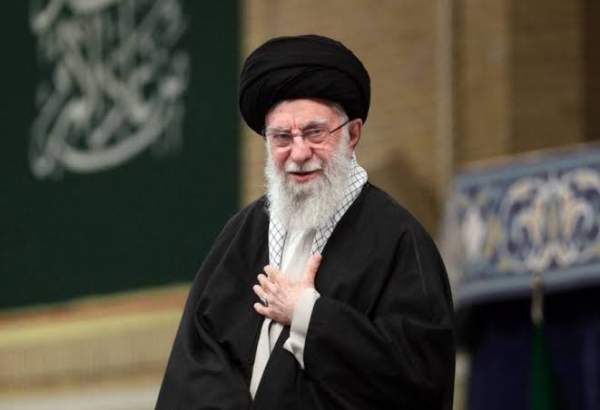
Imam Khamenei introduced independent foreign policy to assert Islamic Republic’s sovereignty, in spite of imposed wars.
Rise of the new world order
Imam Khamenei, between 2022 and 2024, issued prescient statements on the rise of the new world order. They were evidence-based on his own first-hand experience of the old world order as the President of the Islamic Republic and as its Supreme Leader.
He said, ‘In this new order…the US will no longer occupy an important place and will be isolated.’
Decline of the old world order
The decline is manifested by genocide, wars, destruction, and displacement. The historic Al-Aqsa Flood Operation in Palestine of 7 October 2023 was not only against Zionism but also aimed at de-Americanization. It changed USA policies in West Asia. The Gaza Genocide showed the decomposing entrails of the old order.
On the Ukraine War, he said, ‘The moves that we see in Europe today are deep-rooted moves and one can predict complex and difficult futures.’
Awakening of the Global South
With the awakening of the Global South from colonialism, he said, ‘This will lead to a new state of affairs, and it will create a new world.’
His martyrdom on 28 February 2026 marked the irreversibility of the new world order.
Historical correction of Iran’s foreign policy
Qajar rule (1789-1925)
Iran’s foreign policy during the 136 years of Qajar rule (1789-1925) was dictated by three major empires of the Ottoman, Russian, and ‘British India/Afghanistan’ because they had surrounded Iran.
Russian theft of Iranian land (1813-1828)
Russia forced Iran to cede vast territories to it in South Caucasus, Armenia, Republic of Azerbaijan, and Republic of Georgia. For this Russia used the treaties of Gulistan (1813) and of Turkmenchay (1828). Iran lost sovereignty over the stolen territories.
It unsuccessfully tried to solicit the military support of Britain to push back Russian expansionism.
Treachery of France, Russia, and Britain (1807)
In May 1807 Iran at its behest signed the Treaty of Finckenstein with France as a counterbalance to Russia and Britain. But when Napoleon reached an accommodation with Russia at Tilsit in July 1807 France abandoned Iran. Iran then turned to Britain to help it push back Russian expansionism but Britain spurned it.
Russian northward expansion
While Russia continued its northward expansion Britain stifled Iran’s influence in the east, especially, in Afghanistan as a buffer for ‘British India’, which had to contend with the military base of the Deobandi scholars in south Afghanistan/India border. The scholar-soldiers were preparing to launch an armed struggle against British colonialism in India.
Anglo-Persian War (1856-57)
The tensions between Britain and Iran resulted in the Anglo-Persian War of 1856-57 when the British launched attacks on Iranian positions in the Persian Gulf. The War ended with the Treaty of Paris (1857). Once again, Iran turned to its former enemy, Russia, as a counterbalance to the British. It was a costly error for Iran because Russia extracted land concessions from Iran.
Treaty of Akhal (1881)
In 1881 Iran and Russia signed the Treaty of Akhal, in terms of which Iran ceded Khwarazm to Russia. It enabled Russia to expand into Central Asia while Iran relinquished territories north of the border including present-day Turkmenistan.
Ottoman pressures
The Ottoman Empire, too, pressured Iran over borderlands, tribal loyalties, and allegiance of Kurdish communities. Iran lacked military and economic capabilities to resist the pressures. To make matters worse Russia and Britain established political and economic influence inside Iran. They extracted material concessions from Iran.

Anglo-Russian Convention (1907)
Britain and Russia signed the Anglo-Russian Convention of 1907 over Iranian territory. They divided it into three spheres of influence: Russian north, British southeast, and a nominally ‘neutral’ zone. After Iran gave away its sovereignty it vainly sought relations with Germany, USA, and other European powers as a counterbalance to Russia and Britain.
For the rest of the Qajar period until 1925 and after, Iran failed to develop its own independent foreign policy to safeguard its national interests.
Great Britain-Persia Agreement (1919)
On 9 August 1919 Great Britain and Persia signed an agreement, in terms of which Britain sold advisory services, consultants, modern war materiel, building an army, financing reforms, communications network, construction of railways, extension of trade, and collection of revenues and customs tariffs. It began with a 2-million pound sterling loan at 7% annual interest over twenty years.
Invasion of Iran by Britain and Russia (1941)
In 1941, during WWII, Britain and the Soviet Union (Russia) invaded Iran for its oil resources. It resulted in the fall of Reza Shah and the rise of his son, Muhammad Reza Pahlavi. Under Pahlavi the USA controlled Iran’s domestic and foreign policies.
British invasion of Afghanistan (1880-83) to 1893
The British engineered in Afghanistan the ‘Battle for the Throne of Kabul’ in 1880-83. They gave military support to Abdul Rahman Khan to capture Kabul, Turkestan, Ghazni, Herat, and Kandahar and anointed him as the ‘Amir of Kabul and its Dependencies’, actually, as the chief tax-collector. Iranians and Hazaris had a historical and religious affinity.
Hazarajat put up the strongest resistance to Khan’s three proxy military campaigns in 1881-83. Its inhabitants refused to pay taxes to the British. It was also the strategic trade and communication node in the ancient Silk Road. The British through Khan captured Hazarajat ten years later in 1893.
British colonial linguistic morphology (1883 & 1892)
During the war the British coined two suffixed concepts: Shi’ism in 1883 and Sunni’ism in 1892. They were meant to show the ‘divisions’ in the religious and juridical dimensions of a single dynamic Islamic philosophy.
Linguistic morphology is not neutral in the colonial worldview. It serves colonial ideology. Suffixation is supposed to be a word-formation process but in colonial hands it is turned into concepts like Shi’ism and Sunni’ism. They are meant as sound bytes to represent ‘two divisions’ in Islam and to arouse hatred or love to an extent that some unthinking Muslims may kill one another. This morphology serves a colonial ideological purpose. The suffixation changes the neutral word-class of ‘Shi’i’ and ‘Sunni’ into binary religious concepts.
Imam Khomeini: ‘turn neither to the east nor west’ (1979)
Imam Khomeini, immediately after the 1979 Islamic Revolution, enunciated the Quranic principle of international relations: ‘turn neither to the east nor west’.
Imam Sayed Ali Khamenei: dealing with historical structures
As a scholar-statesman, Imam Khamenei dealt decisively with the consequences of historical structures imposed by foreign powers. They were later intertwined with USA imperialism and its necklace of military bases around Iran, with Israel as a wrecking ball for securing oil and gas supplies. The nation-state that the Islamic Republic inherited was an instrument of imperialism, which had to be dismantled.
Changing unequal power relations
The Imam began changing the unequal power relations between the new Islamic Republic and foreign powers. While the ownership of natural resources was vested in the state he changed the relations of ownership, production, distribution, exchange, and use of worldly goods. This induced new revolutionary ways of combining the traditional and modern and state-society relationship.
New paradigm of decolonial thinking
He created a new paradigm for decolonial thinking with which Iranians could identify because traditional knowledge was made commensurate with modern knowledge. He appealed to the intellect. Iranians are blessed with high level of cultural consciousness and national pride in Islamic and Persian civilisation.
Decolonial international relations
He developed critical and constant decolonial international relations in Iran’s national interests with mass participation. Logically, it resulted in solidarity relationships of resistance and vindication with anticolonial struggles in the region and around the world.
Imam Khamenei had an extraordinarily large mind to undertake such a great task.
By Haroon Aziz, South Africa